

When the Oktoberfest comes around, all of Munich pulls on “Lederhosen” and “Dirndl”. In 2026 the fun runs from 19 September to 4 October. Here is everything worth knowing about Germany’s biggest “Volksfest”.
Seven Million Visitors, 40 Beer Tents: The Oktoberfest in Numbers
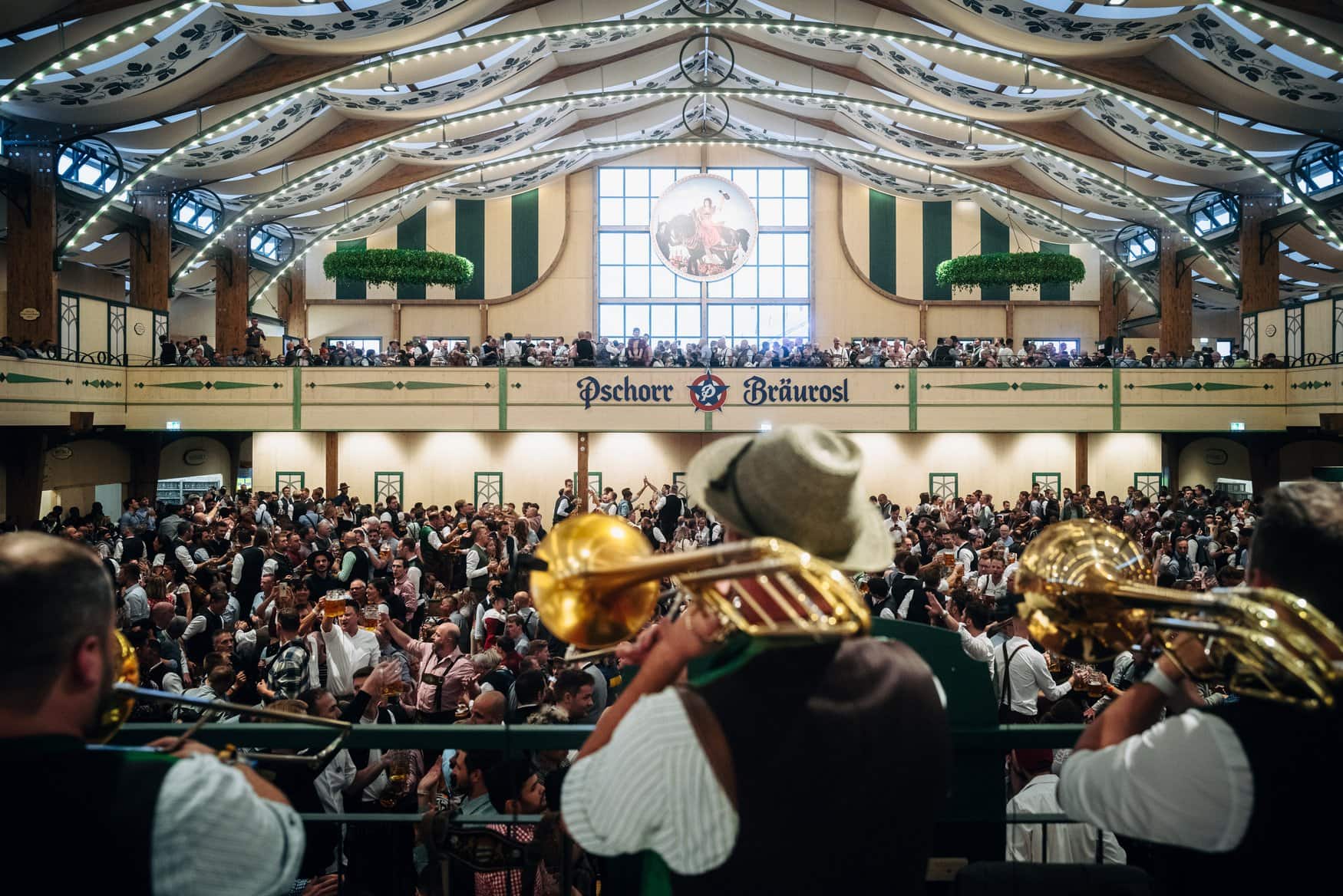
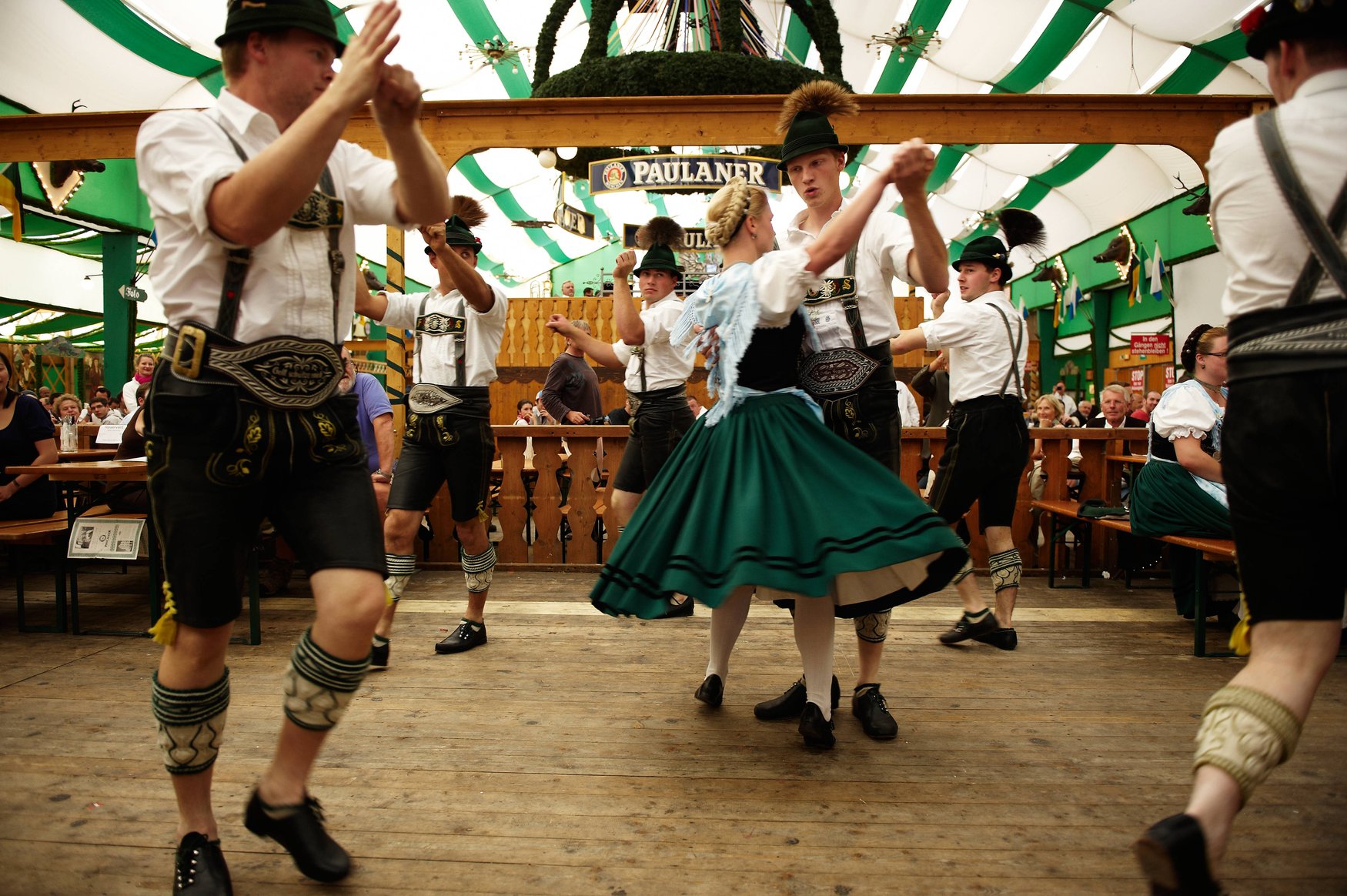
With more than 7 million visitors (2023 figure), the Oktoberfest counts as the biggest “Volksfest” in Germany and possibly in the world. It all happens right in the middle of Munich, on a big open square called the “Theresienwiese”. Bavarian tradition, music, food and a great deal of beer are what it revolves around. Almost 40 beer tents go up on the “Theresienwiese”, and inside them the waitresses carry the beer to the tables in one-litre steins called a “Maß”, up to ten of them at once.
Free Entry, No Guaranteed Seat: Getting Into an Oktoberfest Tent
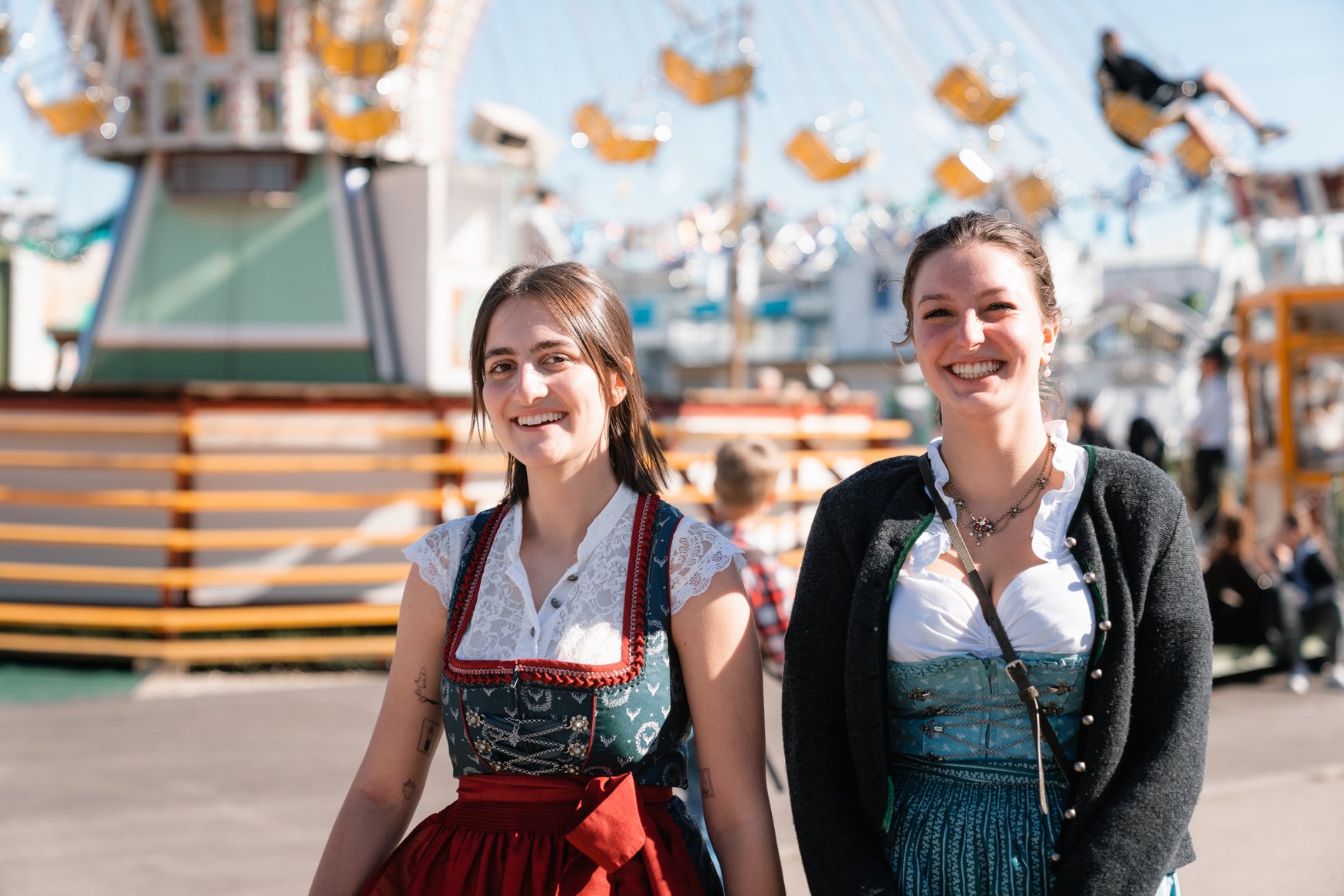
The Oktoberfest 2026 runs from 19 September to 4 October. On Saturdays, Sundays and on 3 October the “Theresienwiese” opens at 9 a.m., during the week at 10 a.m. Entry is free, hooray. (3 October is German Unity Day, a national public holiday, which is why it gets the weekend treatment.) “Lederhosen” and “Dirndl” are not compulsory, though the authentic feeling is hard to get without them.
Anyone who wants a seat in one of the tents should either book ahead, especially at the weekend, or turn up on the grounds early and claim a spot. Most tents keep a number of tables free for guests without a reservation. Those tables go fast.

Why the Oktoberfest Mostly Takes Place in September
If you do not know the festival, the calendar may make you rub your eyes: the longest part of the Oktoberfest happens in September. So where does the name come from? History has the answer.
The very first Oktoberfest really was held in October. The occasion was the wedding of the Bavarian crown prince Ludwig and Princess Therese von Sachsen-Hildburghausen on 12 October 1810. A high point of the celebrations was a horse race on 17 October, held on a meadow outside the city gates that would carry the princess’s name from then on: the “Theresienwiese” (Therese’s meadow).
The race proved so popular that it quickly became a fixture in the Munich calendar, and fairground rides, food stalls and beer stands were soon added. The festival also grew longer, and from 1872 it opened as early as September to make better use of the warm late-summer weather. Today it traditionally starts on the Saturday after 15 September and ends on the first weekend in October.
From the Keg Tapping to the Gun Salute: The Fixed Dates of the Oktoberfest
The two-and-a-bit weeks of the Oktoberfest are packed with a varied programme, almost 40 beer tents and, of course, plenty of beer. Over the decades, though, a handful of moments have become impossible to imagine the festival without.
The Parade of the Landlords and Breweries
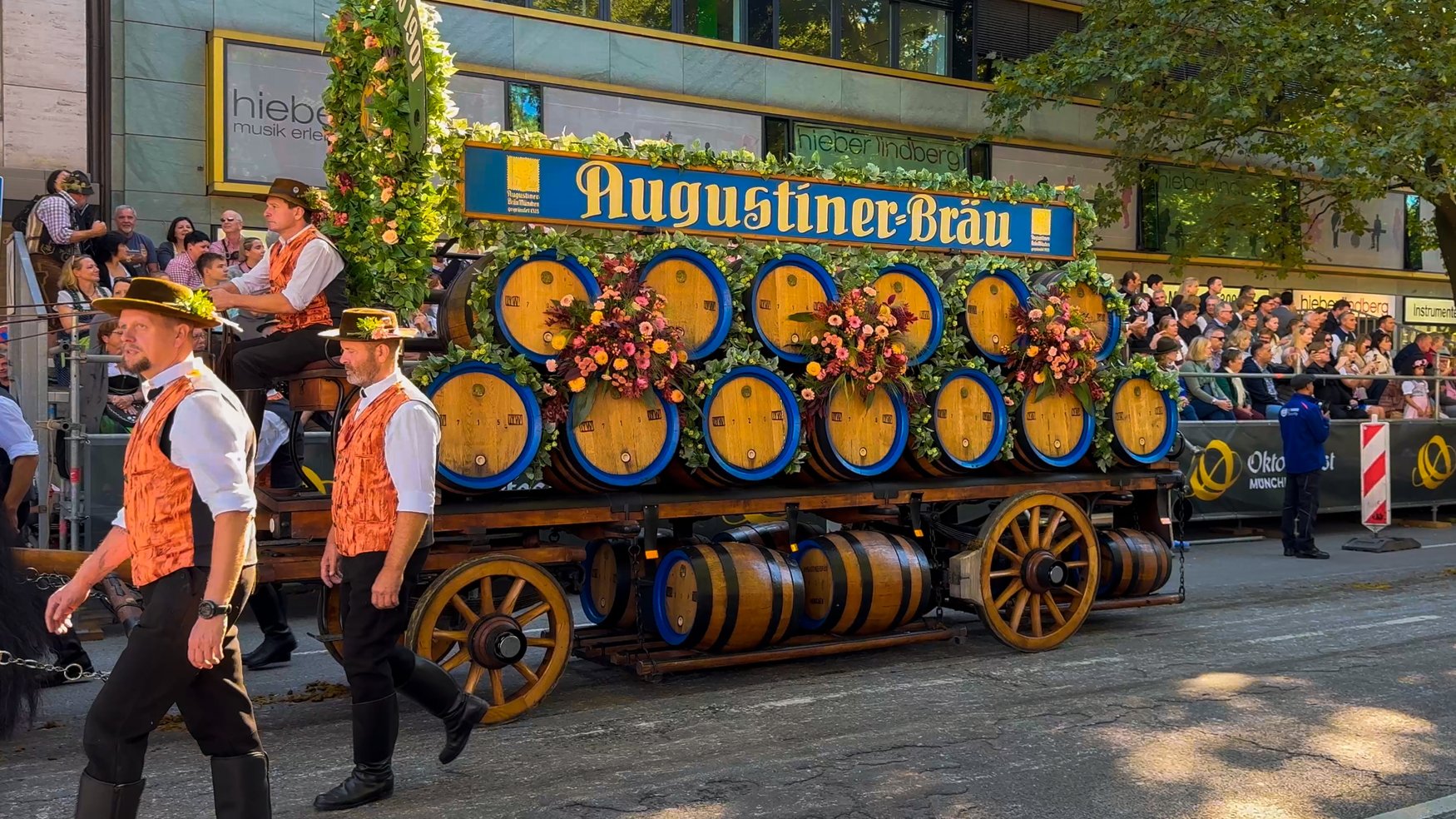
The gates open at 9 a.m. on the first Oktoberfest Saturday and the first few thousand visitors pour onto the “Theresienwiese”, a fairly chaotic sight. From 10.45 a.m. things get considerably more orderly with the “Einzug der Wiesnwirte” (parade of the Oktoberfest landlords). Around 1,000 people who make the festival happen, among them landlords, waiting staff, musicians and showmen, march in a lavish procession from Sonnenstraße onto the fairground.
On show are the magnificent “Prachtgespanne” (ornate brewery horse teams) of the six Munich breweries that pour at the festival, along with the ceremonial carriages of the tents. Leading the procession is the “Münchner Kindl” (the Munich child, the city’s emblem, always played by a young woman in a monk’s habit), embodied since 2026 by Sina Hochreiter. Also near the front: the mayor of Munich, Dominik Krause since May 2026.
The Keg Tapping
The official opening of the Oktoberfest follows at 12 noon sharp. Tradition has it that the mayor of Munich drives the shiny brass tap into the first barrel with a few hammer blows, to loud applause, and gives the long-awaited starting signal with the words “O’zapft is! Auf eine friedliche Wiesn!” (“It’s tapped! Here’s to a peaceful Oktoberfest!”). Most tents have been open since 9 a.m., but beer may officially only be served from this moment. Before that, it is soft drinks only.

The Costume and Riflemen’s Parade
The following Sunday, the Oktoberfest and really the whole of Munich belong to what is probably the largest procession of the year: the “Trachten- und Schützenzug” (costume and riflemen’s parade). Around 8,000 participants in traditional dress and riflemen’s uniforms walk from the monument to King Maximilian II of Bavaria right through the city centre and onto the “Theresienwiese”. (“Schützen” are members of local shooting clubs, an old and very much alive village tradition in Germany.)
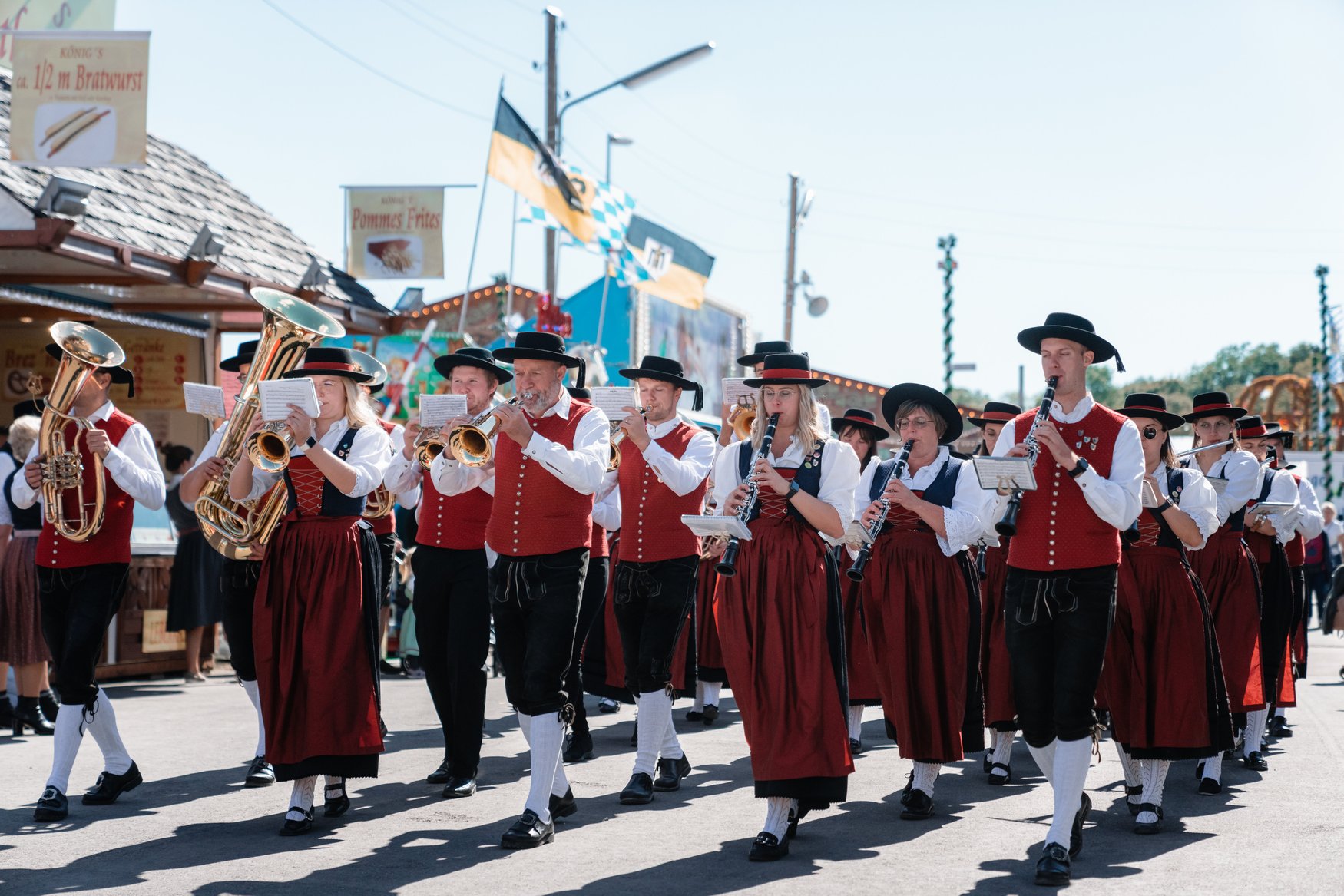
None of this happens quietly. Numerous bands provide loud brass music along the way, and the individual groups bring elaborately decorated floats. Nor is the parade a purely Munich affair: groups and clubs from several German states and six European countries take part. This procession, too, is led by the “Münchner Kindl” Sina Hochreiter, on horseback.
The Open-Air Band Concert
The many Oktoberfest bands normally play in their own tents. There is one exception: on the second Sunday of the festival, 27 September in 2026, around 300 musicians come together at 11 a.m. for a joint performance in front of the “Bavaria” statue, the “Platzkonzert der Wiesn-Wirte” (open-air concert of the Oktoberfest landlords). Admission is free, so arriving early pays off. The best spots go quickly.
The Gun Salute
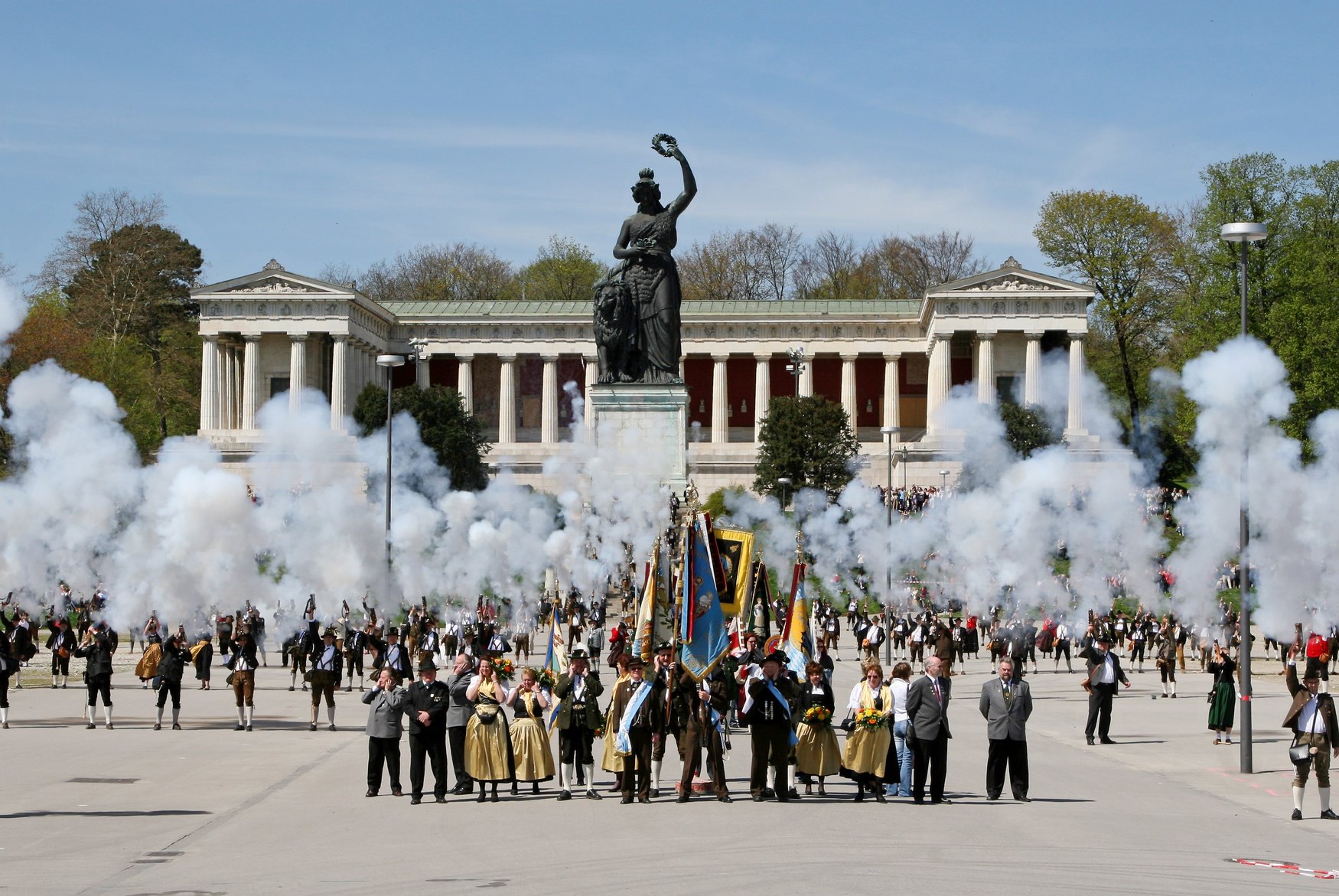
On the first Sunday in October it is time to say goodbye. Tradition marks the last day of the Oktoberfest with the “Böllerschießen” (ceremonial gun salute) at the “Bavaria” statue. Around 60 marksmen in traditional dress line up on the steps below the statue and fire salutes into the air at 12 noon. The tents, however, keep going well into the evening.
The Oktoberfest Rides in 2026: From “Toboggan” to “Chaos-Pendel”
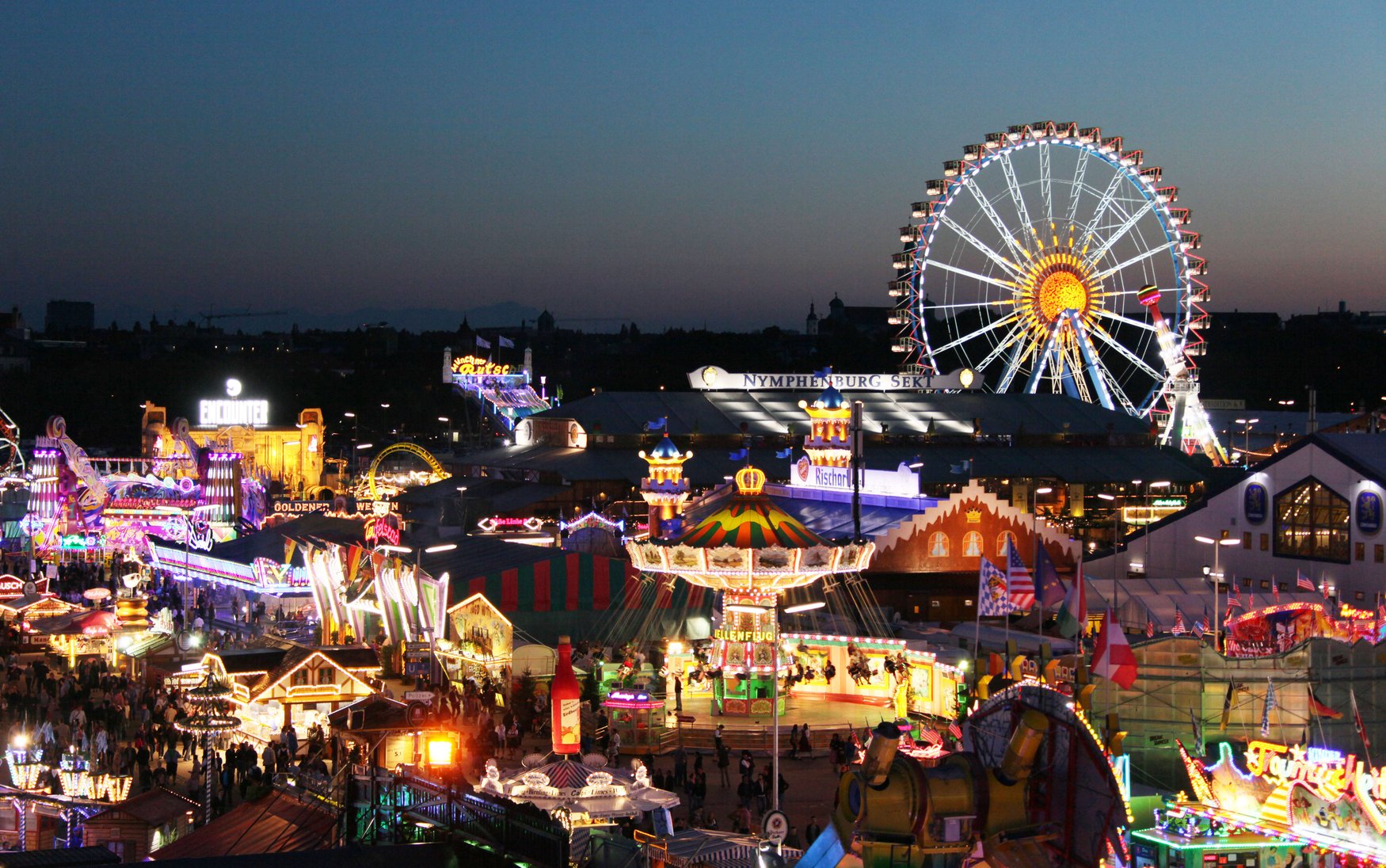
The Oktoberfest would be no “Volksfest” without dozens of fairground rides, ranging from long-standing classics to thoroughly modern adrenaline machines. Simply throwing yourself into the middle of it is always a good idea, but here are a few highlights.
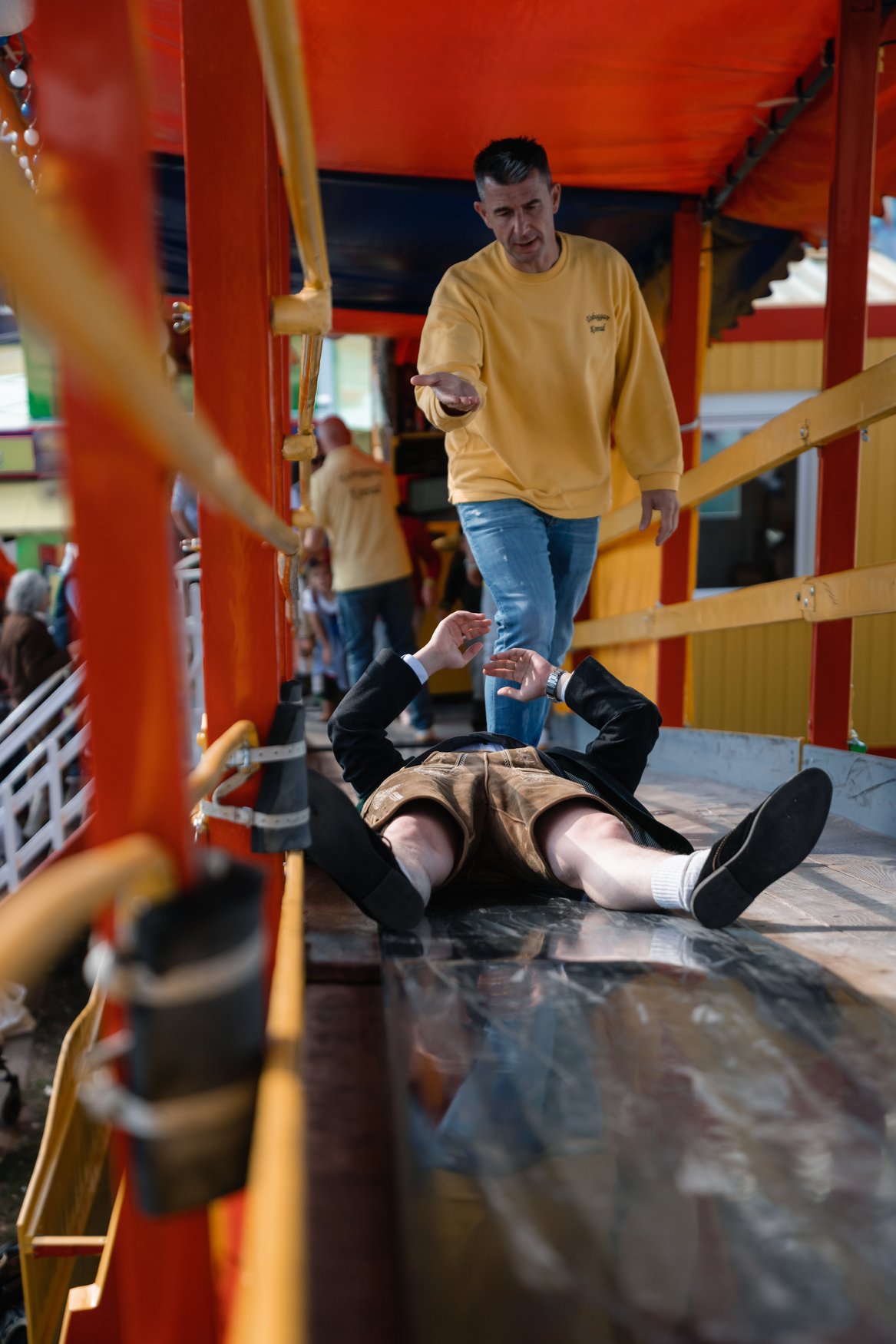
For the traditionalists there is the “Toboggan”: a conveyor belt drags you several metres up a ramp, at least if you manage to stay upright. Plenty of visitors end up on the floor faster than they can blink, especially after a beer or two. Once you make it to the top, more or less elegantly, the slide back down is a much gentler reward.
New to the ride line-up in 2026 is the “Chaos-Pendel” (chaos pendulum). Passengers need a strong stomach, because the giant metal arm swings its occupants around three axes at the same time. Also new is the ride “Shake and Roll“, where the cabins rock and spin on a huge disc that turns in circles at considerable speed.
If that is too much adrenaline, the “Oide Wiesn” (Bavarian for “old Oktoberfest”) is the place to go. This area in the south of the “Theresienwiese” was set up in 2010 for the festival’s 200th anniversary and has been a fixture ever since. Tradition and old customs are the focus here. The historic rides are gentler, the music more analogue, the clothing more authentic. Just the thing for anyone who wants to slow down a little inside the big festival bustle.
Beer Prices 2026: What a “Maß” Costs at the Oktoberfest This Year
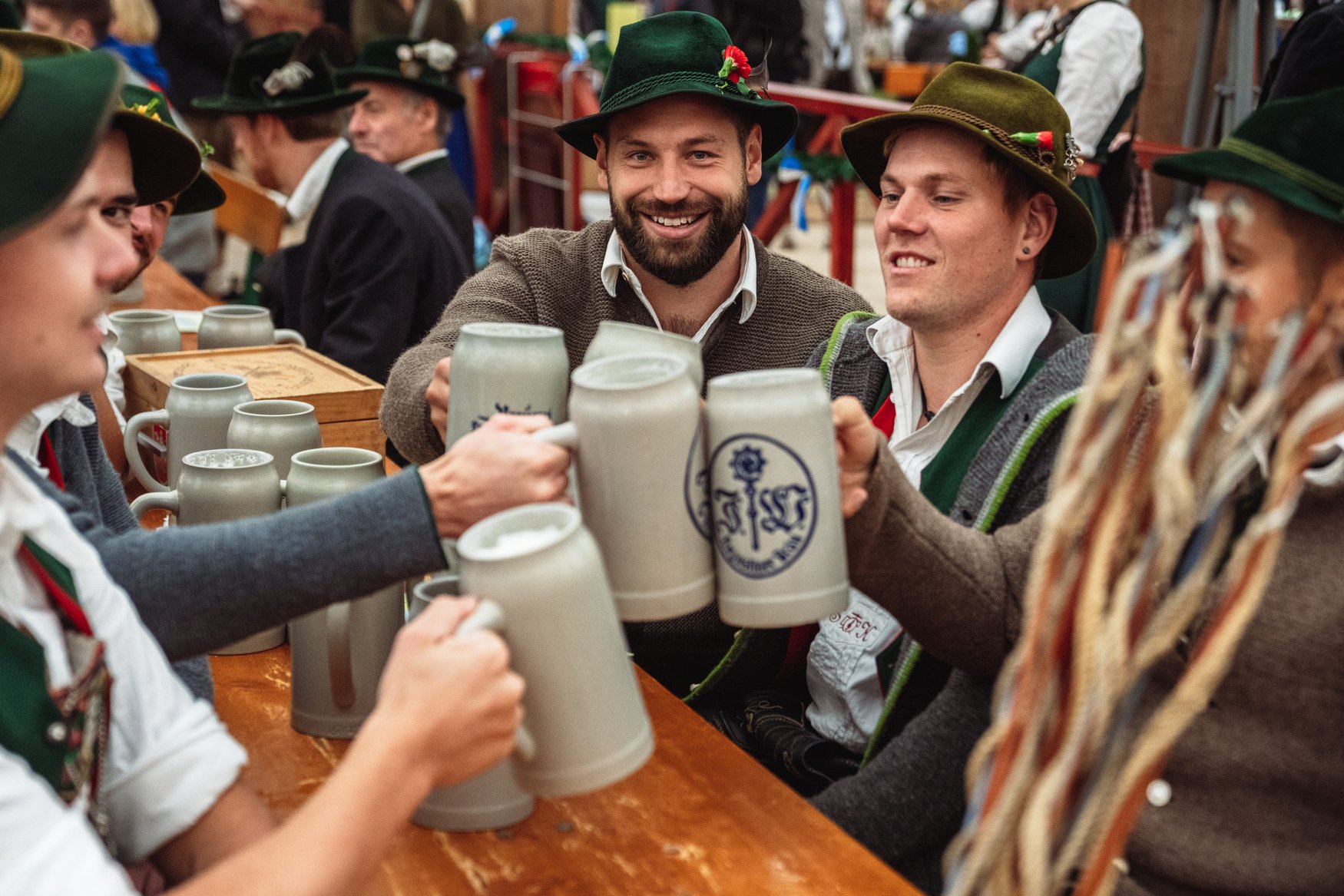
Down to business: what does a “Maß” cost? According to the city portal muenchen.de, visitors in 2026 can expect beer prices between 14.80 and 15.90 euros per litre. Each tent sets its own price.

Only beer from Munich breweries is poured, six of them: Augustiner, Hacker-Pschorr, Löwenbräu, Paulaner, Spaten and the state-owned Hofbräuhaus. Between six and seven million litres go through the taps each year, which averages out at “only” one litre per visitor.
The Oktoberfest Rules: What You Can and Cannot Bring
Wherever this many people come together to celebrate, a few ground rules apply.
- Rucksacks and larger bags are not allowed on the grounds. Only bags with a maximum volume of three litres and maximum dimensions of 20 cm x 15 cm x 10 cm may be brought in.
- Spray cans with harmful contents, corrosive or staining substances, objects that could be used as weapons and glass bottles have no place in your luggage.
- Prams are not allowed on the grounds on Saturdays, on the public holiday on 3 October, and every day after 6 p.m.
- Bicycles, scooters, skateboards and similar equipment may not be brought onto the grounds, let alone used there.
- Animals are not permitted at the Oktoberfest (assistance dogs excepted).
One more thing: the Oktoberfest website has a visitor barometer showing how busy the grounds are expected to be and how busy they actually are. Useful for anyone hoping for a relatively relaxed Oktoberfest experience. In 2025 the entrances were closed twice because the grounds were full, the first time in the festival’s history. Avoid Saturdays if you possibly can.
And as at any “Volksfest”, and really everywhere else: be nice to the people around you, do not insult anyone, do not crowd anyone or push them into situations they did not ask for. And maybe stop drinking one “Maß” earlier than planned. There is always tomorrow.
👉 More information about the Oktoberfest at https://www.oktoberfest.de/en.
Frequently Asked Questions about Oktoberfest
When does Oktoberfest take place?
It runs annually from mid-September to early October in Munich. Most of the festival falls in September, with only the first October weekend included.
What is the best way to get to Oktoberfest?
Take the U-Bahn (lines U4, U5) or S-Bahn to Hauptbahnhof, then walk. Parking is scarce and expensive, so public transport is strongly recommended.
Are there family-friendly areas at Oktoberfest?
Yes, especially in the mornings and during the first week. Many tents have quieter hours, and there are plenty of rides and attractions for children.