



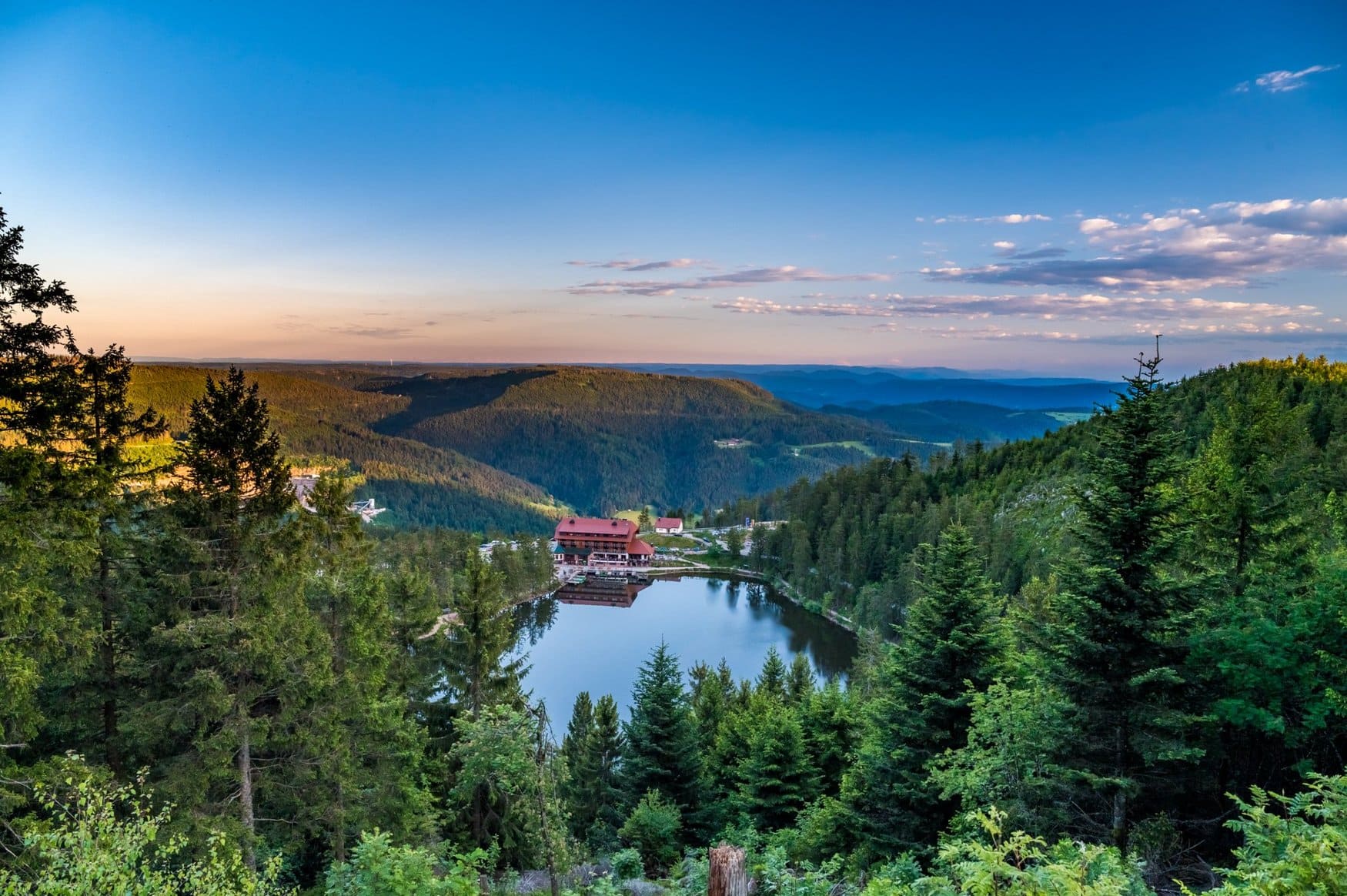
Baden-Württemberg is a land of engineering and progress. But the south of Germany also has a mystical side, thick with old legends. From the heights of the Black Forest down to the Hegau. These places in Baden-Württemberg are the stuff of tales.
Good scary stories and mystical fairy tales are among the oldest things we humans pass on to one another. And Baden-Württemberg, the federal state in Germany’s southwest corner, is anything but short of legends. Some of them are tied to very real places that you can still visit today. A word of warning, though: day trippers and hikers might just run into one of the characters.
Burgruine Dilsberg: Where Farmers Fought Off an Attack With Bees
The “Burgruine Dilsberg” (Dilsberg castle ruin) in Neckargemünd is a proper picture-postcard sight. The ancient walls are also the setting for several legends. One of them tells of the “Rose vom Dilsberg” (rose of Dilsberg). Two lovesick suitors are said to have asked for the hand of the daughter of Count Heinrich von Dilsberg. Happiness never bloomed, because the rejected suitor is said to have ambushed and killed his rival while the wedding was still being prepared. Grief-stricken, the count’s daughter threw herself from the castle wall. A rose bush with white blossoms still marks the spot today.
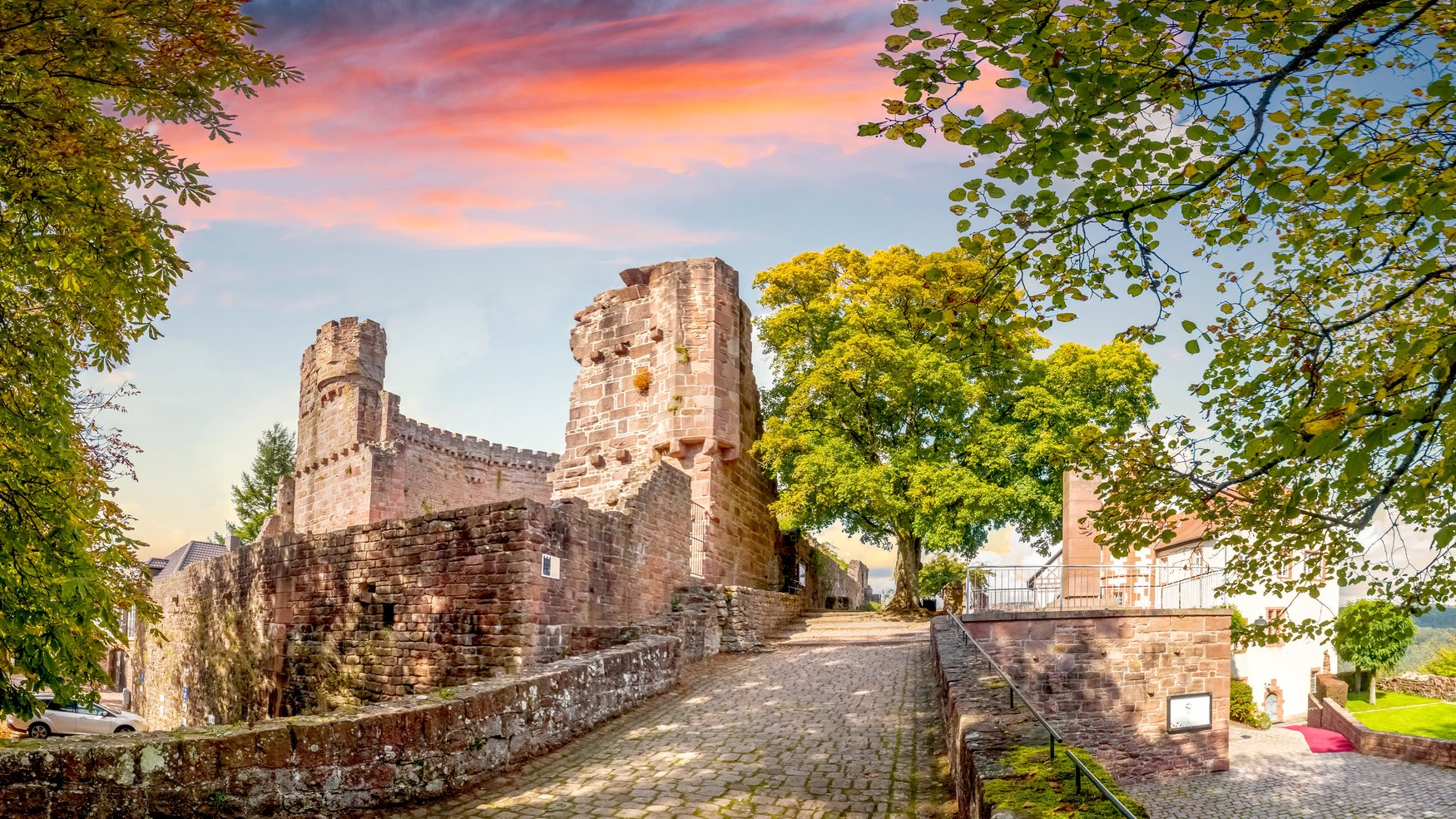
Another legend from the Dilsberg ruin is about the brave farmers of the region. They are said to have fended off an attack on the castle by distinctly unusual means, namely by sending their bees into battle. The “Bienengärtlein” (little bee garden) on the town wall still commemorates the episode.
👉 Here you can find the website of the “Burgfeste Dilsberg”.
Esslingen: The Postmichel Appeared for 50 Years With His Head Under His Arm
The Middle Ages are a treasure trove of gripping legends, as the half-timbered town of Esslingen shows. (Half-timbering, “Fachwerk” in German, is the building style with a visible dark wooden frame and pale infill panels that gives so many older German towns their look.) In 1491, the wealthy citizen Amandus Marchthaler was beaten to death there. The murderer was never found. Two years later the postal rider Michel was travelling through the region. On his way to Esslingen he found a golden signet ring at the roadside and slipped it onto his finger. When he rode into town with it, the people of Esslingen recognised the ring at once as the murdered Marchthaler’s, and promptly accused the “Postmichel” of the killing. The rider was convicted and beheaded.
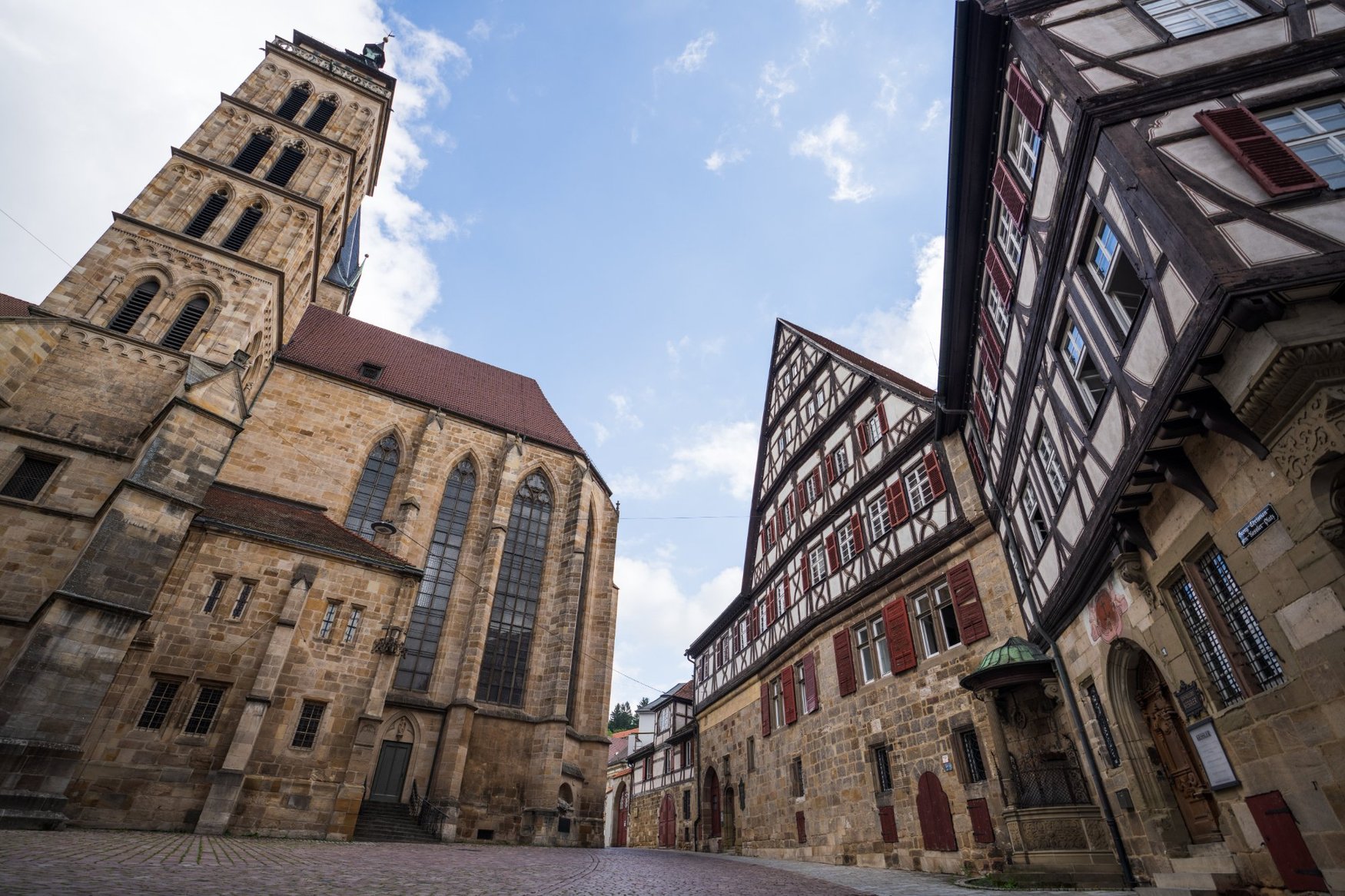
His ghost could not rest with that injustice. Year after year the wrongly executed Michel appeared outside the judge’s house as a ghost, his head tucked under his arm, sounded his horn and vanished again. Only 50 years later, tormented by guilt, did Amandus Marchthaler’s nephew confess to the murder. He died shortly afterwards. With that the “Postmichel” was at peace and was never seen again. A fountain in the Fischbrunnengasse still shows the legend in a series of reliefs. A local “Narrenzunft” carries his name as well. (“Narrenzunft” means fools’ guild, one of the costumed clubs behind the Swabian-Alemannic carnival, where every town has its own figures and hand-carved wooden masks.)

Burg Teck: Wise Sibylle Rode Off in a Chariot of Fire
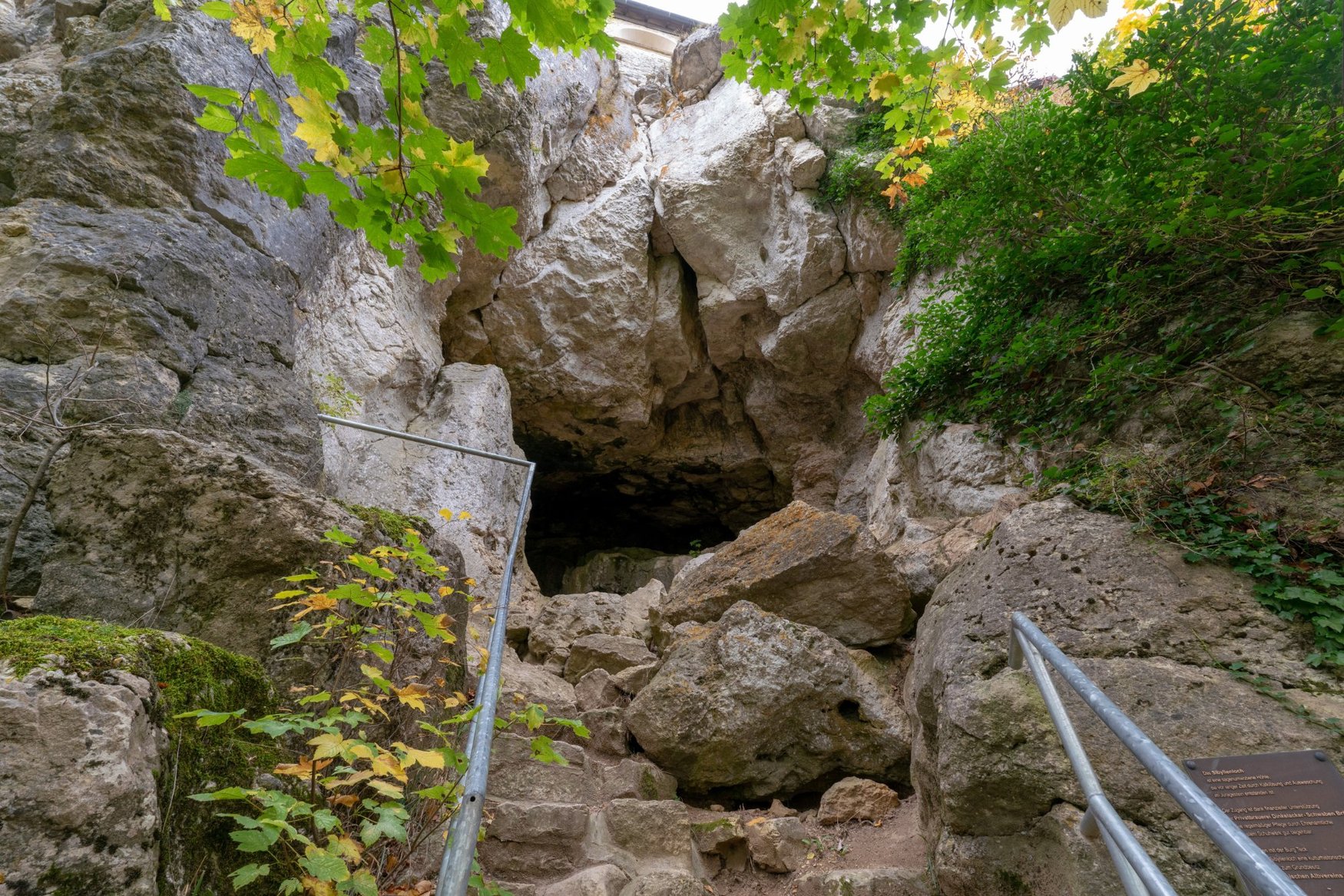
Not every legend has to end in murder and manslaughter. Although the tale of wise Sibylle is no comedy either. The wise woman is said to have lived in the “Sibyllenloch” (Sibylle’s hole), a cave below “Burg Teck” castle. From there she was the person the local people turned to, helping those in need with her powers of prophecy and her good advice.Her three sons were the complete opposite. They roamed the valley robbing and terrorising the population. Ashamed of her offspring, Sibylle turned her back on them, and with her hair ablaze she rose into the sky in a fiery chariot pulled by wildcats, gone for good. Where that chariot is said to have touched the earth, though, the grain grows especially well to this day. One last blessing for the valley.
👉 Here you can find the website of “Burg Teck”. The old fortification makes an excellent Sunday outing or a good hearty hike.
Blautopf: Why the Water Glows So Unreally Blue
One look at the “Blautopf” (blue pot) and it is obvious why so many legends have gathered around this spring pool in Blaubeuren. The water looks so impossibly blue that it could almost have been painted in. The sight inspired the poet Eduard Mörike, one of the best-known German writers of the 19th century, to his “Historie von der schönen Lau” (tale of the beautiful Lau). In it, a water nymph lives at the bottom of the spring, banished there by her husband. Unhappy and short-tempered, she caused ruinous floods along the river Blau. Only after she overheard an innkeeper’s family through the well in their cellar and had to laugh out loud did she find her way back to her true nature and win her freedom. The nymph then travelled along the Blau and the Danube back to the Black Sea.

The reason for the blue water is a good deal more mundane, though no less fascinating. The ground the Blau rises from leaves countless particles of lime floating in the water, and those reflect the short blue wavelengths of light more strongly than the rest. Thanks to its depth of 21 metres and its invisible currents, the “Blautopf” is closed to swimmers and divers. It is a glorious thing to look at from the bank all the same.

Nordrach: This Village Celebrates Its Ghost for a Whole Month
Careful, this one gets a little creepy. In the Moos forest near the Black Forest village of Nordrach, a hooded figure is said to roam at night: the “Moospfaff” (roughly, the Moos priest). Exactly who he is depends on which version you hear. Sometimes the silent wanderer is a monk from the monastery at Gengenbach who took his own life. Sometimes the “Moospfaff” is an abbot from Gengenbach who tried to deceive both earthly and heavenly justice and must now atone for it forever in a state of half-life.
The people of Nordrach, in any case, are huge fans of their eerie mascot. So much so that every October is declared “Moospfaffmonat” (Moospfaff month), with everything in the village revolving around the figure. All year round, visitors can also enjoy “Moospfaffkugeln” (chocolate balls), the “Moospfafftorte” (a layer cake) and the “Moospfafflikör” (a liqueur). Here’s hoping the “Moospfaff” gets a slice of the cake too.

Mummelsee: The Tragic Legend of the Dancing Water Nymph
The legend of the “Mümmlein”, who give the lake “Mummelsee” in the Black Forest its name, could hardly be more tragic. On moonlit nights the “Mümmlein”, dancing water nymphs, are said to appear on the still water. In earlier times the water women helped the people of the valley during the day as well, but on their king’s orders they had to return to the lake at nightfall, to the crystal palace they inhabit at the bottom.
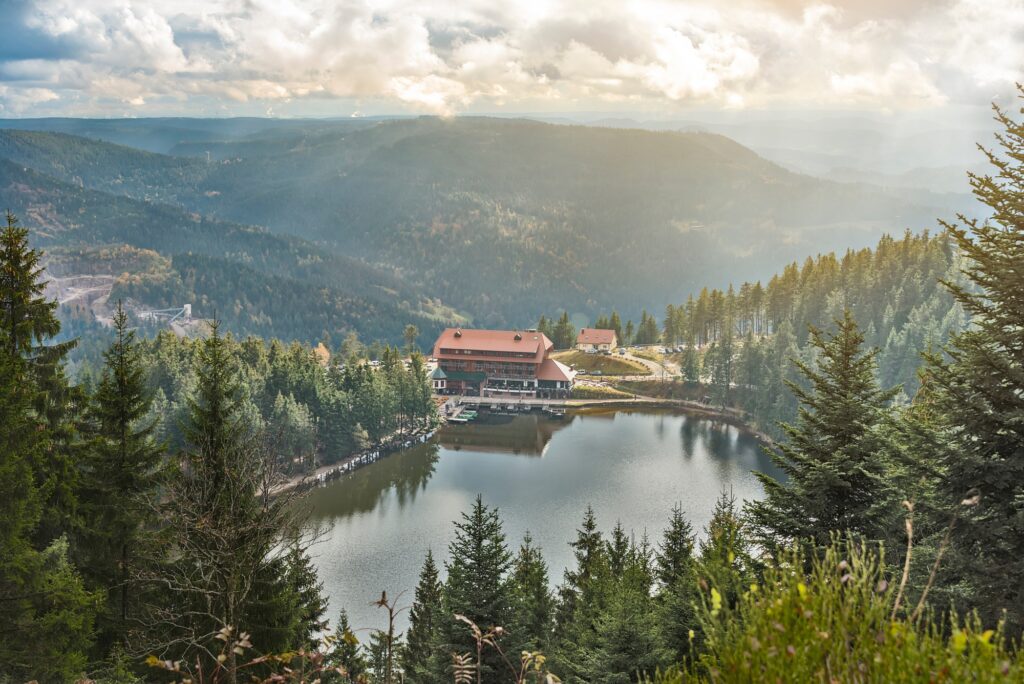
One of the “Mümmlein” fell so deeply in love with a farmer’s son that she lost all track of time while dancing with him at a village festival. She realised her mistake too late, reached the “Mummelsee” and the palace in the water too late, and was punished for her transgression with death. According to the legend, the villagers saw a blood-red wave surge across the lake shortly afterwards.
👉 Here you can find the website of the “Erlebniswelt Mummelsee”.

Hegau: Why the “Poppele” Still Haunts This Corner of Baden-Württemberg
People in earlier times apparently could not resist a good legend with a spark of violence in it. And with our modern true-crime obsession, perhaps we are not so far removed. The legend of the “Poppele” is certainly a strong brew. (“Hegau”, by the way, is the hilly volcanic landscape just north of Lake Constance, studded with conical hills and castle ruins.) The almost endearing name goes back to the castle steward Popolius Maier, who left his enemies and his debtors to rot in dark dungeons and is even said to have imprisoned a man of the cloth, an abbot. The abbot duly cursed the cruel steward.
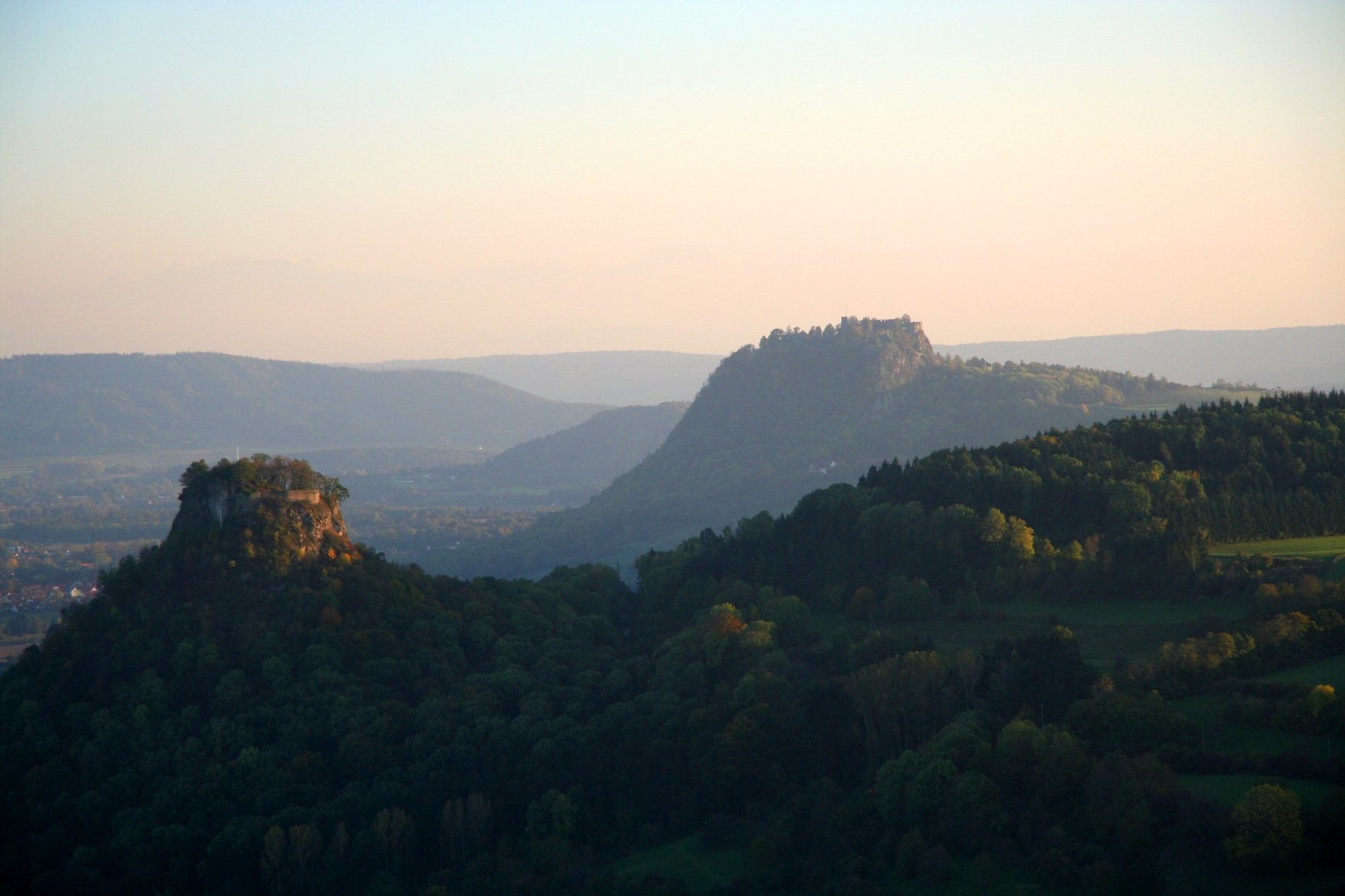
He prophesied that after his death, and long after his castle lay in ruins, the steward would haunt the “Hegau” restlessly. And that he would visit small misfortunes on the people of the region, so that they would curse his name for all eternity. It did not take long after that curse for the “Poppele” to fall from his horse and lose his life. He has been up to mischief in the “Hegau” ever since.
Frequently Asked Questions about Baden-Württemberg
Where is Baden-Württemberg and how do you get there?
It is Germany’s southwest corner, bordering France and Switzerland. Stuttgart has an airport of its own, and trains from Paris reach the city in about three and a half hours.
What should first-time visitors see?
The Black Forest for hiking trails and spa towns such as Baden-Baden, Lake Constance for its lakeside villages, and Heidelberg for the castle above the old town.
When is the best time to visit?
May to September suits hiking, cycling and swimming in the lakes. December brings the Christmas markets of Stuttgart and Esslingen, while the Black Forest ski lifts run from January.