


Bremen is the German city everyone has heard of and almost nobody can place. It sits in the northwest, on the river Weser, and it has been trading coffee, wine and spices for six centuries. That history is still edible, from a fresh fish sandwich to a wine cellar built in 1405.
Bremen lies in northwestern Germany, about 60 kilometres inland from the North Sea. It’s roughly an hour by train from Hamburg and 4,5 hours from Amsterdam. Around 570,000 people live here. Together with the port city of Bremerhaven it forms Germany’s smallest federal state.
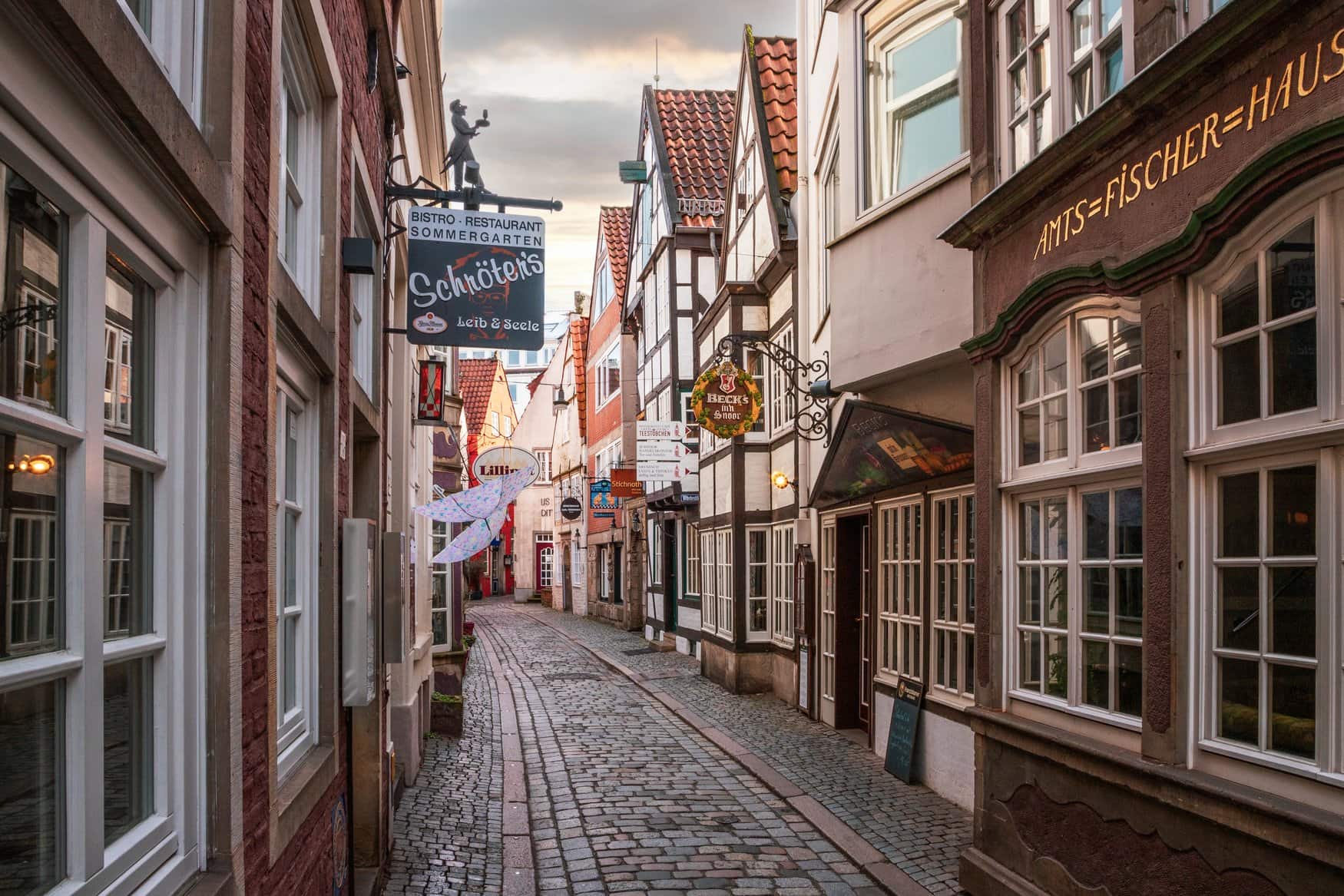
The city is a Hanseatic one, meaning it grew rich through maritime trade rather than through kings. Its market square holds the Town Hall, begun in 1405, and the Roland statue of 1404. The ensemble was designated as a UNESCO World Heritage site in 2004. Two minutes away, the Schnoor quarter squeezes fishermen’s houses from the 15th century into lanes barely wide enough for two people.
What Bremen Stands For
Three things, mostly. Trade, because ships brought coffee, wine, cocoa and spices up the Weser and made merchants wealthy. Independence, because Bremen has governed itself as a free city for centuries and still enjoys the argument. And a fairy tale: the Brothers Grimm sent four animals, a donkey, a dog, a cat and a rooster, on the road to Bremen to become town musicians. They never actually arrive in the story. The city adopted them anyway, and their bronze statue stands beside the Town Hall.
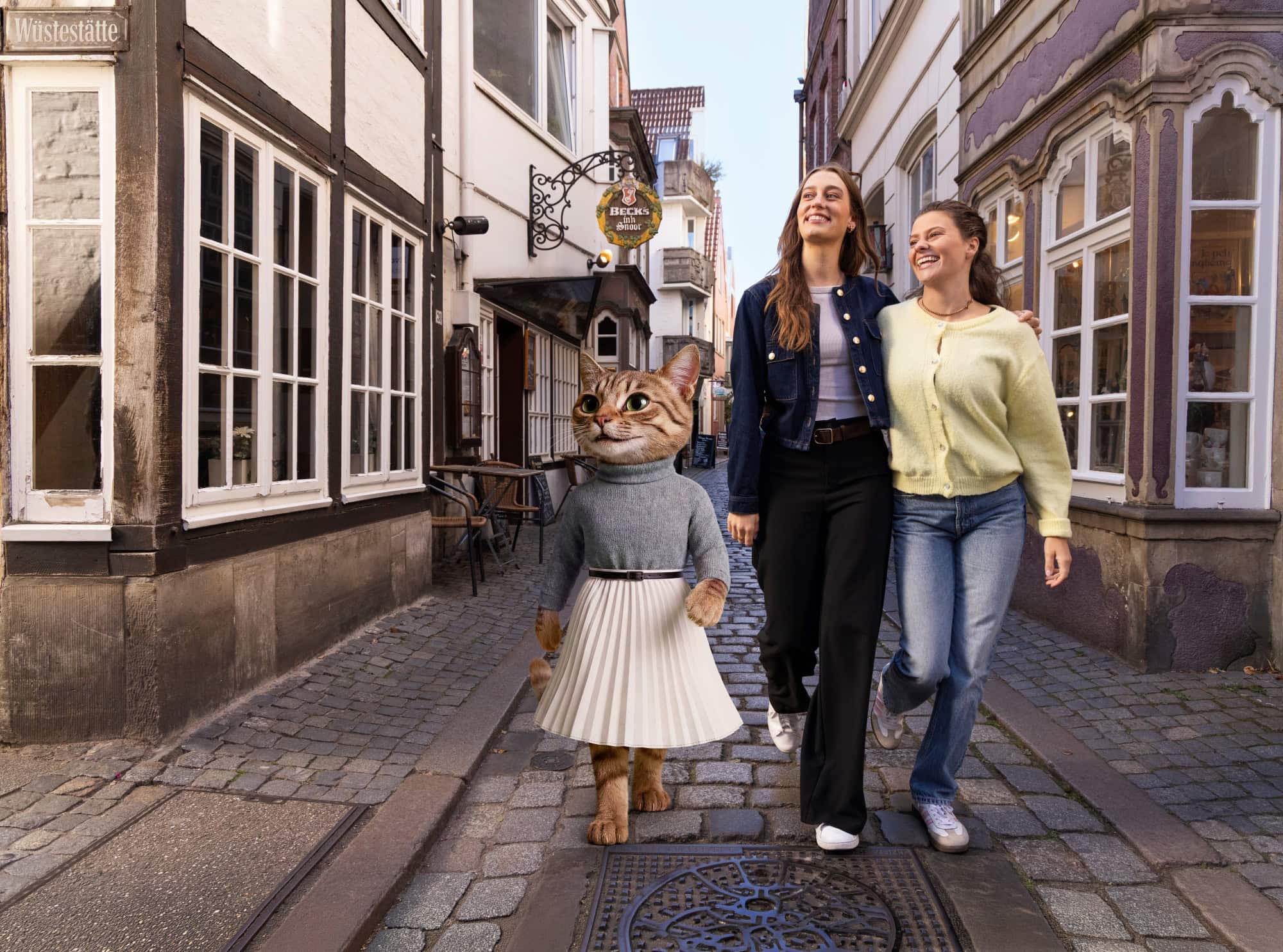
One of them stayed. She turns up in the Schnoor, walking upright along a lane called Wüstestätte in a grey knitted jumper, two locals strolling beside her, entirely untroubled by the cobblestones. Behind the half-timbered gables on either side, bakeries still work to 19th-century recipes. She knows exactly where she is going.
Street Food at Markthalle Acht
Behind the cathedral square, a former bank building now houses “Markthalle Acht“. Sliding doors, a glass roof, a dozen or so stalls: Korean next to Ghanaian, Ukrainian next to vegetarian, plus produce from farms around the city. It operates on a self-service basis with shared tables. Sharing several is the sensible approach.
Outside on the “Domshof” square, the weekly market sells North Sea fish, regional vegetables and flowers under canvas. A fish sandwich at Fisch Bodes here is a must.
Germany’s Coffee Capital
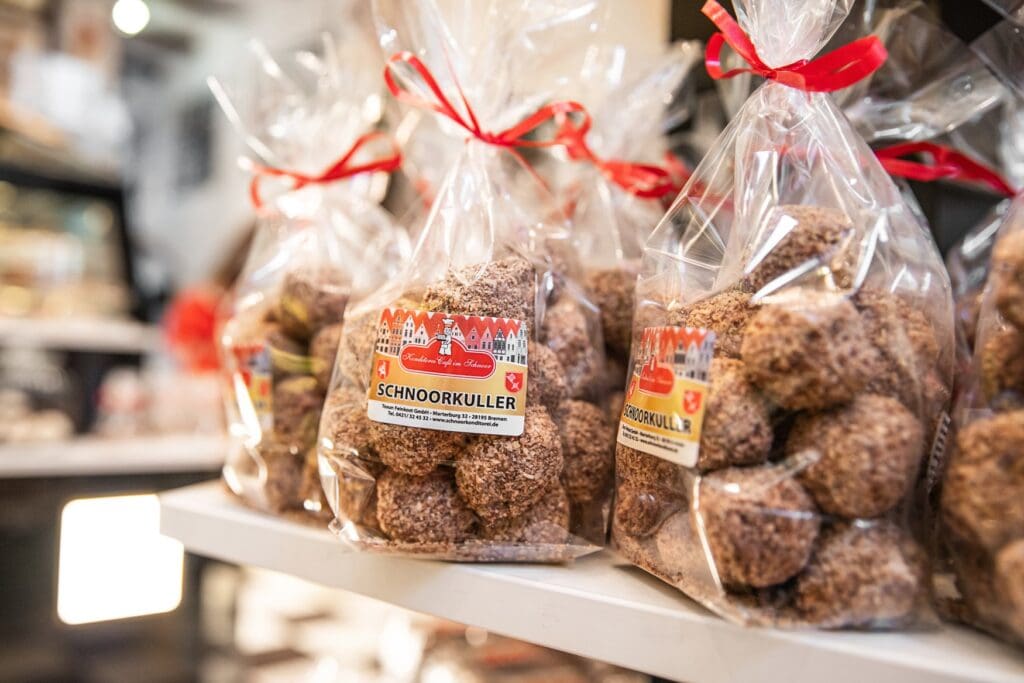
In 1673 the city council approved the first public coffee house in the German-speaking world. By the 1920s, several hundred roasteries operated in Bremen. A handful of very good ones remain.
Lloyd Caffee has been roasting since 1930 and works out of the old Kaffee HAG factory by the timber harbour. The building includes a listed marble hall from 1914, white Carrara stone with art nouveau display cases, which visitors can see on a tour of the roastery. Münchhausen has stayed in the same family since 1935 and uses a long, slow roast. Smaller roasters have opened in the Überseestadt harbour district and in the Viertel, Bremen’s most relaxed neighbourhood.
Sweets That Need a Local Translator
Kluten are bars of peppermint fondant, half dipped in dark chocolate, made to an 1865 recipe. Babbeler are menthol sugar sticks wrapped in paper, invented in 1886 and traditionally sold in pharmacies and tea shops. The name comes from the Low German word for mouth. Both travel well and therefore make excellent souvenirs.
Klaben first appears in city records in 1593. It is a dense yeast cake, heavy with butter and dried fruit, baked in a rectangular tin and glazed with egg instead of dusted with sugar. The bakeries in the Schnoor quarter still make it fresh every morning, alongside cinnamon rusks and hand-dipped Kluten. That lane the cat walked down leads straight to them.
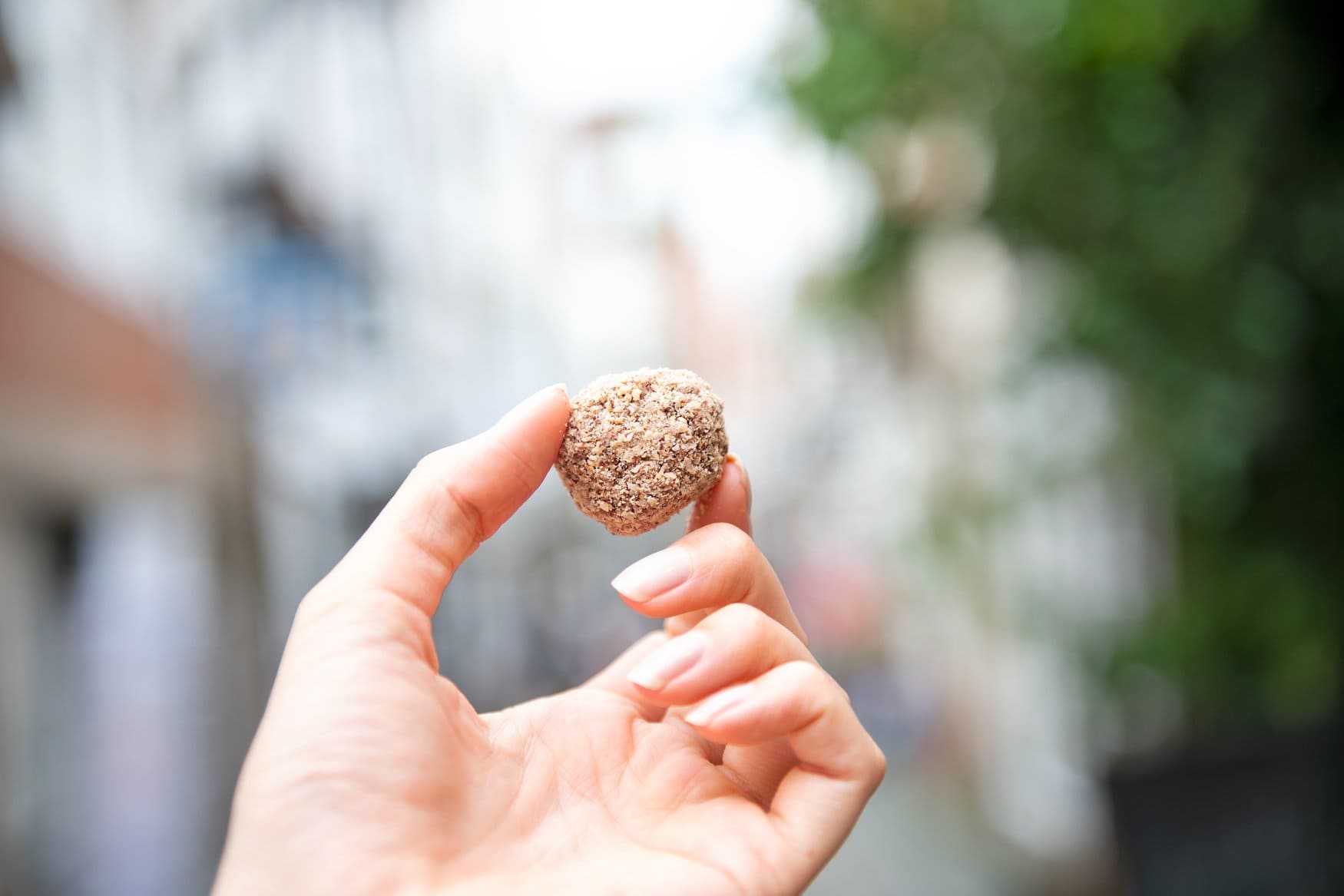
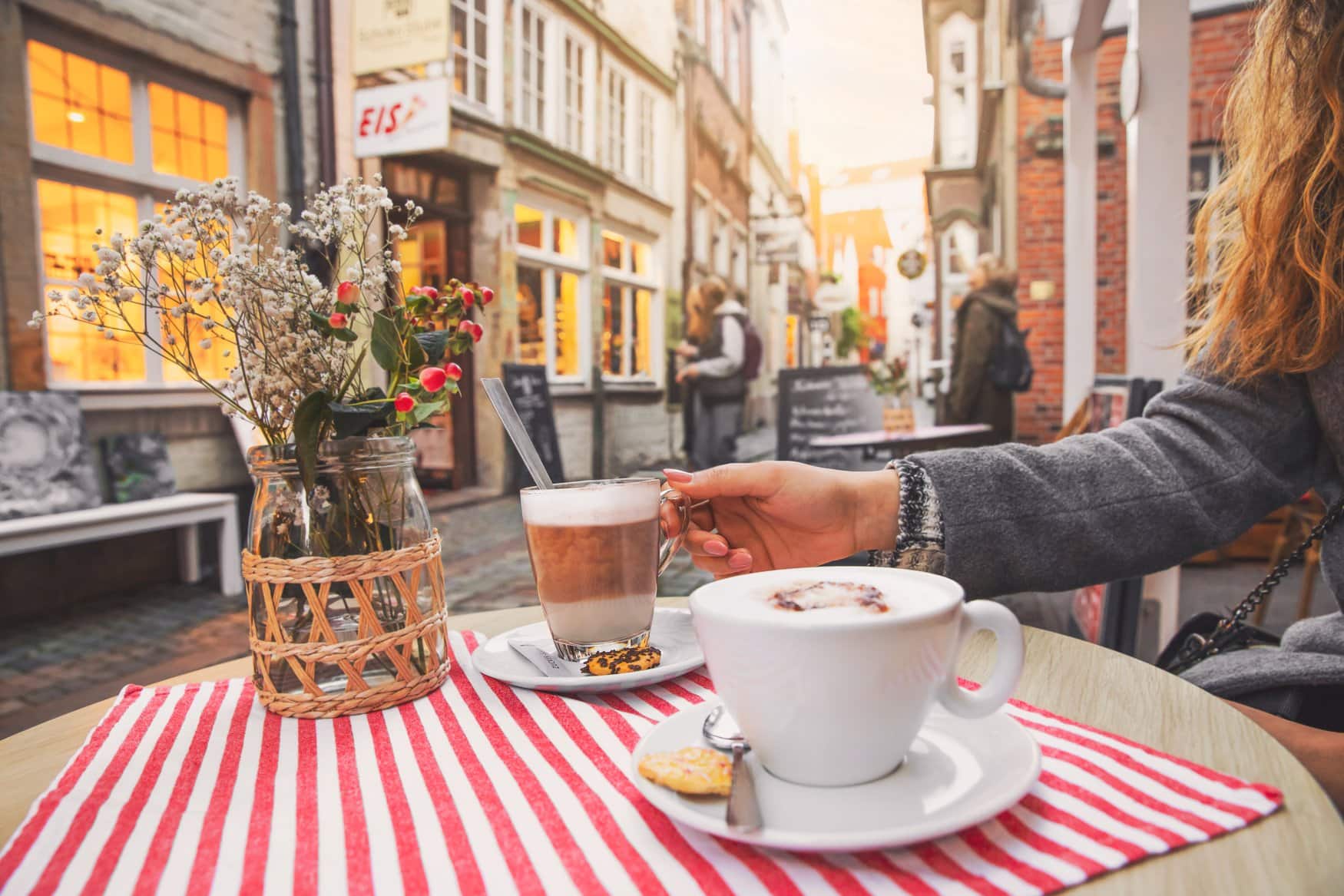
The best name in Bremen belongs to a sweet. The round cobblestones in the Schnoor lanes were once called Schnoorkuller, and confectioner Rudolf Dövener borrowed the word for something edible: a ball of nut meringue with a nougat centre, coated in milk chocolate and roasted nut brittle. The Schnoorkonditorei still makes them to its own recipe.
Six Metres Under the Market Square
The Bremer Ratskeller has been storing and selling wine since 1405, which makes it one of the oldest wine cellars in Germany. Around 650 German wines from all 13 growing regions sit down there, the largest collection of its kind anywhere. The Rosekeller holds Germany’s oldest barrel wine, a Rüdesheimer from 1653. Nobody drinks it any more. Upstairs, the restaurant serves Knipp, a coarse grain sausage, and Labskaus, a beef and beetroot dish that looks alarming and tastes very good.
Schlachte: Six Centuries of Drinking by the River
Ten minutes from the Schnoor, the Weser opens up and the Schlachte runs along it for 660 metres. The name comes from the Low German word slait, meaning to drive in, and refers to the heavy wooden piles medieval merchants sank into the riverbank to moor their trading ships. A document from 1250 records it for the first time. This was Bremen’s harbour for centuries, the place where wine, coffee, cocoa and spices came ashore. Once the river silted up, cargo moved downstream to Bremerhaven.
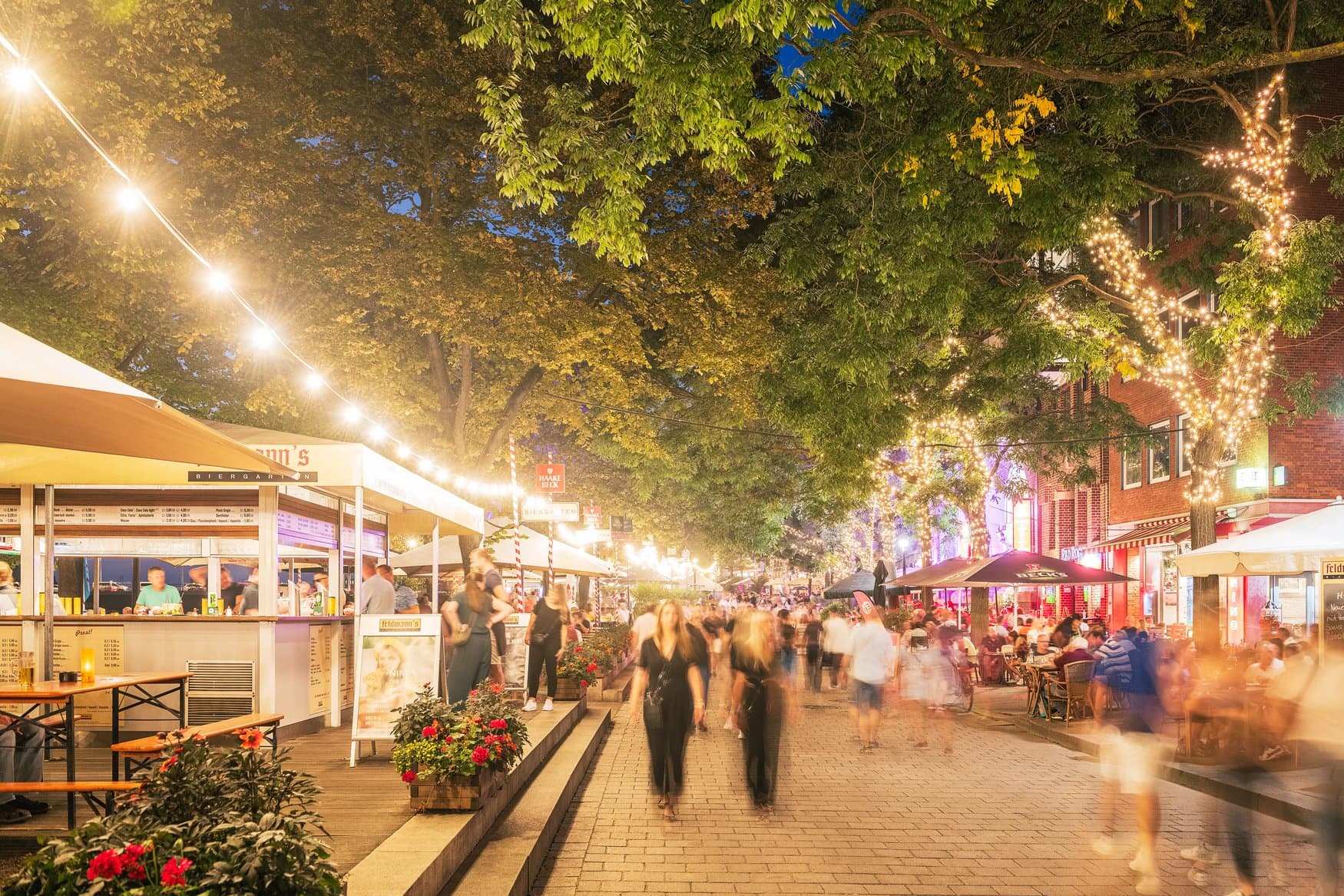
The drinking stayed. By 1822, roughly half the houses along the Schlachte held coffee, beer or wine taverns. The promenade you walk today was rebuilt between 1993 and 2000, with granite paving, sixty trees and moorings for excursion boats. Terraces now run right to the water’s edge, historic ships lie at the quay, and prices range from a fish sandwich in a paper tray to dinner on deck. In December the whole stretch turns into the Schlachtezauber, a Christmas market with a medieval set, blue lighting and mead in clay cups.
The River, the Beer, the Fifth Season
Along the Schlachte promenade, terraces and moored ships line the Weser. Beck’s has brewed here since 1873, and a craft beer scene has grown around it, including a coffee roastery working under a brewery roof in the Walle district.
Autumn belongs to the Freimarkt. From 16 October to 1 November 2026 the 991st edition takes over the Bürgerweide fairground with around 40 rides, sugared doughnuts and roasted almonds, plus a parade through the centre on 24 October. Bremen calls this its fifth season and has celebrated it since 1035, which makes it Germany’s oldest funfair.
👉 Find out more about Bremen at www.bremen.eu!
Frequently Asked
Frequently asked questions about food in Bremen
Where exactly is Bremen?
In northwestern Germany, on the river Weser, about 60 kilometres from the North Sea and around an hour by train from Hamburg.
What is Bremen known for?
Hanseatic trade, coffee, its UNESCO-listed Town Hall and Roland statue, and the Brothers Grimm tale of the Town Musicians.
Where can I find street food in Bremen?
At Markthalle Acht on Domshof square, a former bank building with about a dozen stalls, from Korean to vegetarian.
What should I eat in Bremen?
Fish from the weekly market, Knipp or Labskaus in the Ratskeller, and Kluten, Babbeler or Klaben as sweets to take home.
Is Bremen expensive?
Less than Hamburg or Munich. Street food plates stay in single figures, and a cellar tour costs less than a cinema ticket.