






May Day is a special day. Not only is it a public holiday in Germany, but on May Eve, people across Germany celebrate the “Dance into May.” But what is the true meaning of Walpurgis Night in Germany? And how does Labor Day fit into this?
Why is Walpurgis Night in Germany Celebrated?
Perhaps some still know the legend: On the night of April 30 to May 1, witches fly on their broomsticks to the “Blocksberg” and dance there with the devil. It is Walpurgis Night. But why is it called that?

Behind the name lies not a witch, but a saint. Namely, Saint Walburga, whose name was often spelled “Walpurga” in the past. She was a nun in what is now England who lived in the 8th century and was canonized in the 9th century—on May 1st, no less! In the Middle Ages, a vigil was often held the night before, meaning a midnight prayer service. Today, February 25 is considered the saint’s feast day, but the night before May 1 remains Walpurgis Night.
Why do Witches Celebrate at the “Blocksberg”?
In fact, Saint Walburga has absolutely nothing to do with witches. So where do the spell-casting broom-riders come into play? The answer to this question lies in folk belief and literature.
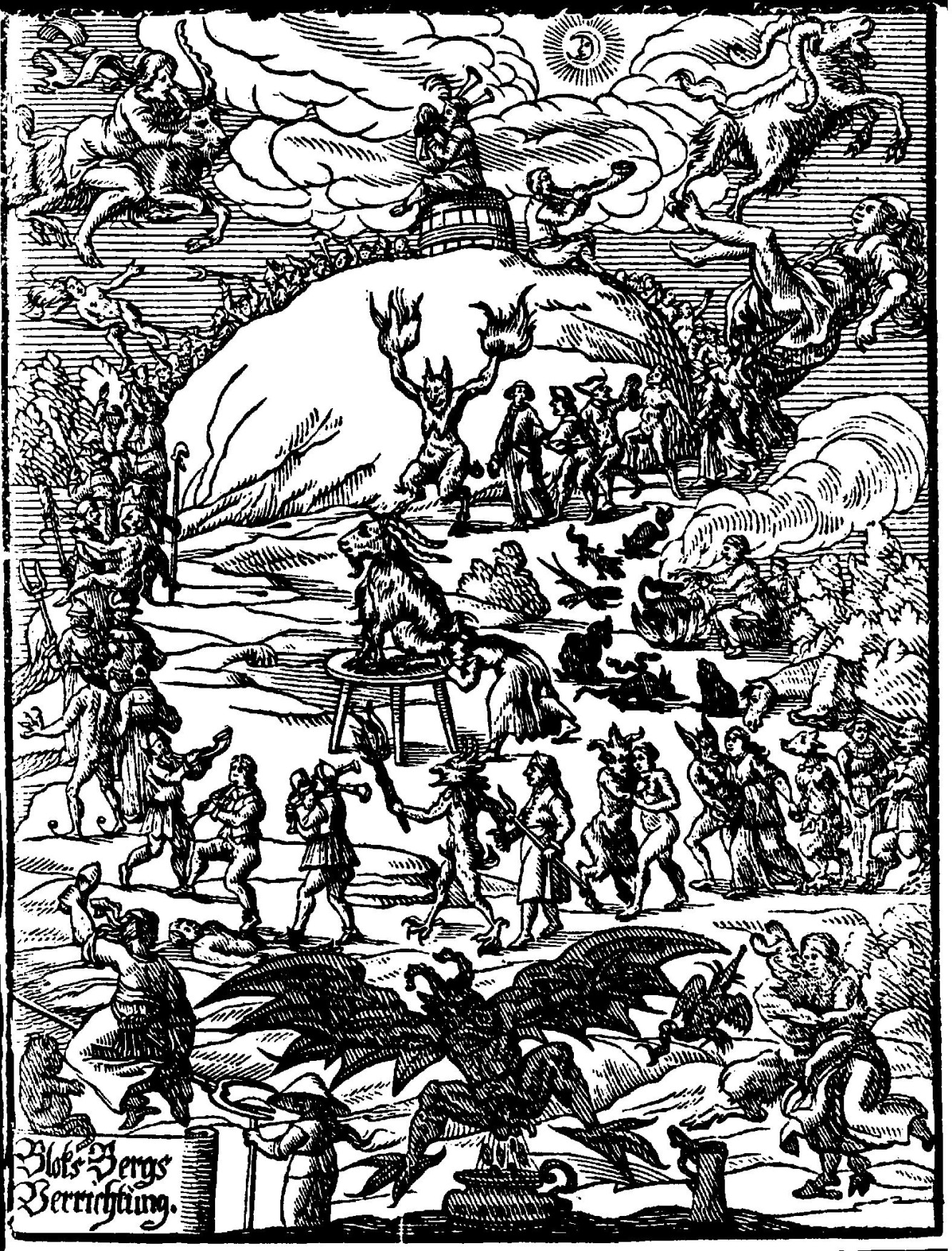
Belief in supernatural powers and women skilled in magic dates back many centuries in Europe. Depictions of women riding brooms or dancing with the devil already existed in the Middle Ages. However, belief in witches was particularly strong in the early modern period, that is, between the 16th and 18th centuries. A book by the writer Johannes Praetorius contains the first mention of the “Brocken” in the Harz Mountains, also known as “Blocksberg”.
According to the author’s account, witches are said to dance with the devil there on Walpurgis Night. Praetorius specifically linked existing notions of witches to Walpurgis Night and the Brocken. According to his account, the devil sought to overshadow the feast of Saint Walburga and therefore chose this night. This notion was further reinforced by the fact that on the night of May 1, celebrations to welcome spring were indeed held throughout Europe. Presumably a traditional remnant from pre-Christian times. And by the time Walpurgis Night was described in Goethe’s “Faust I,” the legend had become an integral part of the culture.
Is Walpurgis Night in Germany Still Celebrated?
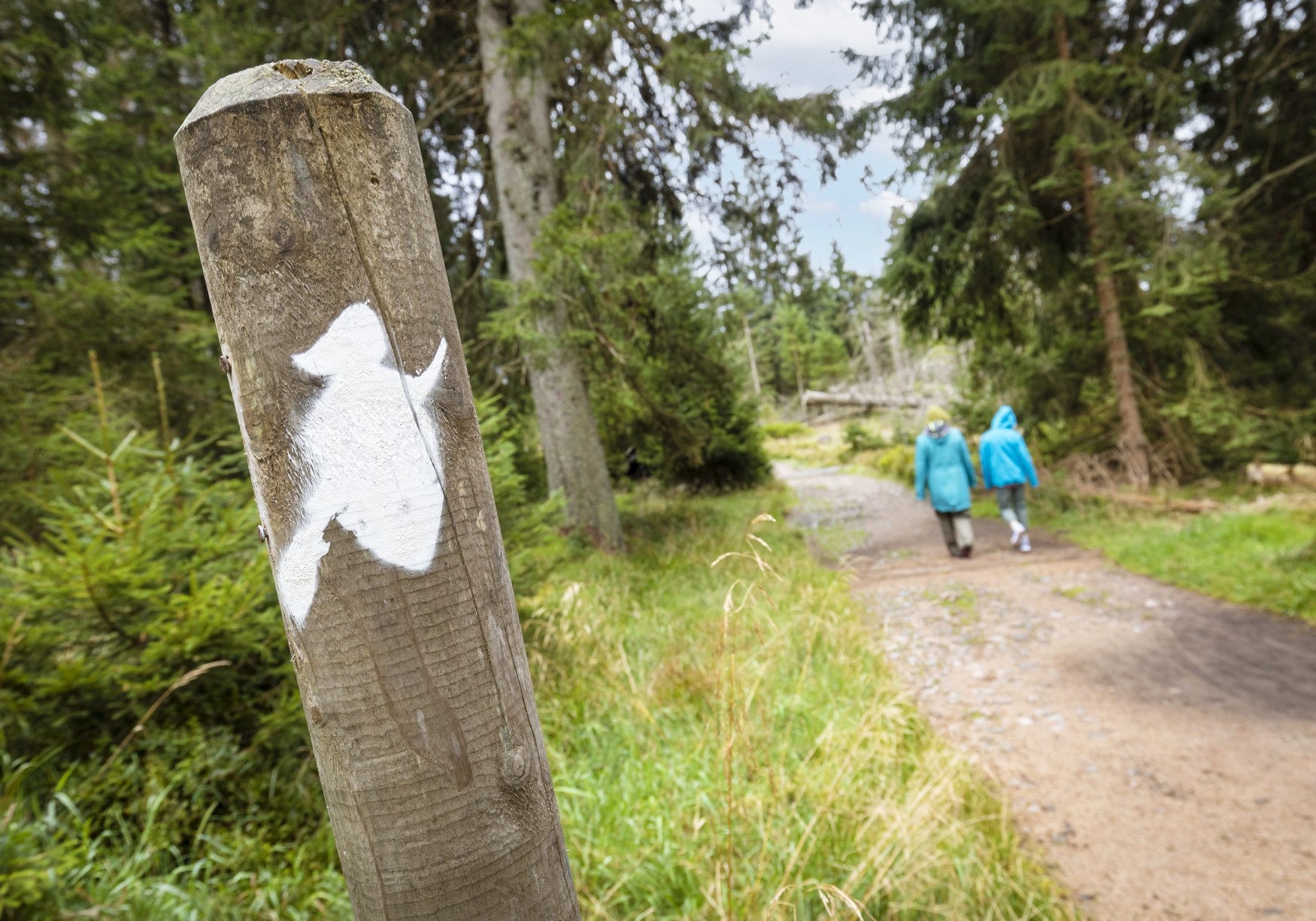
The first actual celebration on the Brocken was not held until 1896, organized by the bookseller Rudolf Stolle. However, only male guests were invited. Today, Walpurgis Night continues to be celebrated, particularly in the Harz Mountains, specifically at the Brocken. One of the largest celebrations takes place in Braunlage: Starting at 6 p.m., a large Walpurgis procession winds its way through the town, with people wearing all sorts of spooky costumes. At 7 p.m., a big celebration begins in the spa gardens with live bands and a fire show. And late at night, a portion of Goethe’s “Faust” is performed on the floating stage in the spa park pond, before a grand fireworks display brings Walpurgis Night to a close.
👉 Here you find the homepage of the Harz National Park.
What Does Walpurgis Night Have in Common With the May Dance?
The May Dance, as it is celebrated today in many places in Germany, has little to do with Walpurgis Night as a witches’ festival. The arrival of spring has been celebrated for centuries. In many smaller towns and communities, not only in Germany, erecting a Maypole is also part of the tradition. For this, a tree trunk is set up in the town center, often elaborately decorated with colorful streamers and a green wreath. People then dance around the Maypole.
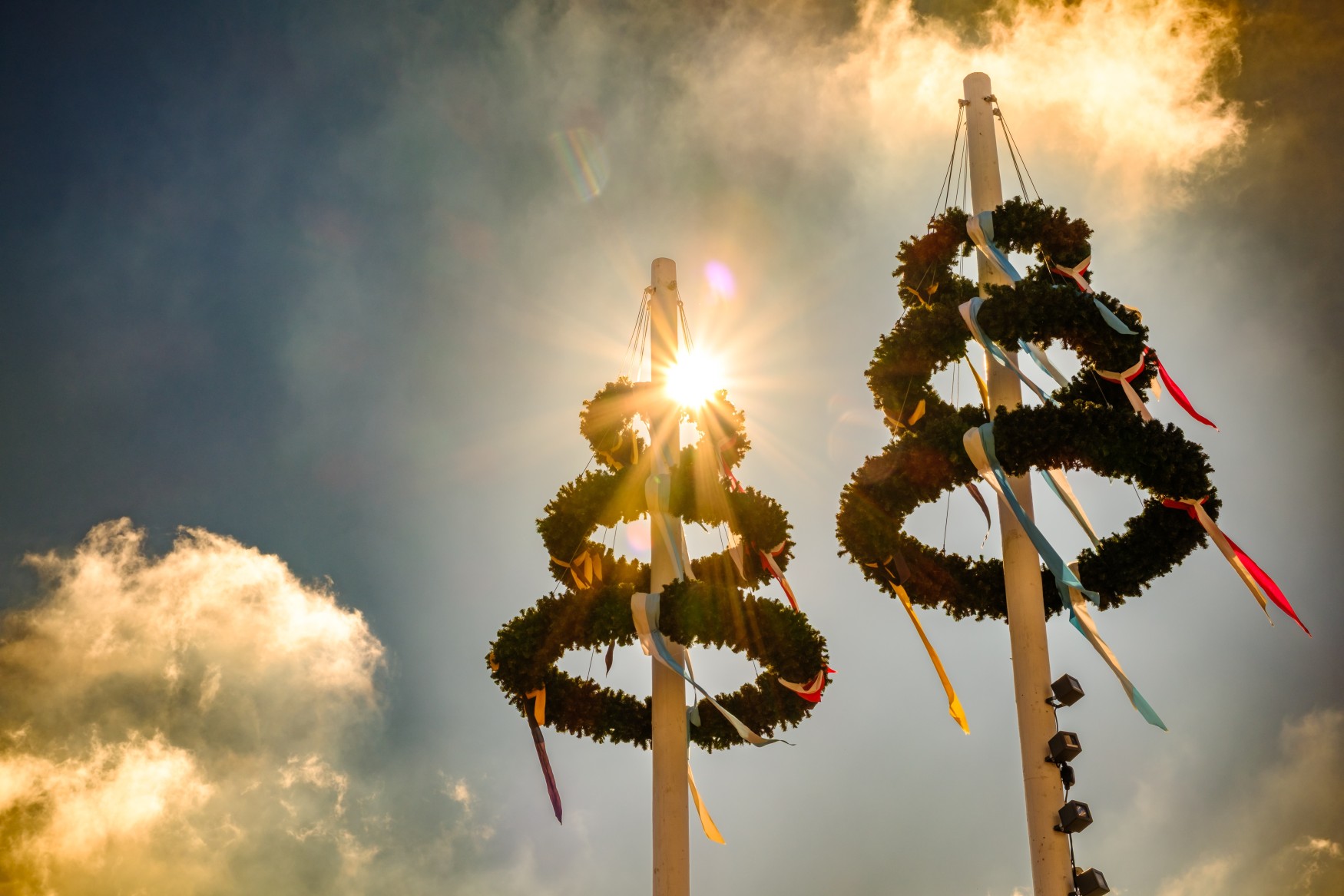
In some regions of Germany, it is also customary to erect so-called “love maypoles.” Traditionally, on the night of May 1, young men from a town or village set up a small, decorated tree—often a young birch—in front of the house of the girl they have a crush on. Often, a heart bearing the name of the beloved is attached to the tree. In leap years, however, it is the women who erect the tree. Nowadays, though—after all, we live in the 21st century—the “rules” aren’t so strict anymore. Anyone who wants to put up a Maypole simply does so.
And why is May 1st Labor Day?
The fact that May 1st is a statutory holiday as Labor Day in Germany has nothing to do with Walpurgis Night or the May Day dance. At the founding congress of the Second International in 1889, an international alliance of socialist and social democratic parties, May 1 was proclaimed the “Day of Struggle for the Labor Movement.” This was done in memory of eight demonstrators sentenced to death who had been arrested during the “Haymarket Riots” in Chicago in 1886.
In Germany, May 1 was then declared a legal holiday by the National Socialists in 1933—cynically, one day before the trade unions in Germany were brought into line or dissolved. After World War II, however, May Day was reinstated by the Allies in 1946 and has remained a holiday ever since.

In many cities across Germany, demonstrations take place on May 1, often organized by political parties or labor unions. Most protests are in support of better working conditions. These events frequently lead to riots and clashes between protesters and the police, particularly in Hamburg, Berlin, and Leipzig.
FAQ
Why is it called Walpurgis Night?
The night from April 30th to May 1st is named after Saint Walburga.
Why do the witches dance in Walpurgis Night?
The dance of the witches is a fiction by German Author Johannes Praetorius.
Why is there a May Day, or “Dance into May”?
The May Day is probably a remnant of pre-Christian tradition in Europe.