


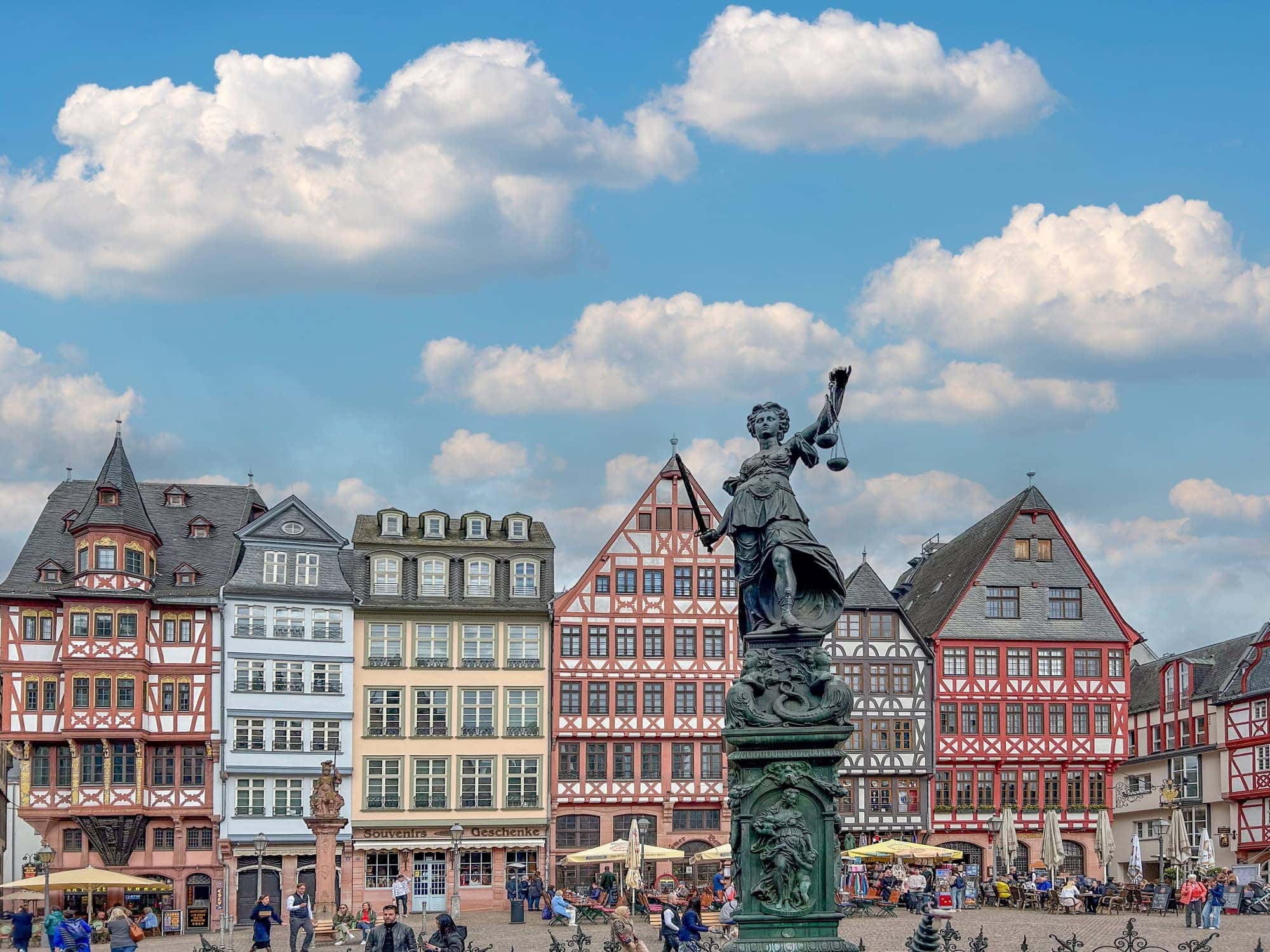
Frankfurt doesn’t exactly have a reputation for being a feast for the eyes within Germany. That’s why a city break in Frankfurt is somehow an unconventional idea. Yet the metropolis on the Main has so much to offer. Endless art and culture, the finest Hessian cuisine, a surprising amount of green space. And on top of that, there’s an impressive skyline that is unique in Germany. Simply a city with a high quality of life! Ten tips for your next trip to Frankfurt!
Marvel at Dinosaurs at the Senckenberg Museum
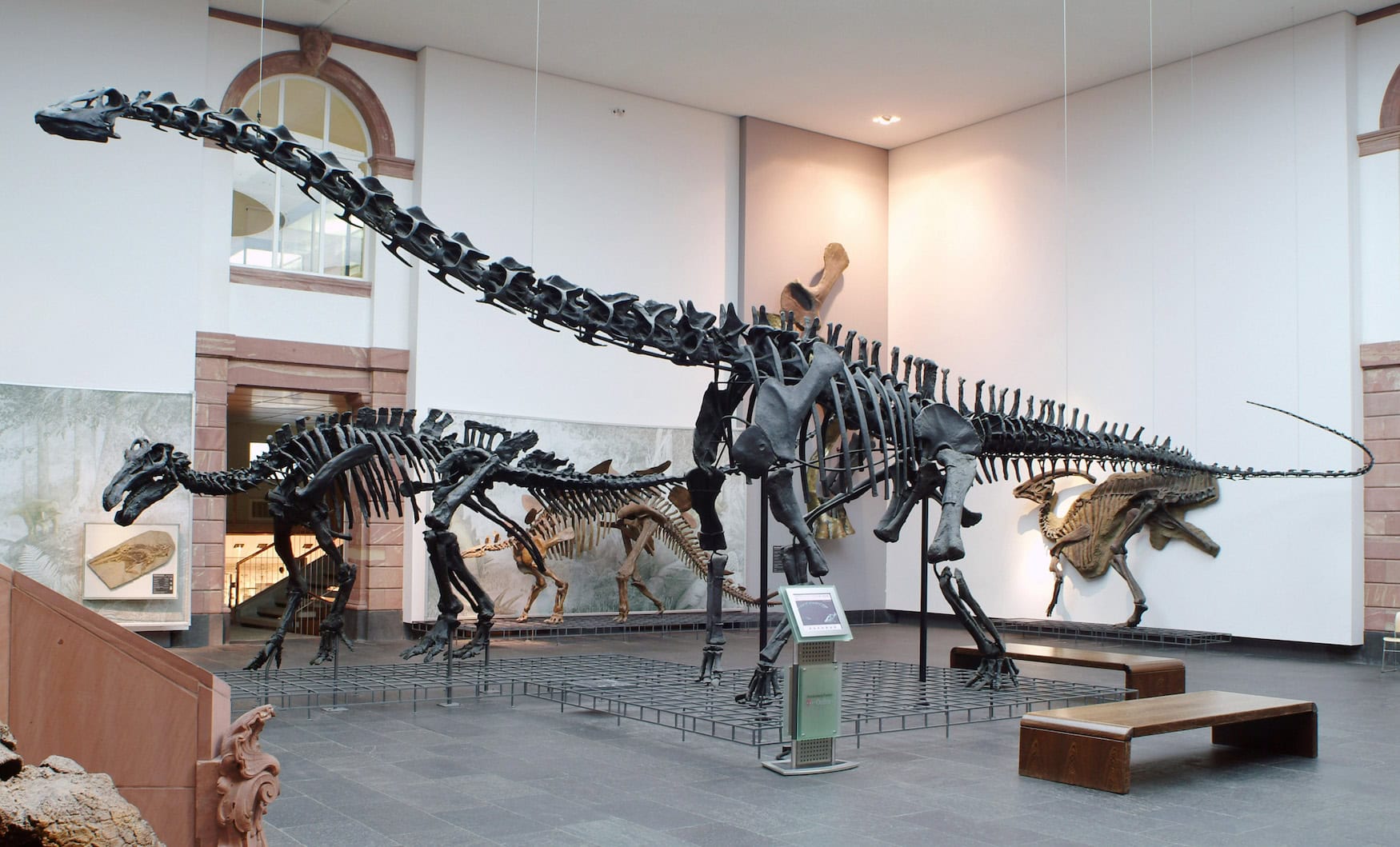
You have to tilt your head back to see the Tyrannosaurus Rex in its full size. For children, standing in front of the skeleton of this prehistoric giant is probably the most impressive experience. The Senckenberg Museum is one of the largest natural history museums in Germany and shows children and adults alike in a very exciting way how the earth and living creatures have developed and changed over millions of years. It’s not just the dinosaurs that take center stage here, but also the more than 1,000 preserved birds. The species-rich collection is rare in Germany.
👉 Click here to visit the museum’s website.
Admire the Skyline from Every Angle by Bike
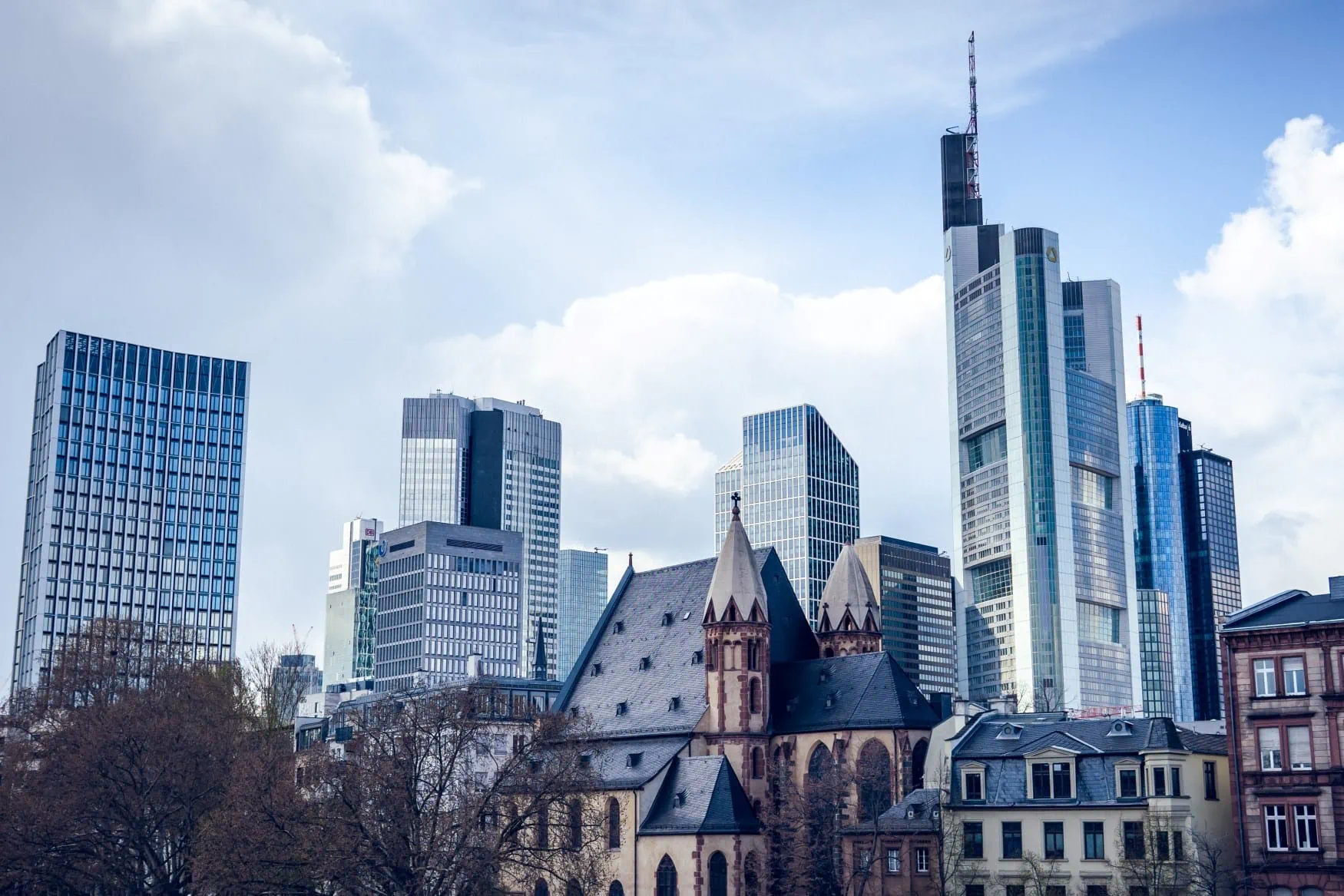
There’s no question about it: in Frankfurt, it’s the impressive skyline that makes the city so special, gives it its metropolitan character, and provides plenty of photo opportunities. The comparison with Manhattan is obvious (to Germans, at least), which is why the metropolis on the Main is also called Mainhattan. It is an expression of bold architectural dreams, high investments, and a lack of space that has led to skyscrapers huddling together like a flock of sheep during a thunderstorm.
A beautiful way to admire the skyline from all angles? By bike! There is something elemental about the wind whistling through the urban canyons as you race through them on your bike. If you like, you can stop at the Main Tower, Frankfurt’s only skyscraper with a viewing platform. From there, at a height of 198 meters, you can see Germany’s tallest skyscraper, the 259-meter Commerzbank Tower, as well as the high-rise buildings of Deutsche Bank and Sparkasse. And the skyline continues to grow.
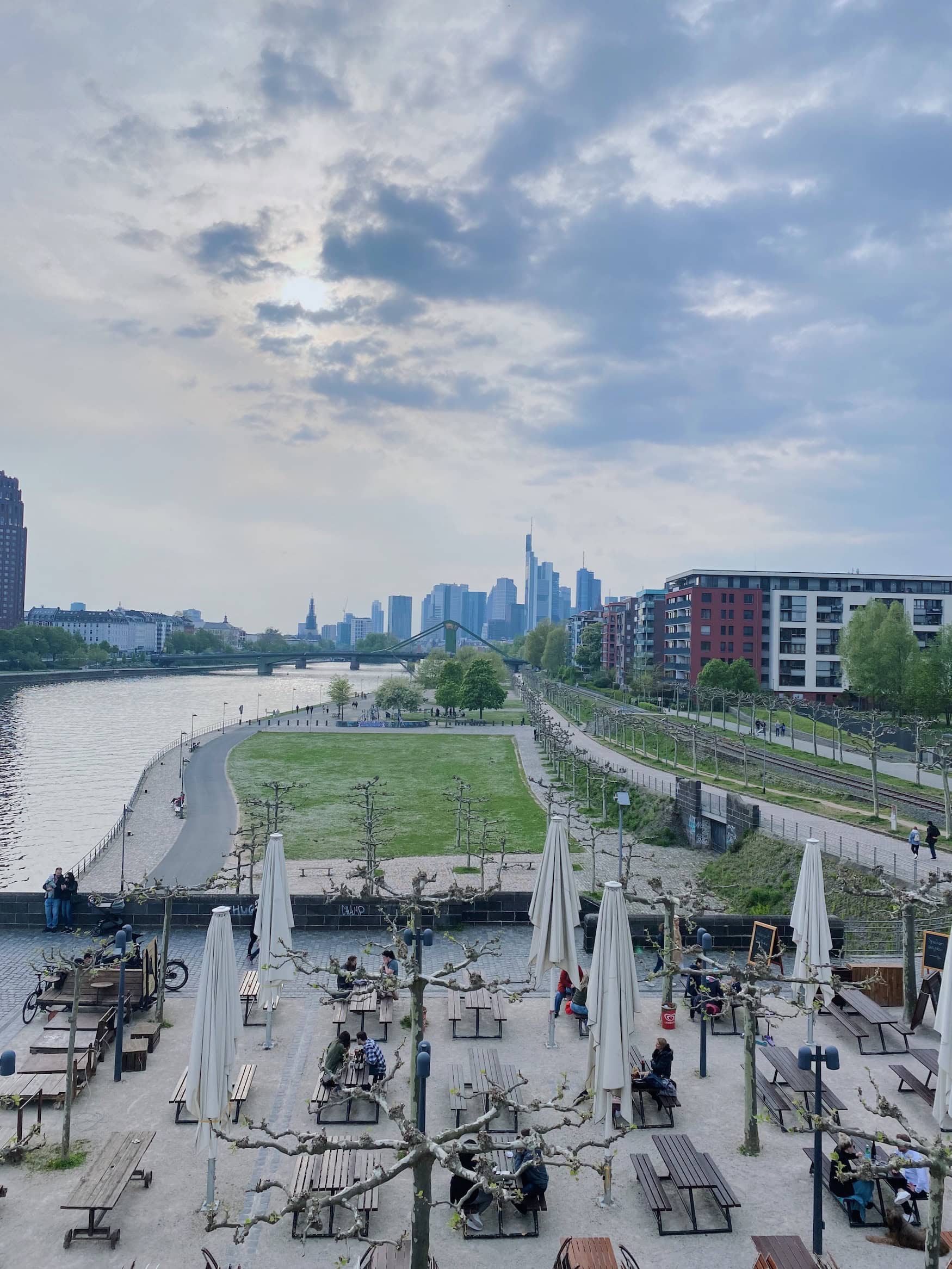
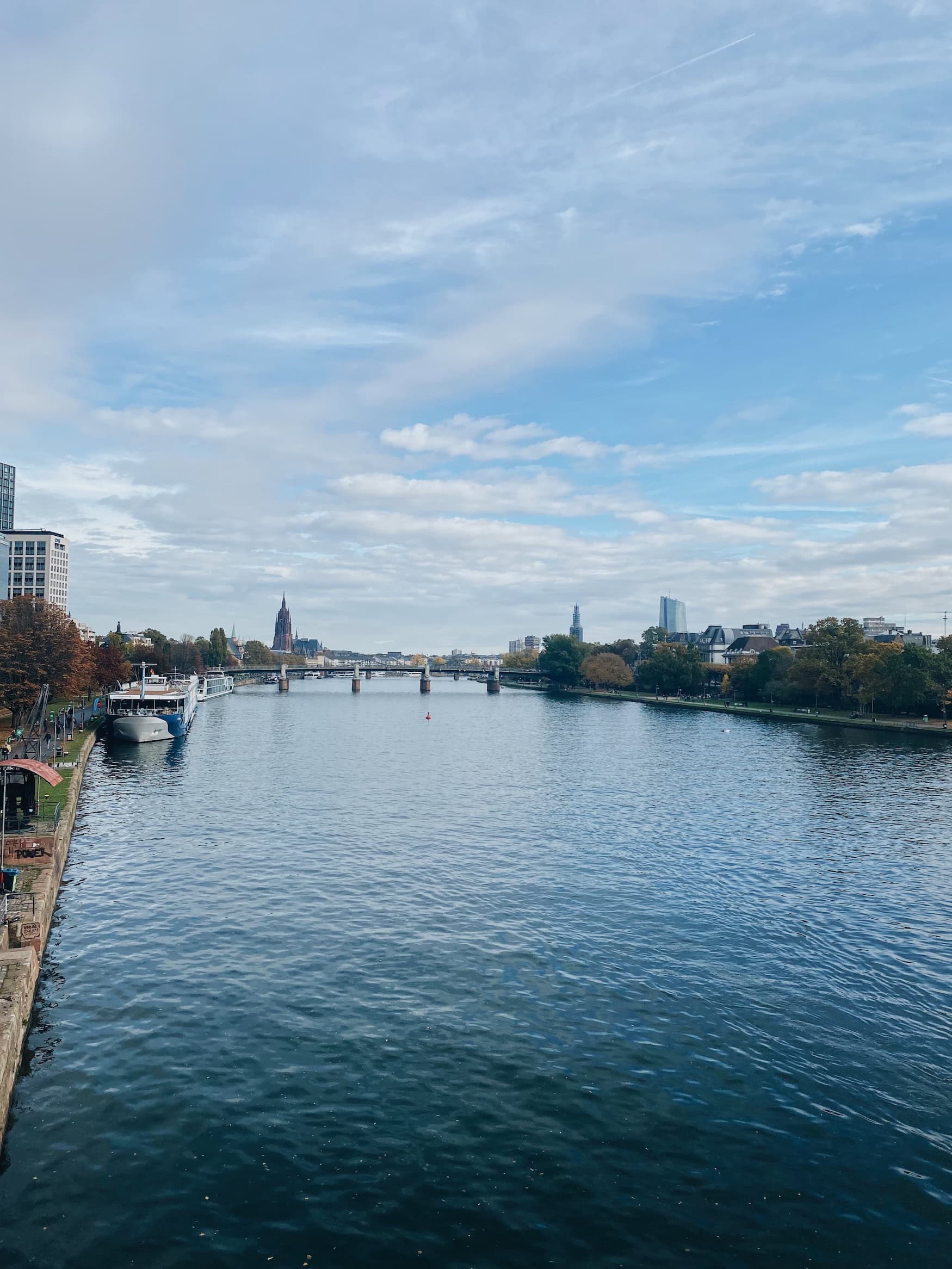
But the best thing is probably to admire the skyscrapers with their reflective facades from a distance – either from the banks of the Main or from the “Maincafé” in front of the Film Museum. Or you can cycle towards the Flößerbrücke, which connects the city center with the Sachsenhausen district. When the setting sun bathes the skyline in a glowing orange light in the evening, with the Ignatz Bubis Bridge in the foreground, you can hardly get enough of the panorama.
Eat your Way Around the World at the Kleinmarkthalle
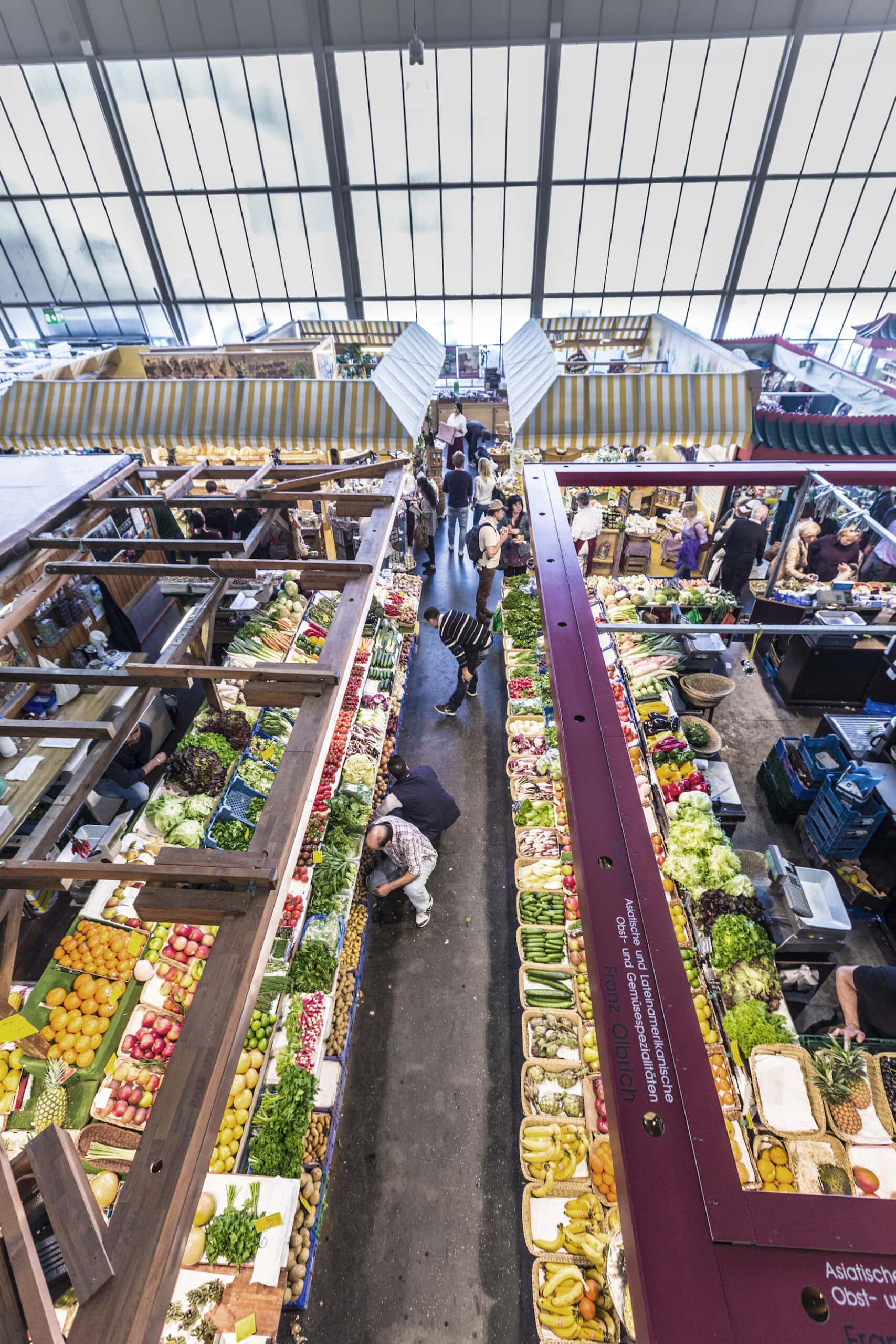
Hungry for the world? Then head to the Kleinmarkthalle in the city center. It is both a traditional market and a culinary world tour. From Monday to Saturday, around sixty traders offer everything from fresh fruit from overseas to traditional Frankfurt “Rindswoscht”, the local sausage. Ilse Schreiber’s sausage stand is legendary. It’s best to get there early, as the stand is very busy at lunchtime.
The hall, which dates back to the 1950s, is not only a must for gourmets, but also interesting for architecture fans. The building was destroyed during the war and rebuilt in 1954. Today, it has one thing above all else: a lot of patina. This is very unusual for Frankfurt and therefore well worth seeing.
Museum Hopping and Strolling Along the Main
There is no clear answer to the question: “Which is the best art museum in Frankfurt?” Hardly any other city in Germany has such a high concentration of excellent art museums, all of which are located along the Museumsufer (museum embankment) on the Main River. The Schirn Kunsthalle is one of the most prestigious museums in the country and regularly hosts groundbreaking exhibitions (note: the building is undergoing renovation until 2027, and the Kunsthalle is temporarily moving to the Dondorf Druckerei in Bockenheim). The Städel is also at the top of the list for many art lovers, where, in addition to an impressive permanent exhibition that includes Monet’s work “Luncheon,” there are always great special exhibitions. It is probably the oldest and most renowned museum foundation in Germany.
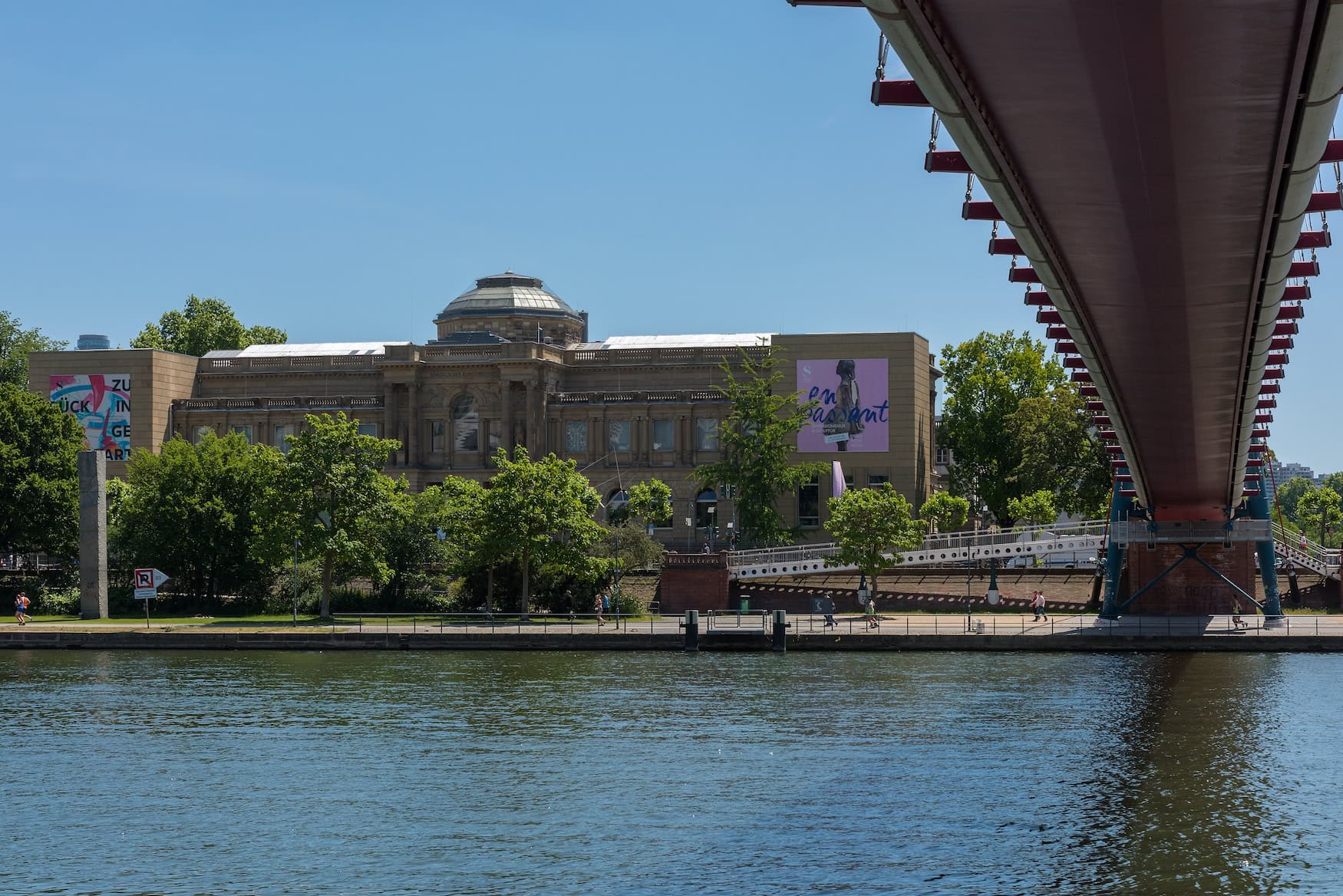
Then there is the Historical Museum, the Architecture Museum, the Romanticism Museum, the Film Museum, and the Museum of Applied Arts—to name just a few. A nice way to end the art tour is at the Liebieghaus, which looks invitingly pretty from the outside. The villa, built in 1896, houses a collection of sculptures from antiquity to classicism. The quaint garden with a café is also lovely, where you can indulge in art yourself and linger until your legs have recovered from museum hopping.
Experience German History at St. Paul’s Church
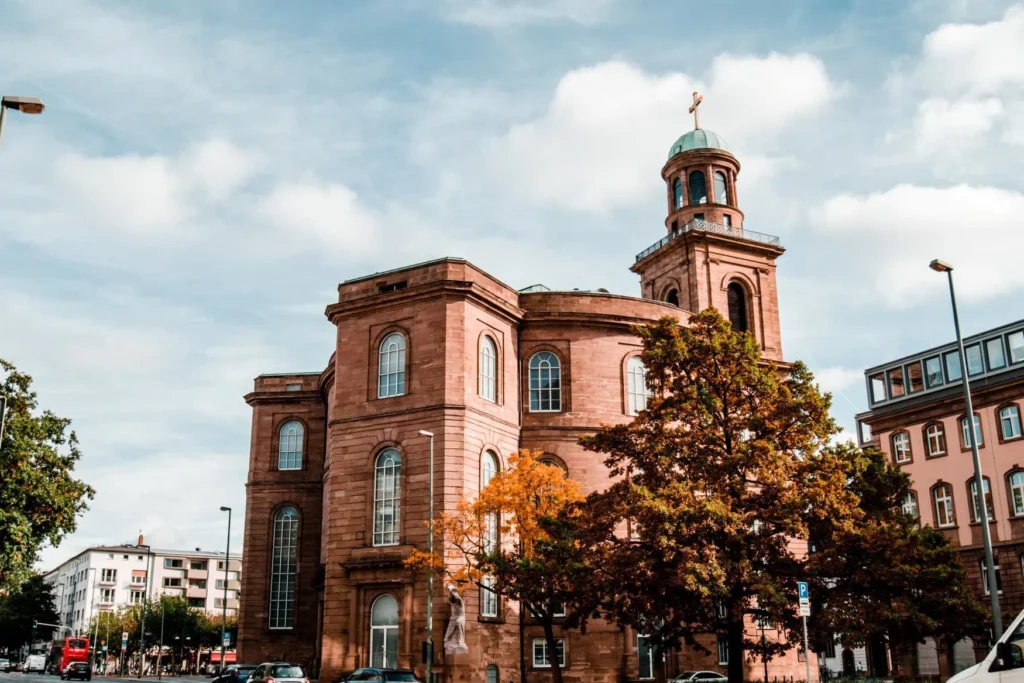
If you are interested in German history, you should visit St. Paul’s Church, which is part of every history lesson. This is where the first freely elected German parliament gathered between 1848 and 1849. It is a national monument that still commemorates the beginning of German democracy today. The classicist rotunda was built between 1739 and 1833 and was Frankfurt’s main Protestant church until 1944. Today, events, exhibitions, concerts, and award ceremonies take place here. The permanent exhibition “PAULSKIRCHE. Democracy, Debate, Monument” is fascinating, vividly illustrating the history of the church itself and the path to German unity and democracy.
👉 Click here to visit the Paulskirche website.
Stroll Through the New Old Town
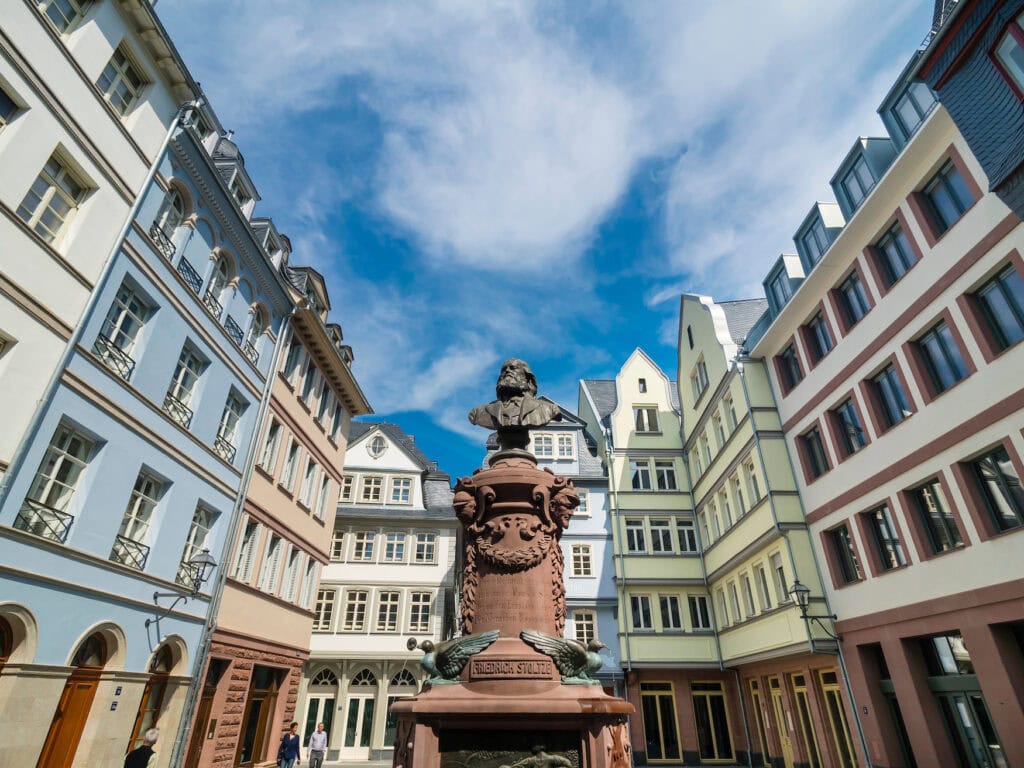
It looks old, but it’s new—or let’s say relatively new. The buildings between the cathedral and the Römer, the city’s famous town hall, were only built a few years ago. Bombs destroyed the medieval old town during the war. Construction of the new old town began in 2012. Even though many Frankfurters themselves have not yet warmed up to the new heart of the city: the graceful, narrow houses in pastel blue, yellow, and beige that line the Hühnermarkt are really pretty to look at. Highlights include the “Alte Kaufhaus”, which was reconstructed by the Basel architects “Morger + Dettli,” and the “Haus der Goldenen Waage”, which is a gem with its reconstructed Renaissance façade.
Taste Frankfurt Classics at an Apple Wine Tavern
The “Äppelwoi” (hessian apple wine) culture is lived and developed with passion in Frankfurt. Whether in the orchards of the Wetterau, the wine presses, or the pubs. Anyone vacationing in Frankfurt should not miss a visit to an apple wine tavern. Good places to go are, for example, Apfelwein Solzer in the Bornheim district or Ebbelwoi Unser in the Sachsenhausen district. In addition to apple wine from a “Bembel,” as the clay jug is called, the traditional dish of green sauce with potatoes is an absolute must when visiting an apple wine tavern.


Stylish Accommodation
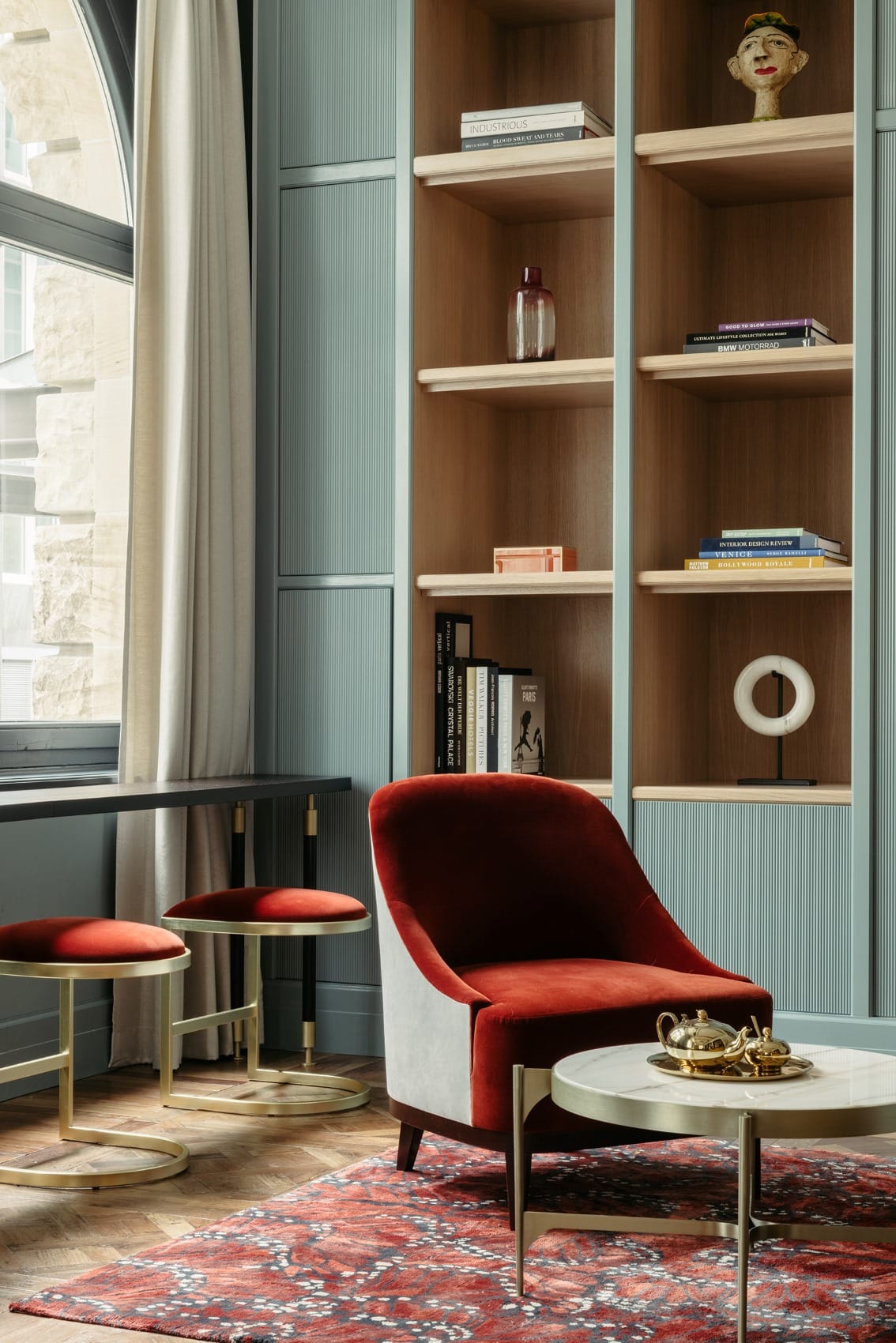
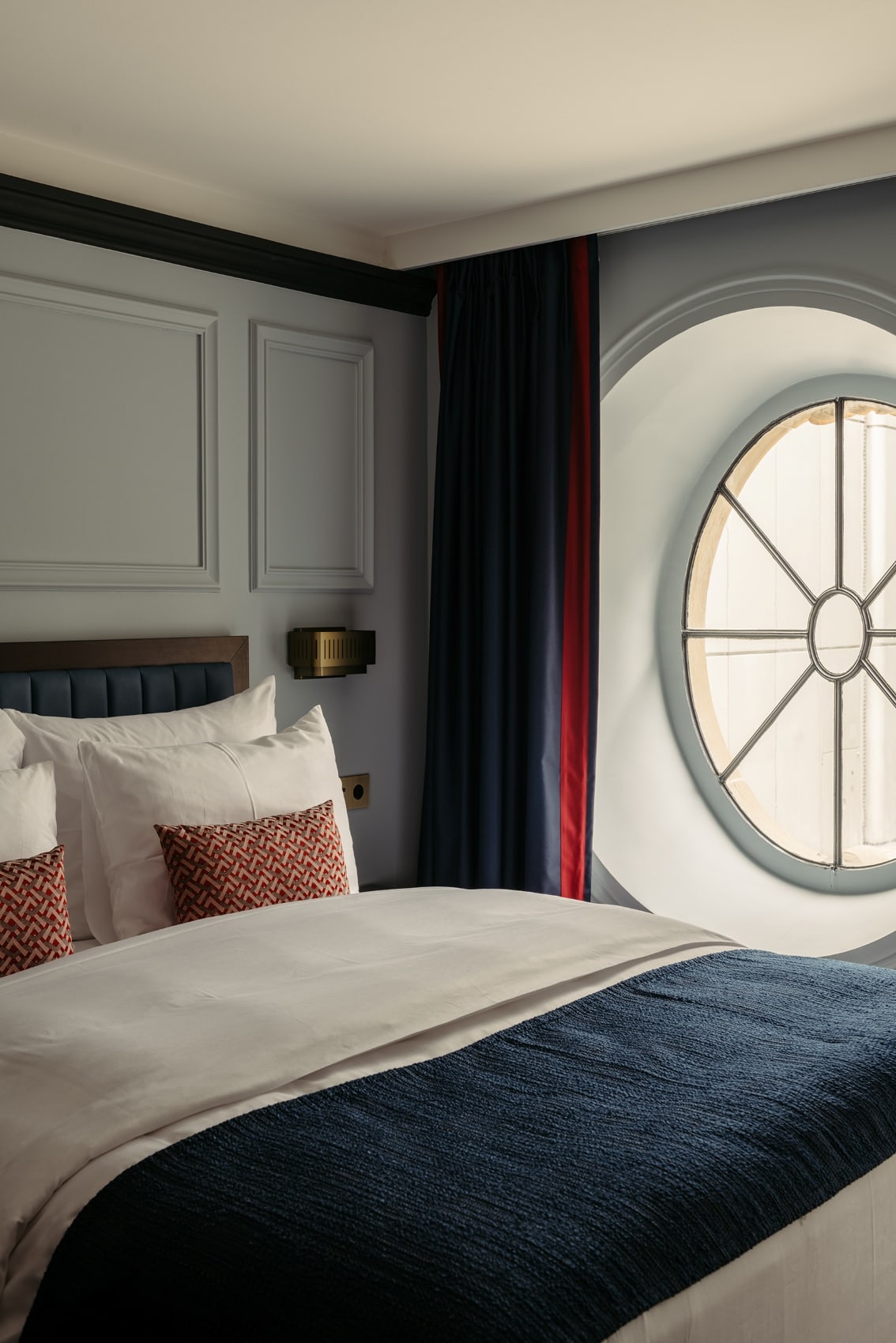
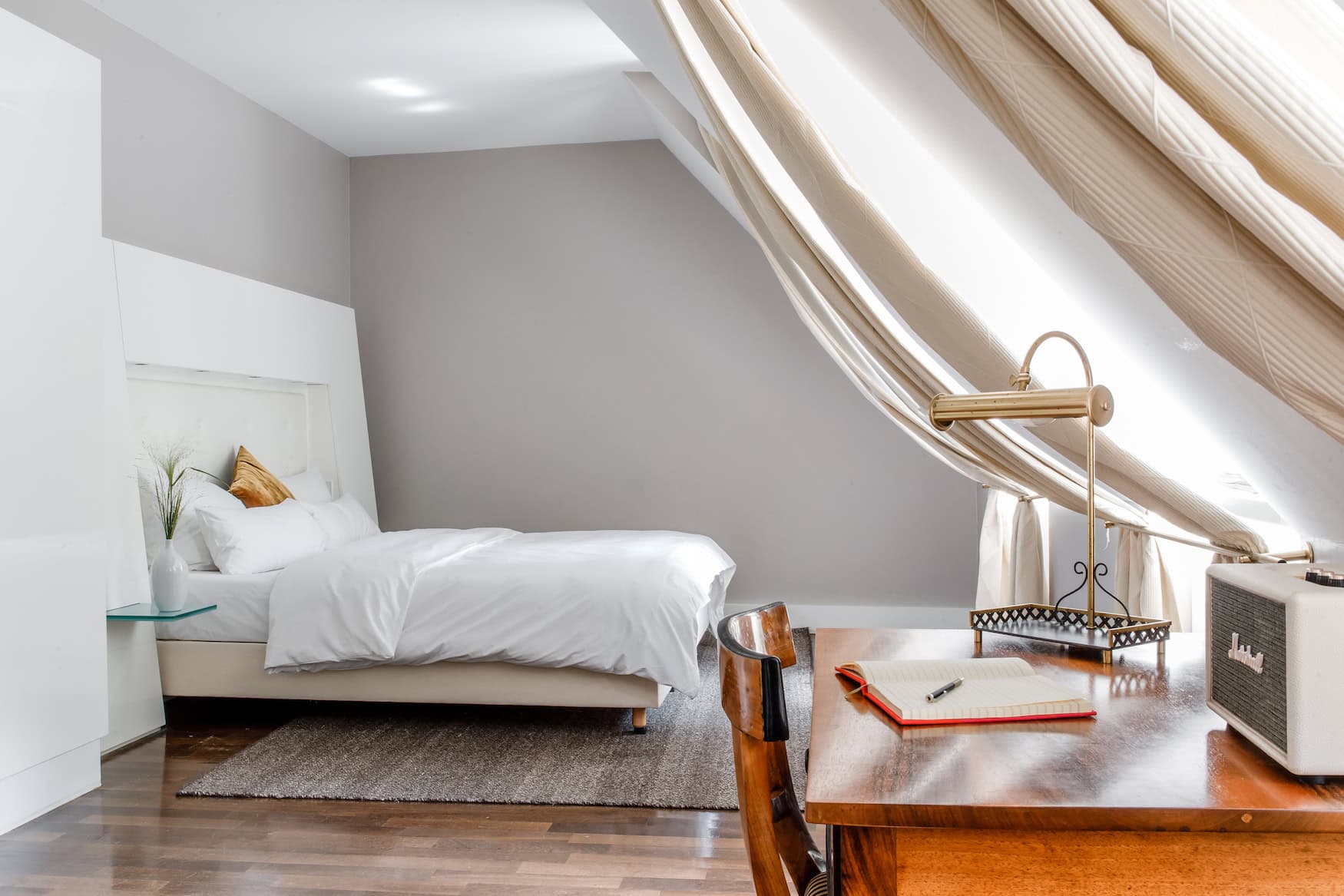
Being hip is also possible in Frankfurt. Visitors can look forward to true design gems that promise restful nights. Like the centrally located Lume Boutique Hotel in the heart of Mainhattan. The exciting design concept of this luxury hotel combines opulence with clarity and classic elegance with modern lightness. The rooms are oases of well-being in a modern style combined with the look of the 1950s.

👉 Click here to visit the website.
The nearby Roomers is also one of the city’s hottest design hotel addresses. Modern burlesque chic instead of business dreariness. At the Roomers Hotel, you enter a world of black, purple, and gold, where everything seems elegantly dim. Whether in the 116 luxuriously and extravagantly furnished rooms and suites or in the trendy Roomers Bar.
For those who prefer to stay in a quieter area just outside the city, the Gerbermühle, located directly on the Main River, is the perfect address. A historic former estate, it is a listed building and is now one of Frankfurt’s designer hotels. Goethe visited the Gerbermühle several times between 1814 and 1815.
👉 Click here to visit the website.
Hiking Across Dunes
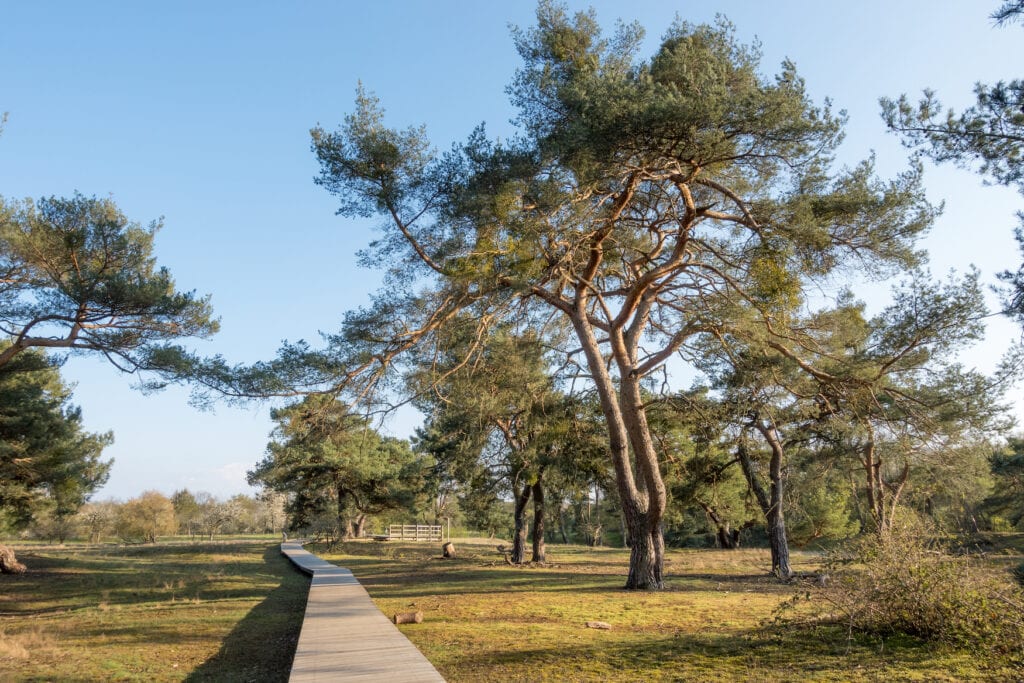
Had enough of city life? Fortunately, there are plenty of green oases of calm around Frankfurt. One of these beautiful green retreats is located in the west of the Schwanheim district. Around 10,000 years ago, an unusual natural phenomenon occurred here as a result of the last ice age: the Schwanheim Dune, one of the few inland dunes in Europe. It was formed from sand that was blown away from the riverbed of the Main. And so you walk on footbridges through this rustic landscape, which, with its unusual vegetation of silver grass and pine trees, is reminiscent of distant, inhospitable sea coasts. The area has been a nature reserve since 1984.
Say “Kühkopf-Knoblochsaue”
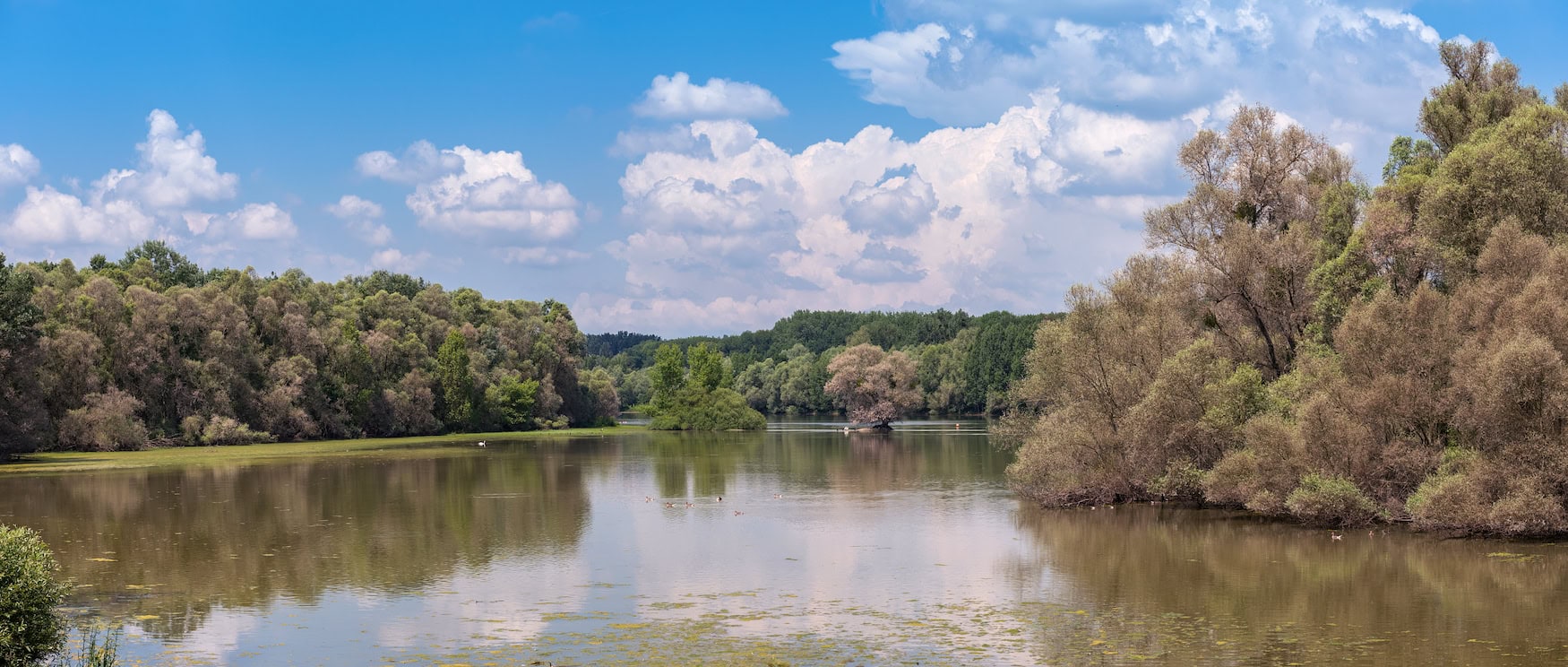
What sounds like a difficult tongue twister is an enchanted floodplain landscape a good half hour away from Frankfurt. It is the largest nature reserve in the state of Hesse and can be explored on around 60 kilometers of cycling and hiking trails. A good starting point is the environmental education center in the north wing of the Gunterhausen estate. There you can also get all the information you need about the reserve for your trip. Set off on the Haubentaucherweg, Schwarzspechtweg, or Nachtigallenweg trails. The names give it away: the nature reserve has a remarkable diversity of species to offer. It is a paradise for ornithologists or anyone who enjoys going on animal safaris.