



The low mountain range Eifel is without question one of our favorite regions in Germany, which may also be due to its proximity to our home city of Cologne. But beyond that, we would like to recommend this beautiful corner of the world to you. So here are our favorite sights and destinations in the Eifel.
Historic Old Town of Monschau
Many visitors feel like they have stepped into a fairy tale when they enter the historic center of the old cloth-making town of Monschau. Here you will find a wealth of traditional delicacies – such as the finest gingerbread specialties, original “Monschauer Dütchen” (egg biscuit croissants) and mustard from the more than 100-year-old mustard mill. Hollywood has also discovered the town on the Rur. In 2014, the old town served as the backdrop for the action thriller “Collide” starring Felicity Jones, Nicholas Hoult, Anthony Hopkins, and Ben Kingsley.
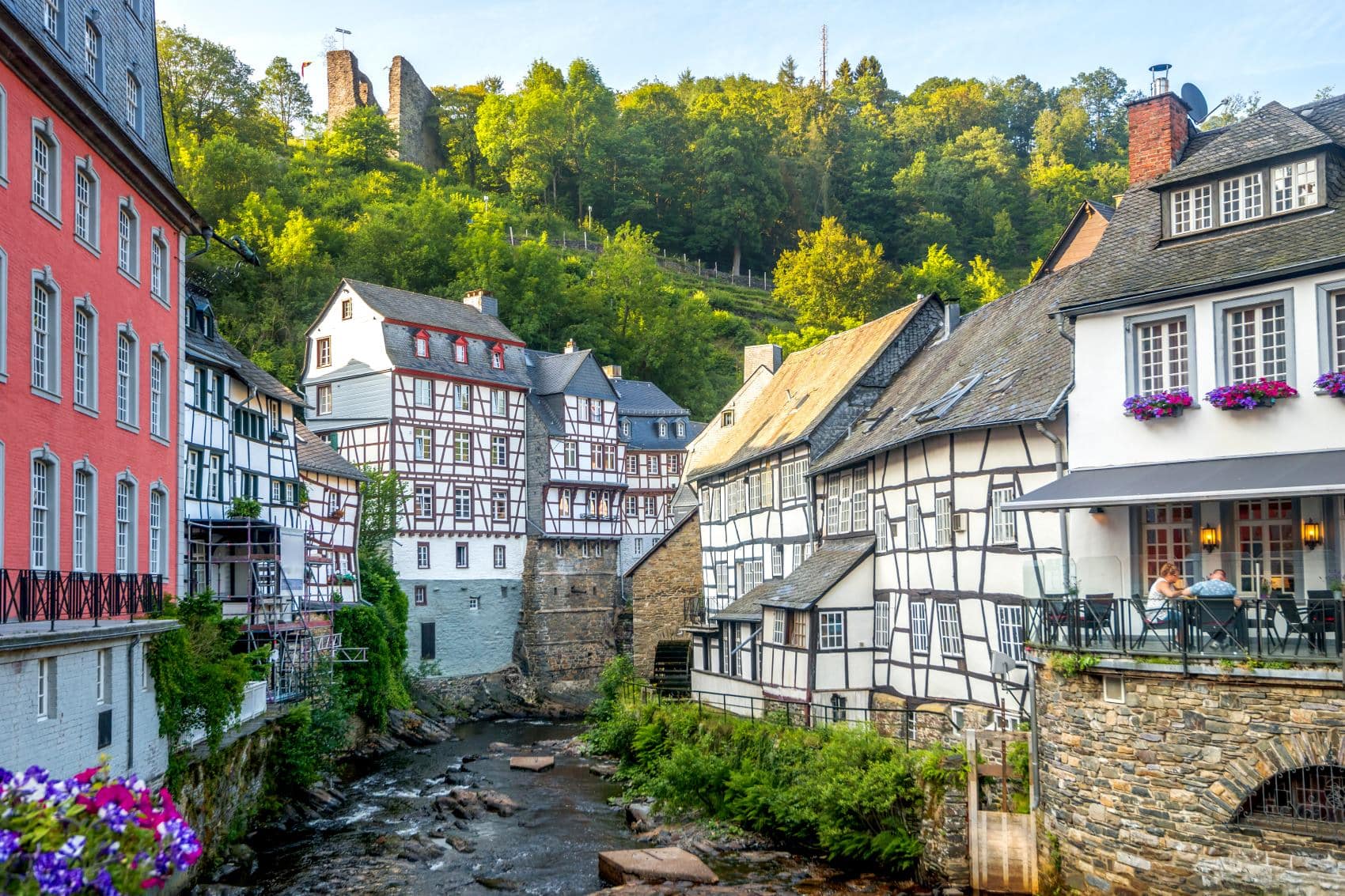
Must-do: In the “Museum Rotes Haus,” which is furnished in the Rococo, Louis XVI, and Empire styles, you can experience how magnificently the upper middle class once lived. Definitely worth a visit!
👉 Click here to visit the Monschau town website.
Eltz Castle
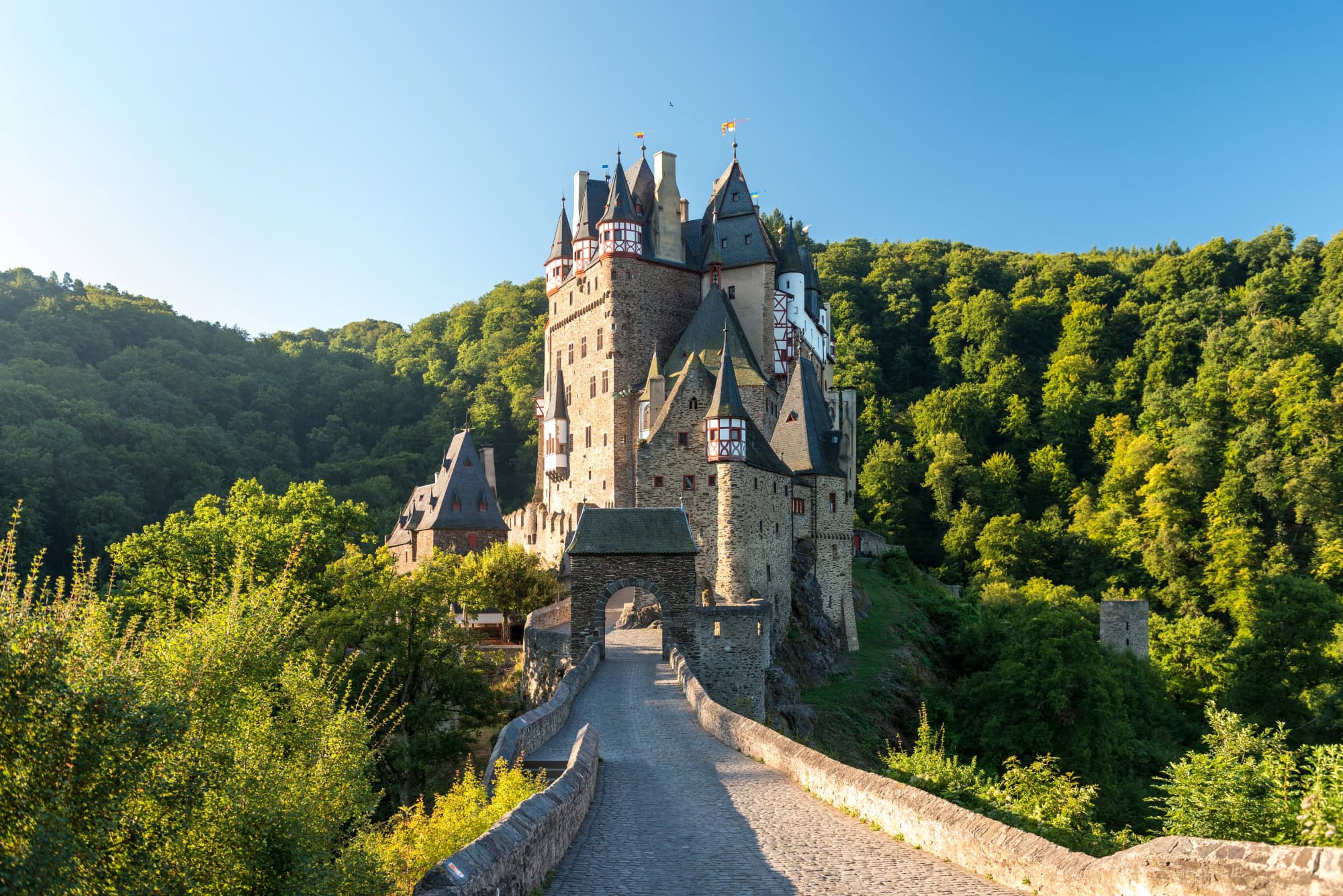
High above, nestled between the hills above the Moselle, sits Eltz Castle. Completely surrounded by forest, the hilltop castle, which was built in the 12th century, has been owned by the Eltz family, who belong to the ancient nobility of the Moselle region, for more than 800 years. Visitors can learn more about life in the castle in the past on guided tours of rooms such as the armory, the knights’ hall, and the electors’ chamber. Impressive gold and silver smithing, especially from Augsburg and Nuremberg, can be admired in the Eltz armory and treasure chamber.
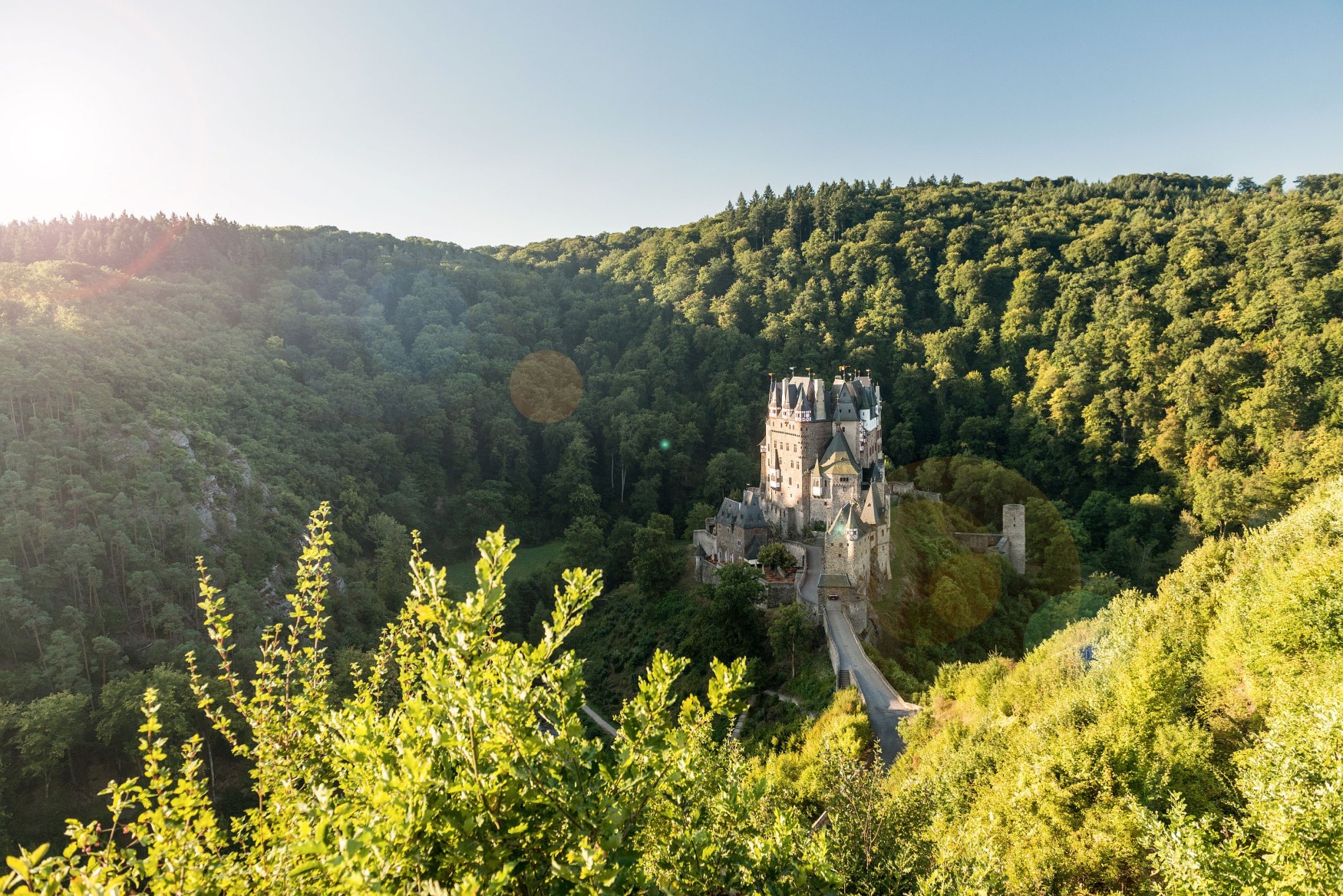
Must-do: Don’t forget to bring your camera! It’s no surprise that the castle is a popular destination for many Instagrammers.
NS-Ordensburg Vogelsang
With around 100 hectares of built-up area, the so-called “NS-Ordensburg” is one of the largest buildings from the Nazi era. With the aim of training selected young men to become leading officials of the NSDAP, the first courses took place here in 1936. The school was closed at the beginning of World War II in 1939. The facility was then used by the Wehrmacht until 1945. Today, Vogelsang is a lively place of remembrance culture – in the middle of the Eifel National Park. Visitors can enjoy a wide range of informative offerings, including various guided tours, training courses, workshops, seminars, and lectures.
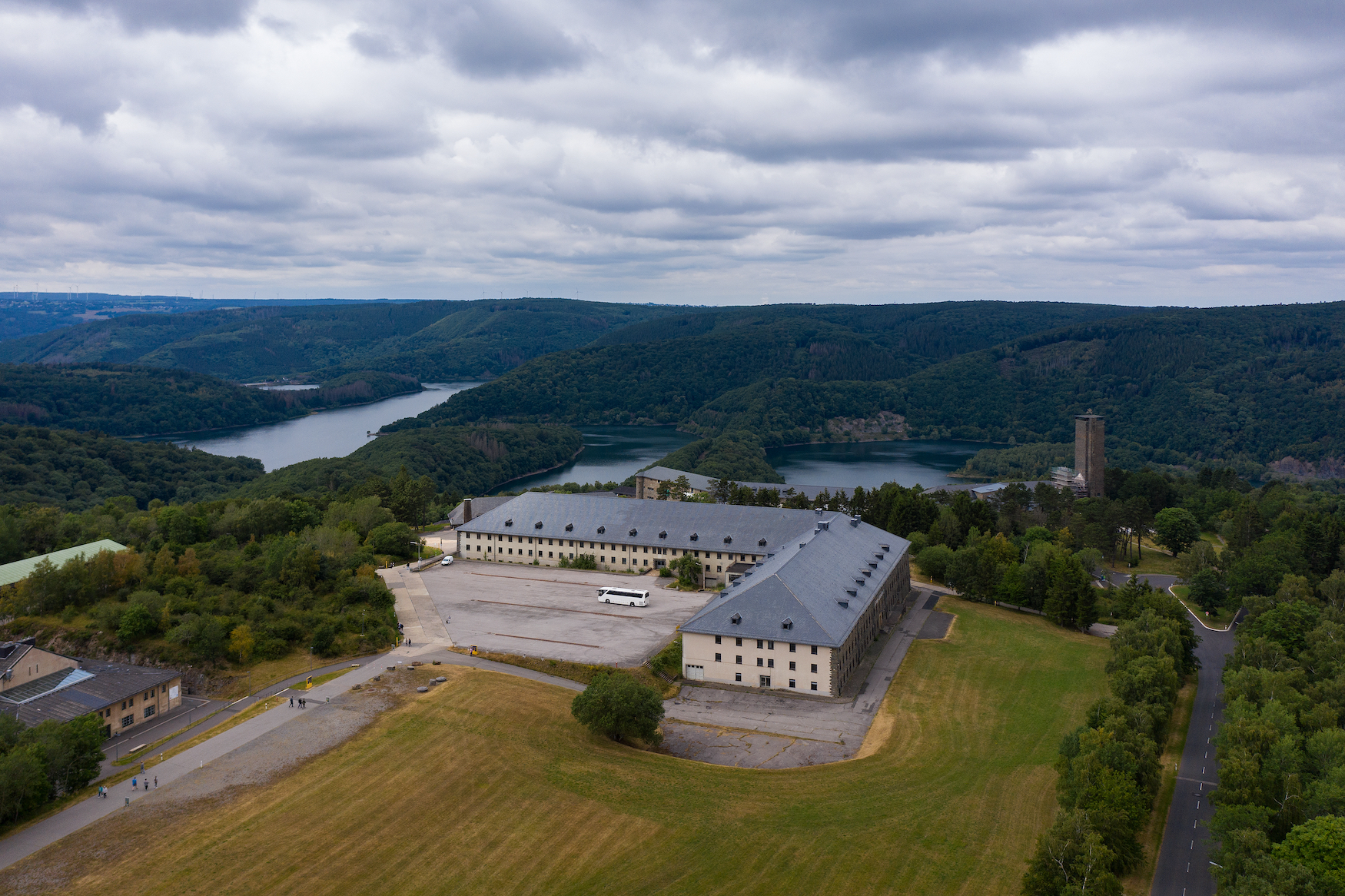
Must-do: The award-winning permanent exhibition “Destiny: Master Race” is housed in the Forum Vogelsang IP. It is recommended for people aged 12 and over; children under 14 must be accompanied by an adult.
👉 Click here to visit the memorial’s website.
Eifel National Park
Hikers and nature lovers will find their paradise in the Eifel National Park. The multitude of possible hiking routes with impressive panoramic views includes the 85-kilometer wilderness trail from south to north, which is divided into four daily stages. The individual sections range in length from 18 to 24 kilometers. In this barrier-free nature experience area, people with and without disabilities can explore nature. The 6.2-kilometer network of trails includes viewpoints overlooking the lake landscape and the “Der Wilde Weg” nature discovery trail, where interactive stations provide information about forest development and biodiversity.
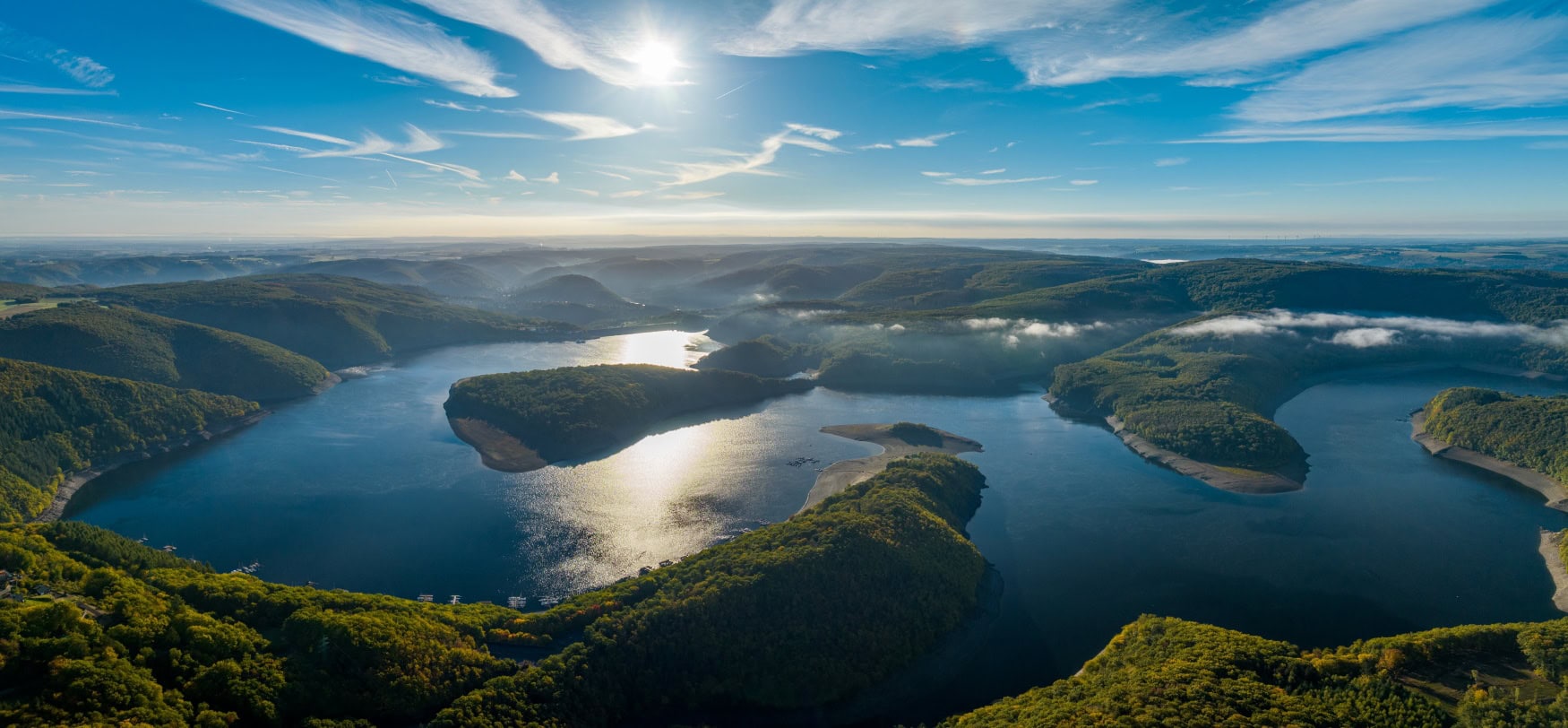
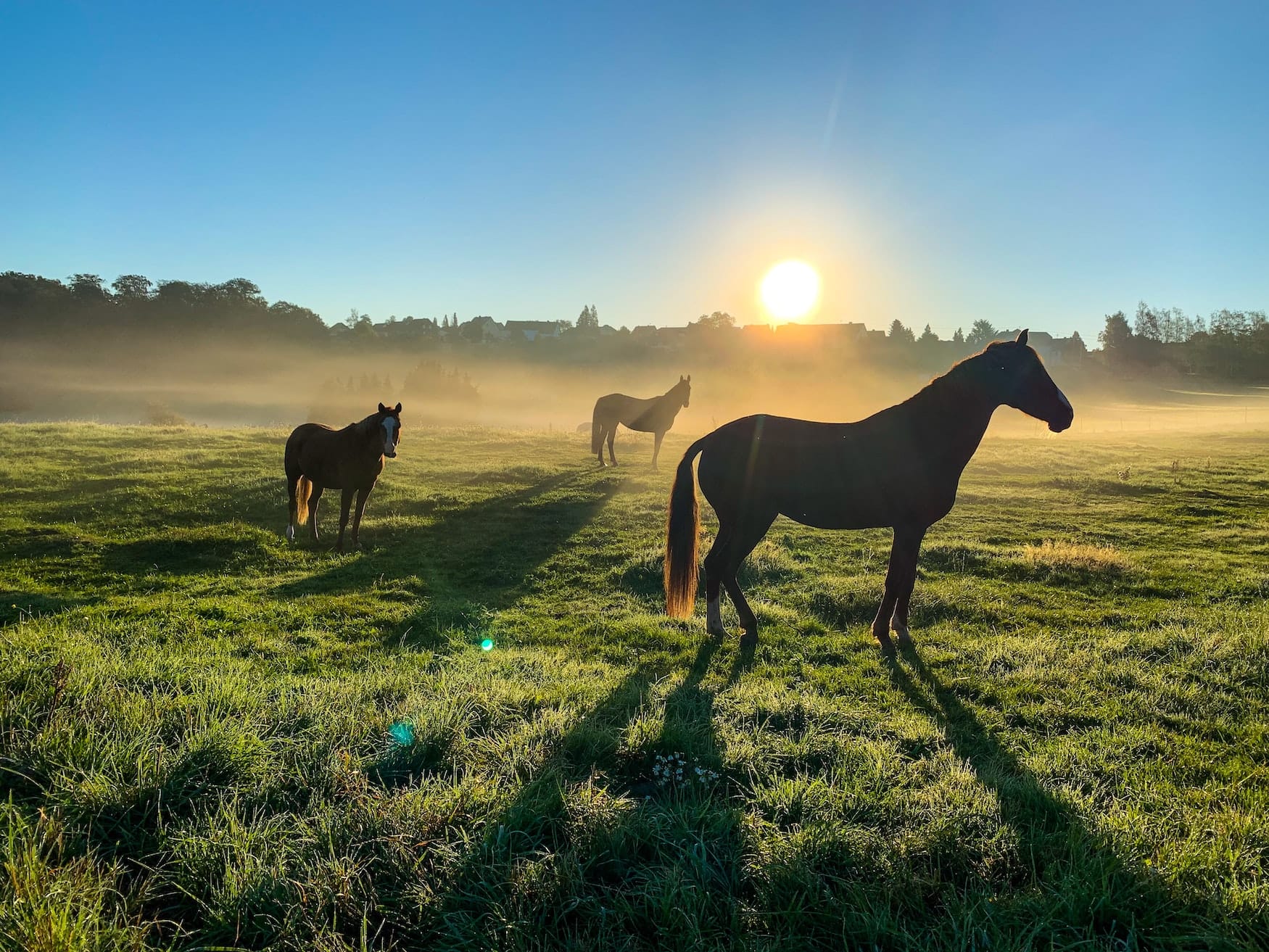
Must-do: Interested visitors can expand their knowledge of flora and fauna with the regular ranger tours through the Eifel National Park. The starting point for these tours is the Eifel National Park Center at the “International Place” Vogelsang IP, which also houses the Eifel National Park Center’s interactive exhibition “Wildnis(t)räume” (Wilderness Dreams).
Kommern Open-Air Museum
Barns, stables, farm buildings, and other structures from times long forgotten can be explored at the Kommern Open-Air Museum. If you are not only interested in how the nobility lived in earlier times, but also want to learn more about the everyday life of ordinary people, this is the place for you. People in the museum – such as the “farmer’s wife,” the “wheelwright,” and the “mouse trap seller” – demonstrate their traditional work. Together with the farm animals that live in the villages made up of historic houses, they fill the museum with life.
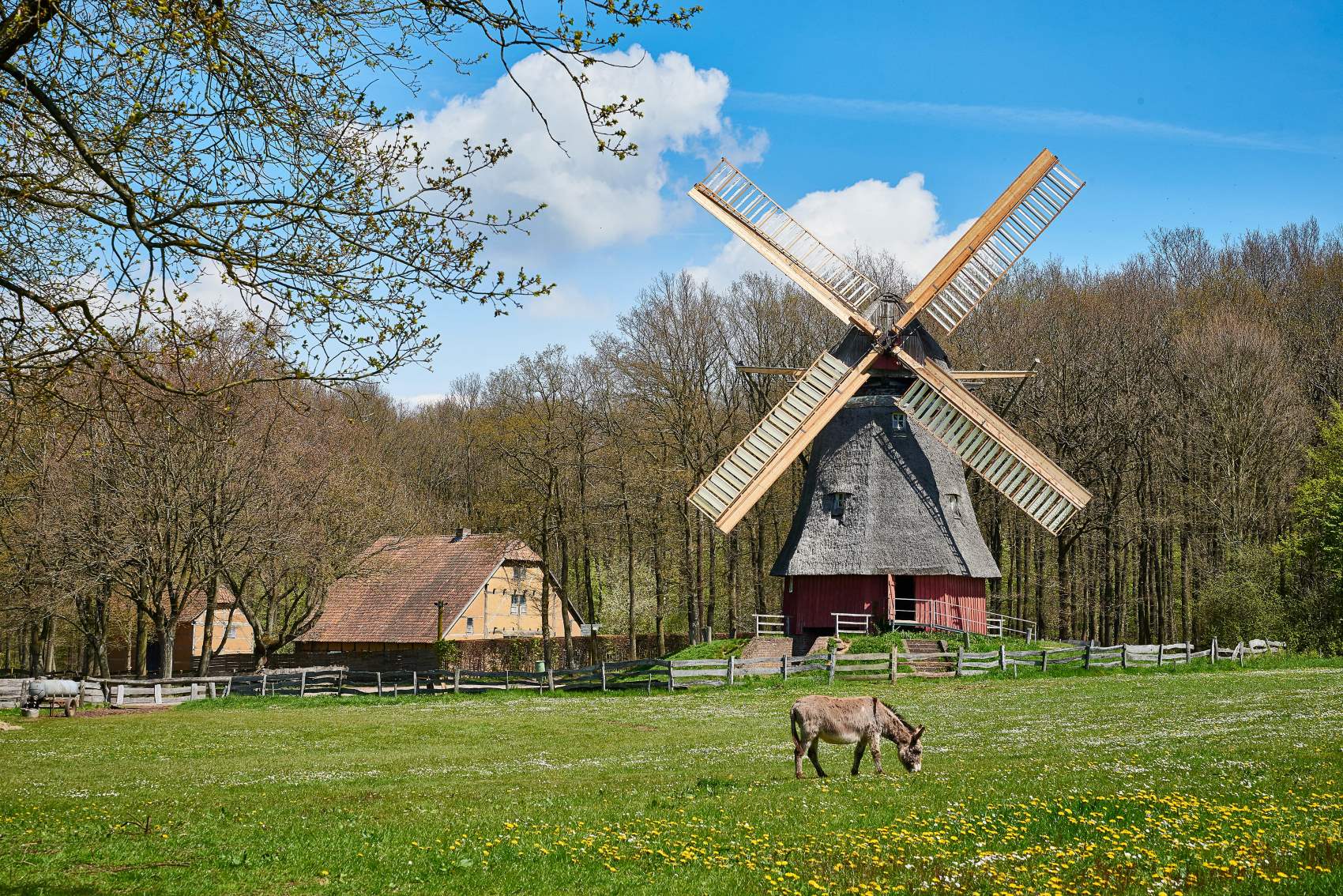
Must-do: Don’t miss the museum’s annually changing special exhibitions and the permanent exhibition “WirRheinländer” (We Rhinelanders) during your visit!
👉 Click here to visit the open-air museum’s website.
Roads of the Romans
Celts and Germanic tribes were at home in the Eifel for a long time – until they were conquered by Caesar in 54 BC. The region belonged to the Roman Empire for almost five centuries. Road settlements and large estates were established. The aqueduct they built from the Eifel to Cologne is particularly famous. Around 100 stations can be admired on the Roman roads, including the matron sanctuary “Görresburg” in Nettersheim and the temple district of Pesch.
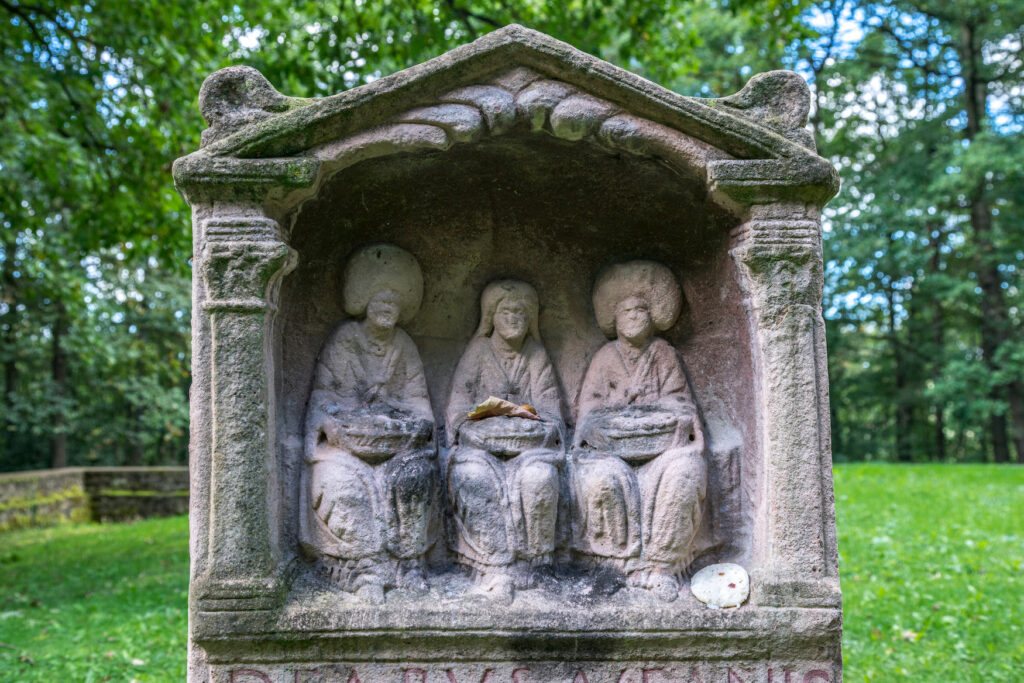
Must-do: Many stations along the “Roads of the Romans” can be viewed in their original size and in a 360-degree display. This is possible on site via augmented reality with the free ARGO app (click here for the website).
Maars of the Eifel
Bathing in a volcano? That’s possible in the Eifel – but not in lava, of course. The maars were formed by the convergence of groundwater and magma. The resulting water vapor explosions blew over 70 maar volcanoes into the Eifel landscape. Twelve of these are still filled with water today.
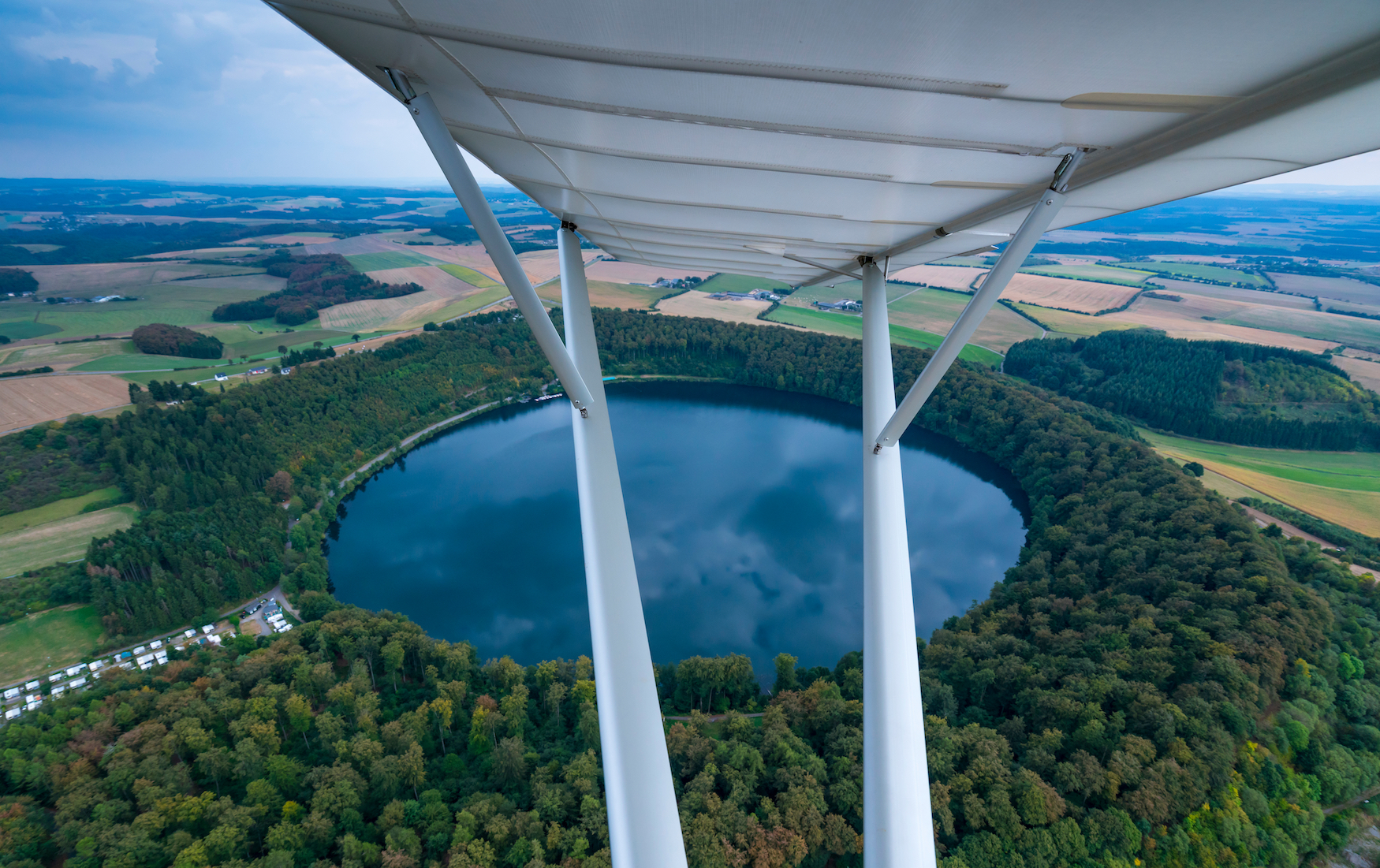
Must-do: Swimming is permitted in summer in the Meerfelder Maar, Pulvermaar, Schalkenmehrener and Gemündener Maar.

Nürburgring
The legendary motorsport racetrack, also known as “The Green Hell,” was opened in 1927. Many Formula 1 races have been held here since 1984. In addition, Germany’s most traditional rock festival, “Rock am Ring”, takes place here every year. Historic vehicles, simulators, and other attractions await young and old alike at the “ring°werk” motorsport experience museum. Electric karts can also be used on the “ring°kartbahn.” Current movies are shown at the “ring°kino.”
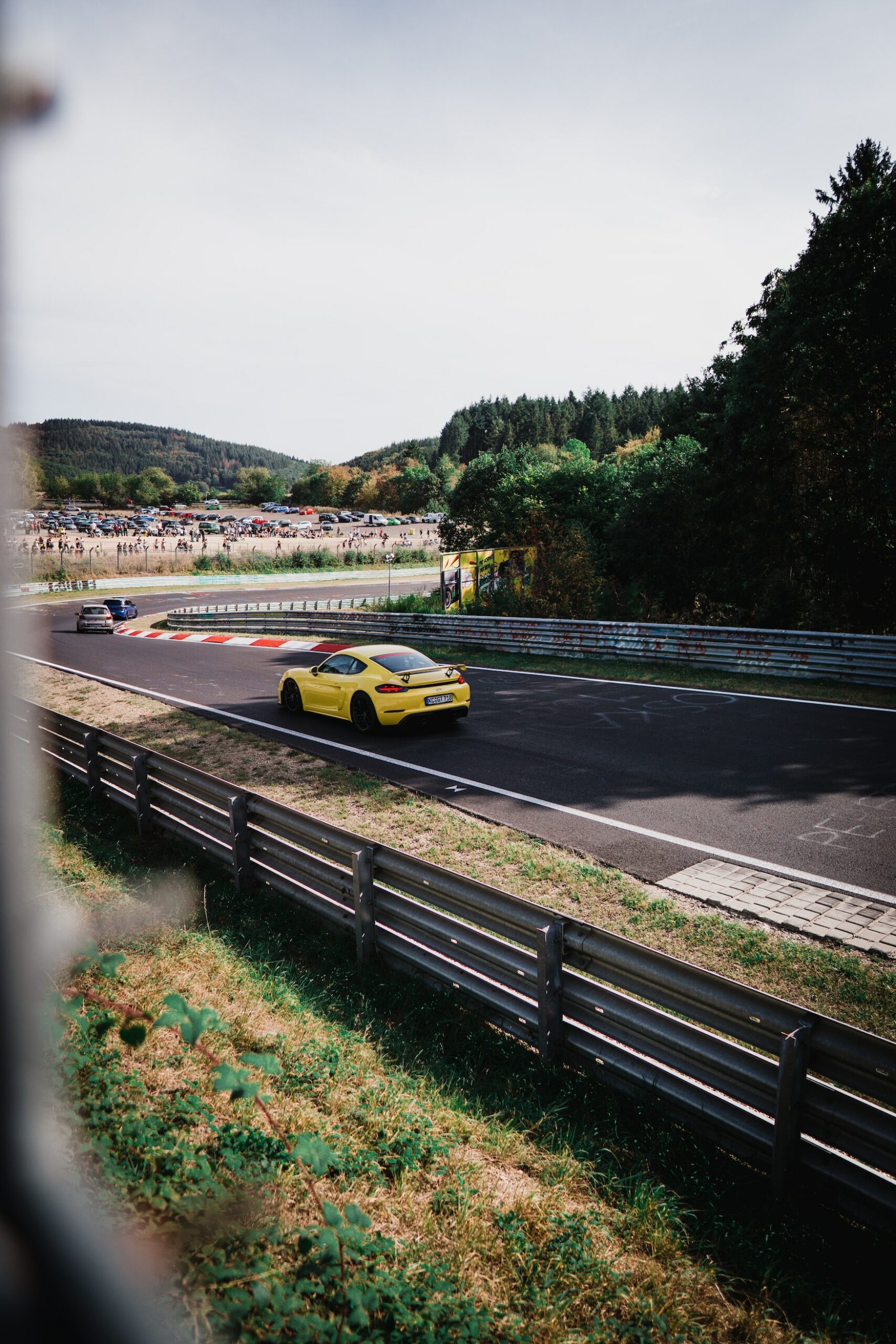
Must-do: Visitors can take a look behind the scenes at the Nürburgring: A backstage tour is offered daily and also takes you through the pit lane!
👉 Click here to visit the “ring°werk” website.
Genovevaburg
The mighty Genoveva castle stands on the “Kleiner Simmer” rock outcrop in Mayen. It was built in 1280 by Heinrich von Finstingen, Archbishop of Trier. Since its initial destruction by French troops in 1689, it has been rebuilt several times. Today, the late Gothic castle houses the Eifel Museum with the exhibition areas “EifelTotal” and “German Slate Mine.” Every summer, the Mayen Castle Festival also takes place here.
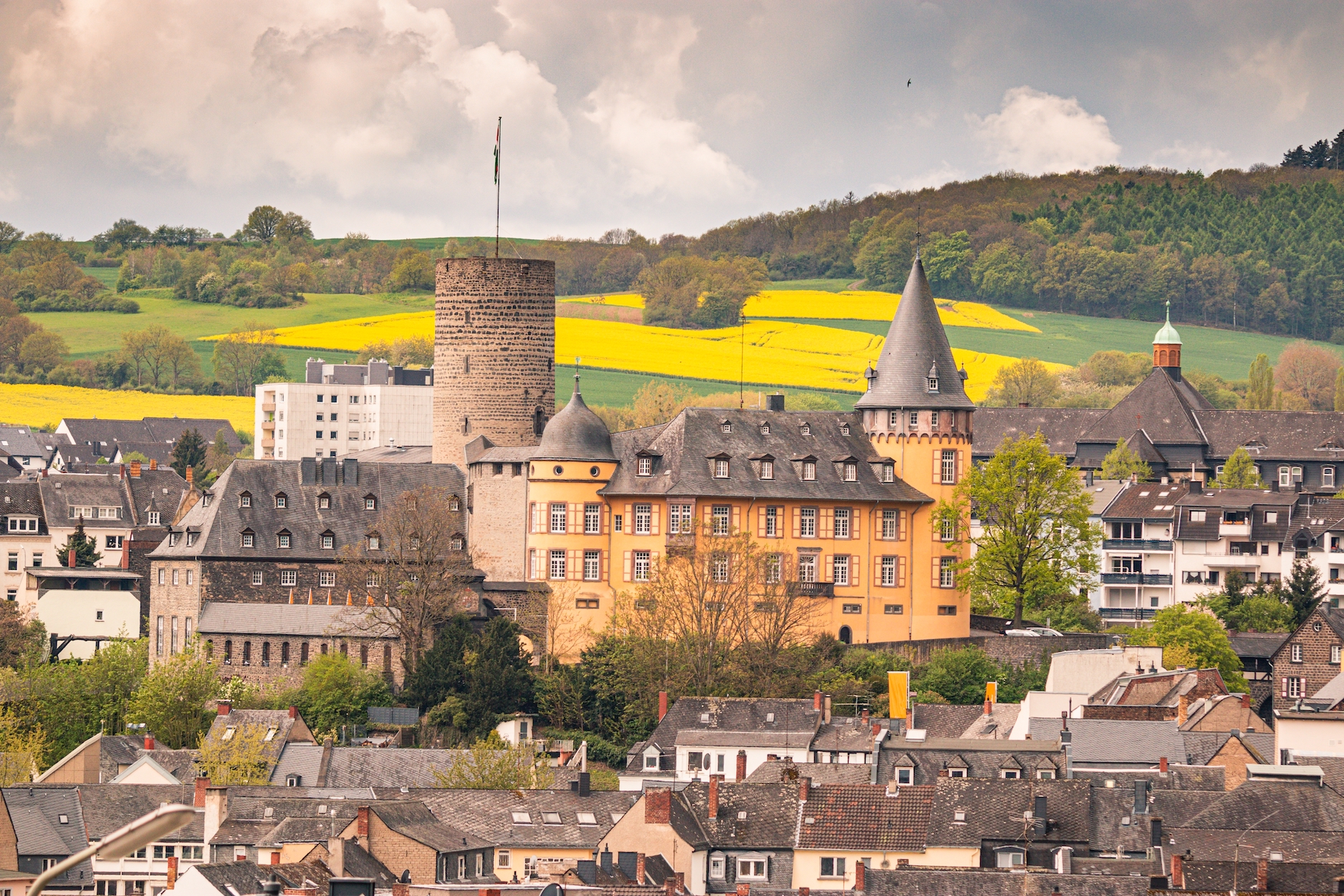
Must-do: For visitors who want to learn more about Mayen itself, there are themed tours for every target group. However, it is also possible to experience the city on your own – using QR codes that can be scanned or the “HEARonymus” audio guide app.
👉 Click here to visit the Eifel Museum website.
Devil’s Gorge
You won’t find the devil here, but you will find a geological curiosity: the bizarre rock landscape is the result of frost action at the end of the Ice Age. Gorges and crevices with steep rock faces are waiting to be explored. The Devil’s Gorge (“Teufelsschlucht) is an excellent starting or finishing point for hikes in the surrounding area.
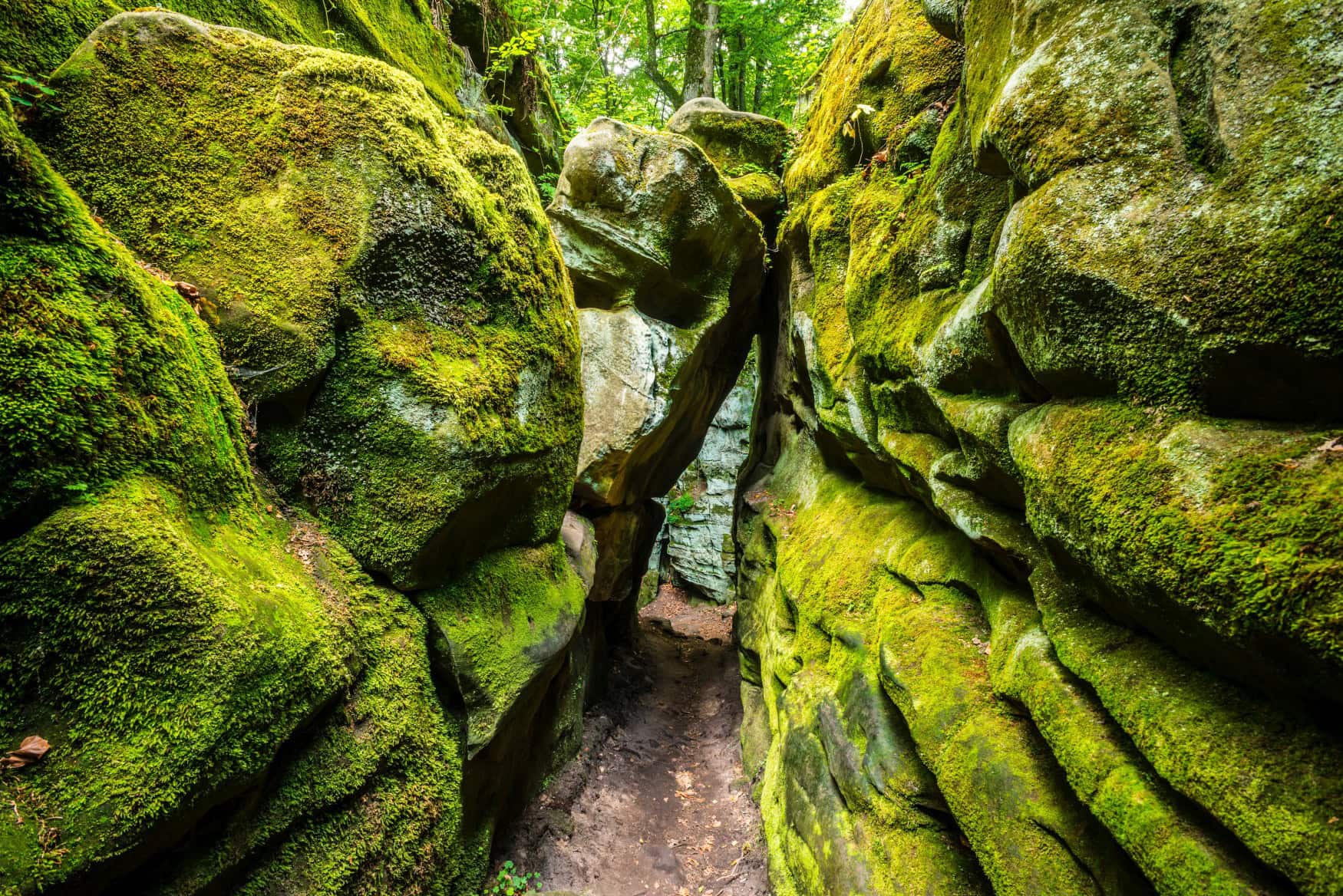
Must-do: Visitors can learn more about the history of this amazing landscape at the Nature Park Center and Dinosaur Park Teufelsschlucht.