



So, you missed the recent Northern Lights in Germany? Good preparation is essential when it comes to catching a glimpse of the dancing colors in the night sky. And this year, thanks to strong solar activity, the chances of seeing the Northern Lights in Germany are better than ever. Find out where you’re most likely to see them here.
Northern Lights on the German islands
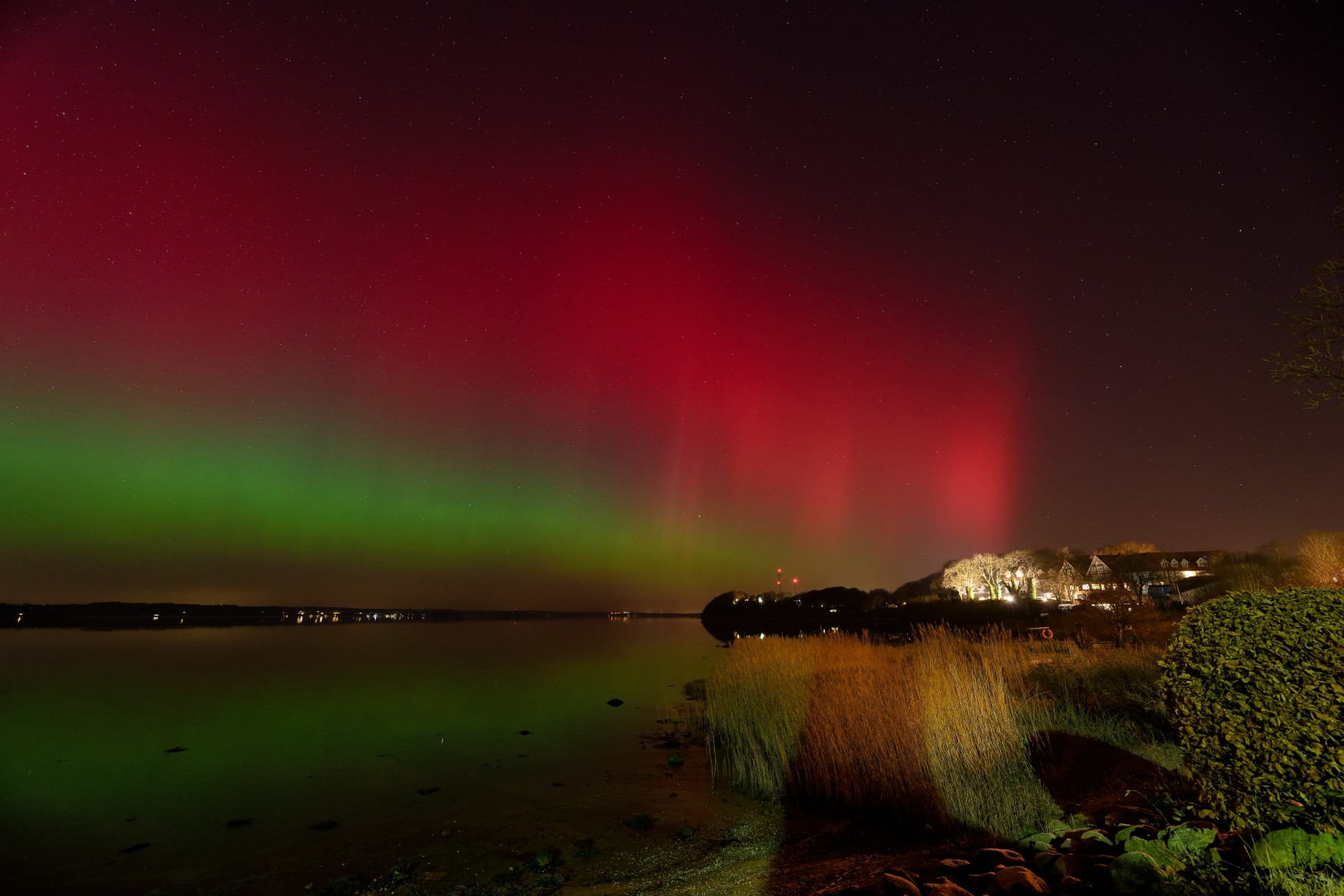
Unsurprisingly, the Northern Lights are particularly visible on the German islands. This is because two conditions come together here. On the one hand, there are hardly any places in Germany that are further north, and on the other hand, light pollution is particularly low on all German islands. So the conditions are ideal. However, there are a few differences between the islands.
Northern Lights on Rügen
Of all the German islands, Rügen has the least cloud cover, at least in February. This may surprise some Rügen residents, but the statistics don’t lie. And cloud cover is not unimportant. Even the strongest solar storms are of little help if the view of the sky is blocked by thick, gray clouds. One small drawback: the Königstuhl, which would be a perfect vantage point, is unfortunately closed at night.
Northern Lights on Sylt
You can’t get any further north than this. Located between 54 and 55 degrees north latitude, Sylt is not only Germany’s northernmost island, but also home to the country’s northernmost point. With statistically slightly more clouds than on Rügen, but less light pollution, the conditions here are also excellent for hunting the Northern Lights. And if that doesn’t work out, you can always stick your feet in the fine Kniepsand.
Northern Lights on Fehmarn
We’re staying in the north. Because the Northern Lights can also be observed on Germany’s third-largest island, Fehmarn. The light pollution here is slightly lower than on Sylt, but it’s not as far north. So the chances are quite similar. The Northern Lights were sighted here a total of 20 times in 2025.
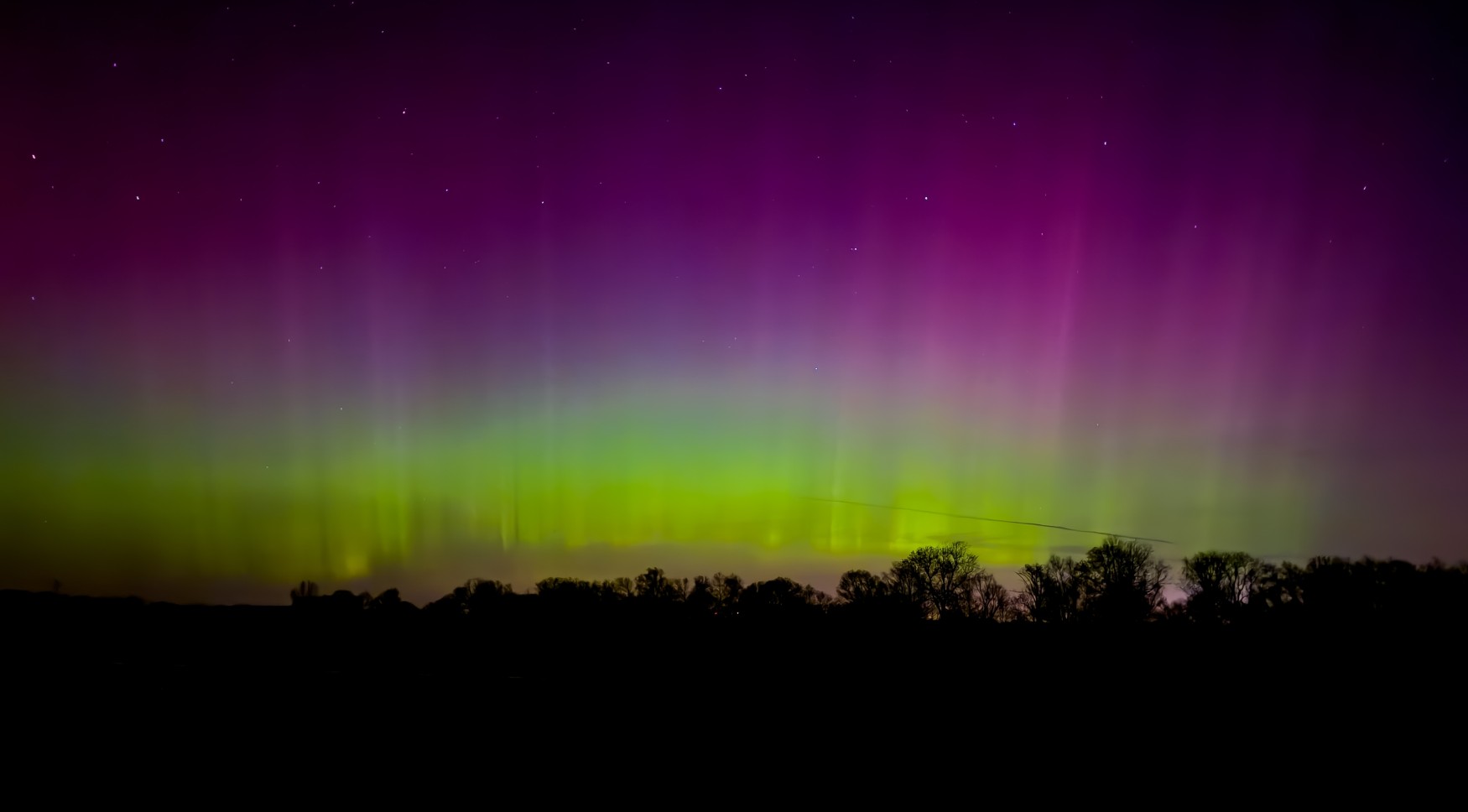
Northern Lights on Pellworm
The North Frisian island of Pellworm is ideal for relaxation. And also for searching for the Northern Lights. With one of the lowest levels of light pollution in Germany, it’s worth looking up at the starry sky here even without the Northern Lights.
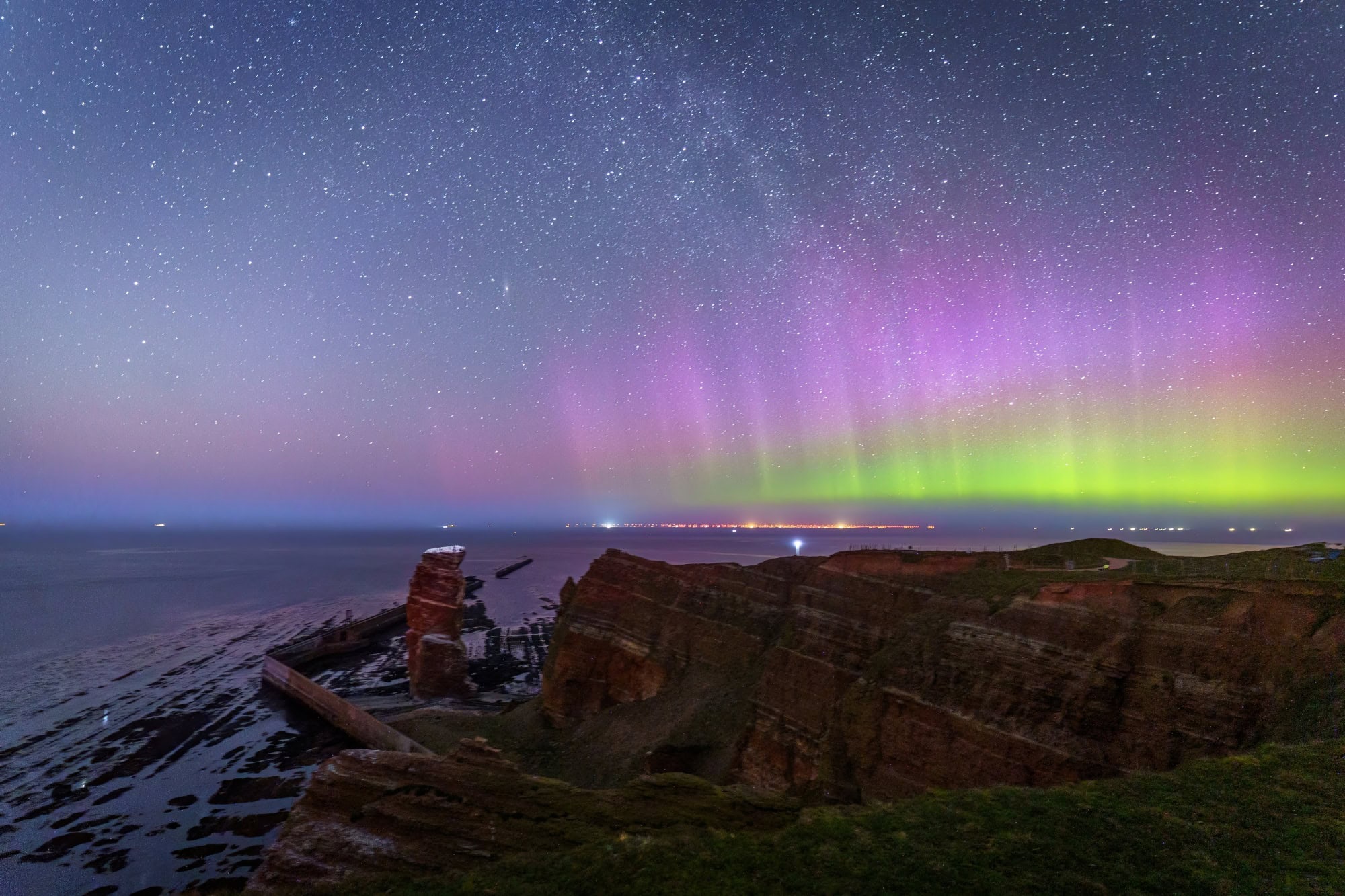
Northern Lights on Heligoland
Anyone who travels here wants to know for sure. Because Northern Lights seekers can’t get much further away from the German mainland and its disruptive light pollution than Heligoland. The shortest route takes about 150 minutes from Cuxhaven, but even with the high-speed catamaran “Haljunder Jet” it still takes three and a half hours from Hamburg. The reward for your efforts is not only the solitude of this unique island, but with a little luck, also the view of the Northern Lights over the vast North Sea.
Northern Lights on Spiekeroog
Spiekeroog is one of the smallest German islands and is our tip here. Although “only” eight Northern Lights were reported here in 2025, that’s better than nothing. And with low light pollution and its northern location, the chances of further sightings in the super year 2026 are very good.
Northern Lights in other regions of Germany
Those who do not live on the coast can breathe a sigh of relief. Even away from the North Sea and Baltic Sea, the chances of seeing the Northern Lights in Germany in 2026 are not so bad. Only in the big cities should you not get your hopes up too high, due to light pollution.
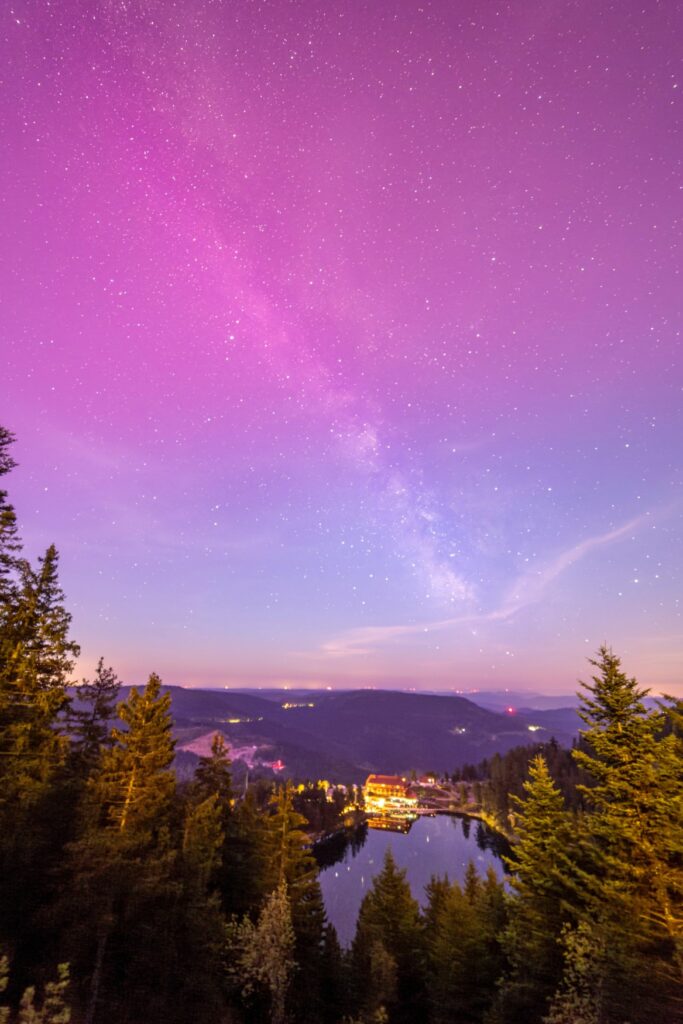
Northern Lights in Müritz National Park
Müritz National Park in Mecklenburg-Western Pomerania is a real insider tip, even without the Northern Lights. Or rather, not so secret. In two to three hours, Berliners in need of relaxation can reach the region by car or train and enjoy the wonderfully unspoiled nature there. And on nights with solar storms, they can also go in search of the Northern Lights. If you want to be on the safe side and have the time, book a spot at one of the many campsites, as wild camping is strictly prohibited. And as in any national park, please leave no trace and be considerate of the wildlife.

Northern Lights in the Vorpommersche Boddenlandschaft National Park
There is virtually no light pollution in the Vorpommersche Boddenlandschaft National Park on the Fischland-Darß-Zingst peninsula. This means that conditions are ideal in Mecklenburg-Western Pomerania’s largest national park. Many animals have made the peninsula their home, even if only temporarily. In autumn, for example, countless cranes stop here on their migration south, and gray seals and harbour seals can be seen in the waters off the peninsula, sometimes even porpoises. The rarest, but not impossible, guest, however, is the Aurora Borealis. In 2025, there were twelve sightings.
Northern Lights in the Harz Mountains
A pattern is emerging: national parks are good places to see the Northern Lights. And stars, for that matter. The Harz National Park is no exception. In the huge forest, which is divided between Lower Saxony and Saxony-Anhalt, a total of 24 Northern Lights sightings were reported last year. Reason enough to plan a night-time excursion this year.
Northern Lights in the Eifel
Star hunters will hardly be surprised that the Eifel National Park also appears on this list, as it has been awarded the title of “star park”. And where the conditions for stargazing are good, they can’t be too bad for Northern Lights. Even though we are so far south here. The national park even has specially equipped camping platforms with tables, benches, and composting toilets. But beware: please book in advance.