




We Germans aren’t as serious as you might think. Quite the opposite, in fact. Every year, the calendar in Germany is filled with german folk festivals, public holidays, and traditions. We’ve listed the most important ones for you so that you’ll be in the know on your next trip to Germany.
Oktoberfest | Munich
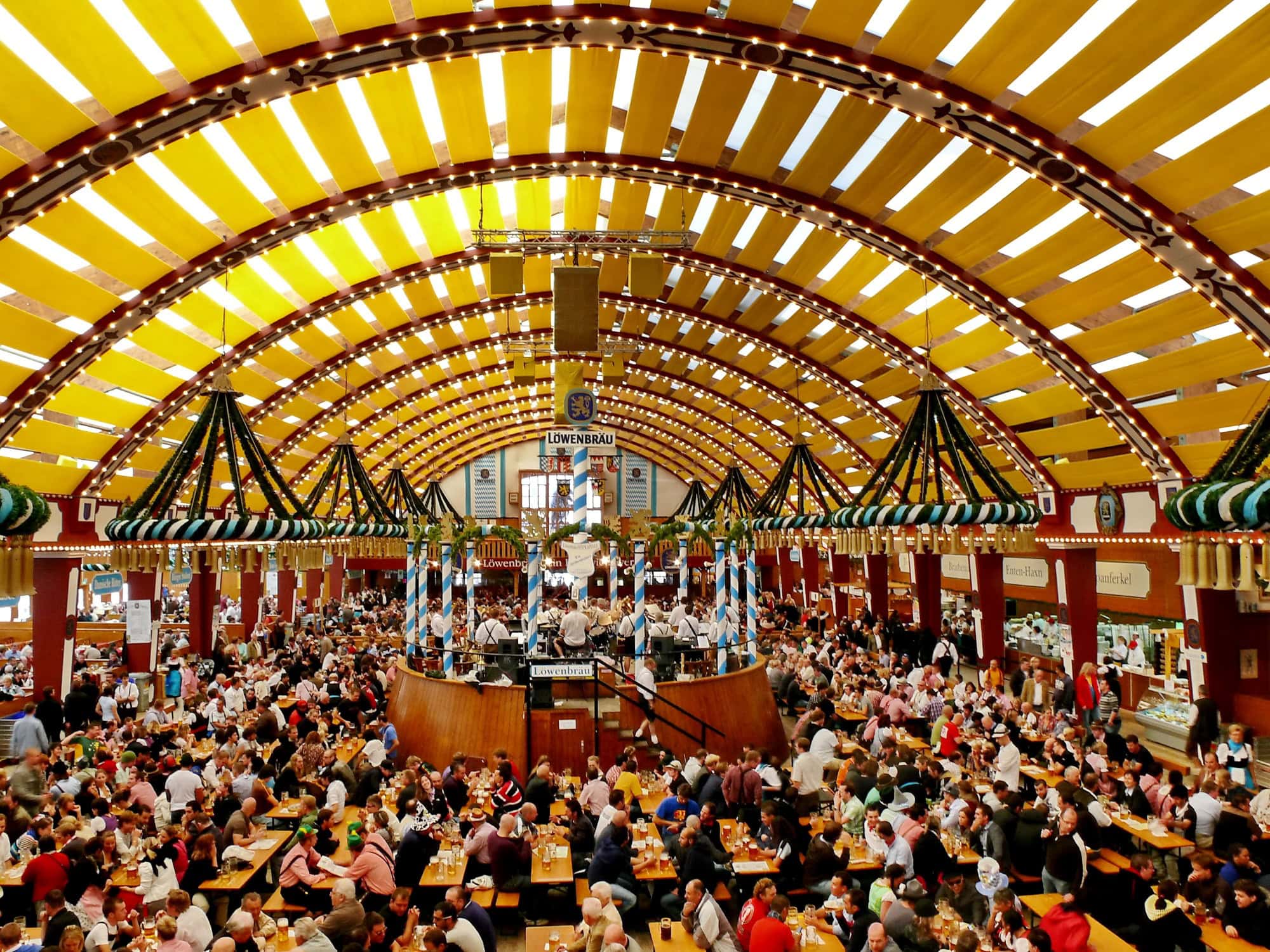
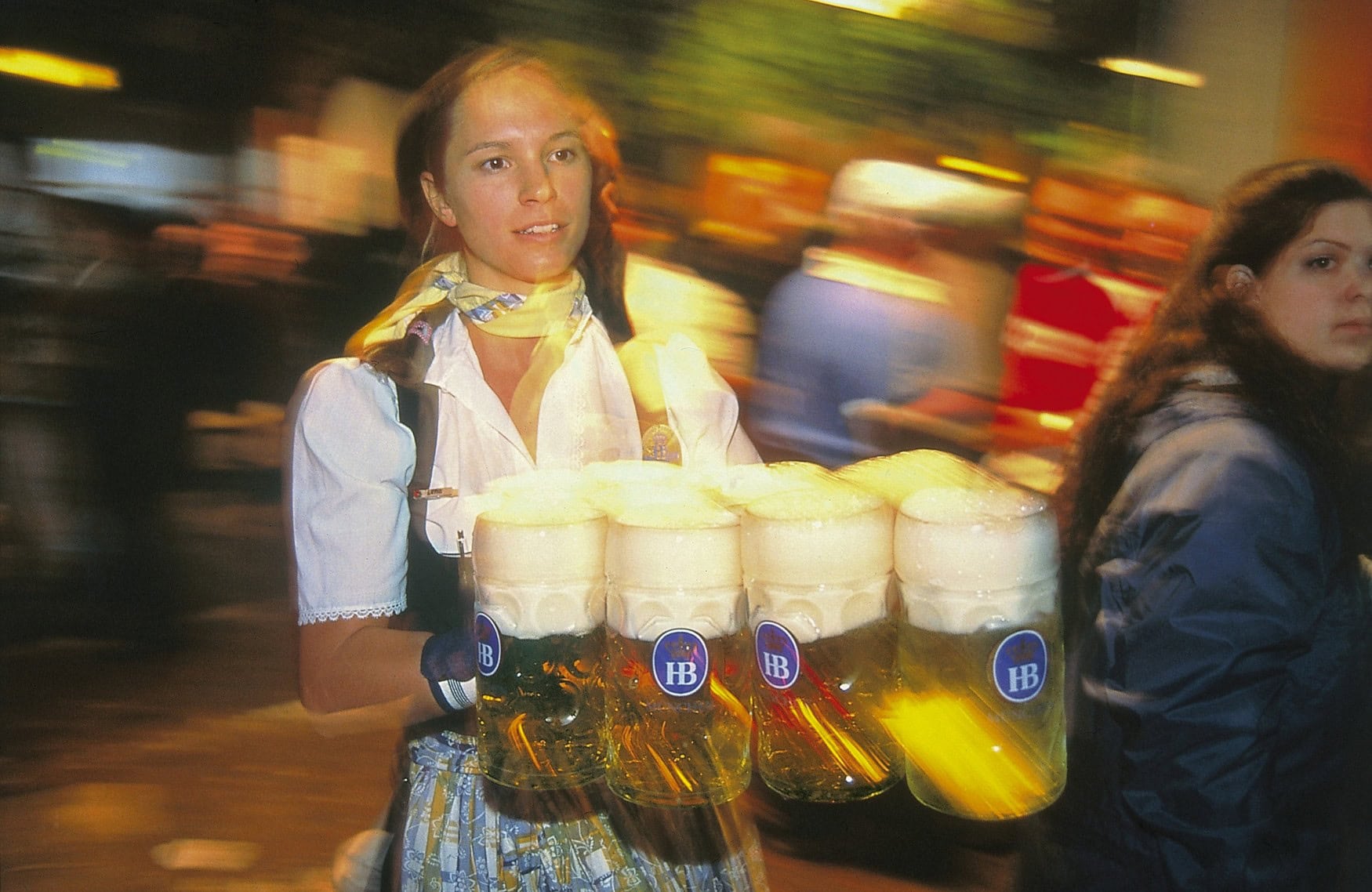
Let’s start with the biggest event, Oktoberfest. Once a year, the Theresienwiese in the center of Munich is transformed into a small town of tents, beer stands, food stalls, and fairground rides. Many visitors come dressed in traditional Bavarian clothing, i.e., lederhosen for the men and dirndls for the women. The focus is not only on enjoying beer, but also on other things. Beer is served in a “Maß”, a one-liter beer mug. As a rule, light beer is served. In 2025, the average price was between 15 and 16 euros.
Admission is traditionally free. However, a visit is not cheap. Prices for hotel rooms, vacation apartments, and sublet shared rooms skyrocket during the festival. Those who can stay with friends. Otherwise, it is worth booking a room early before they are all taken. The same applies to seats in the festival tents: first come, first served. Some tent operators offer the option of reserving a table. However, most visitors arrive early. Often, when the gates open in the morning, people sprint chaotically to the tents to secure a table for their group.
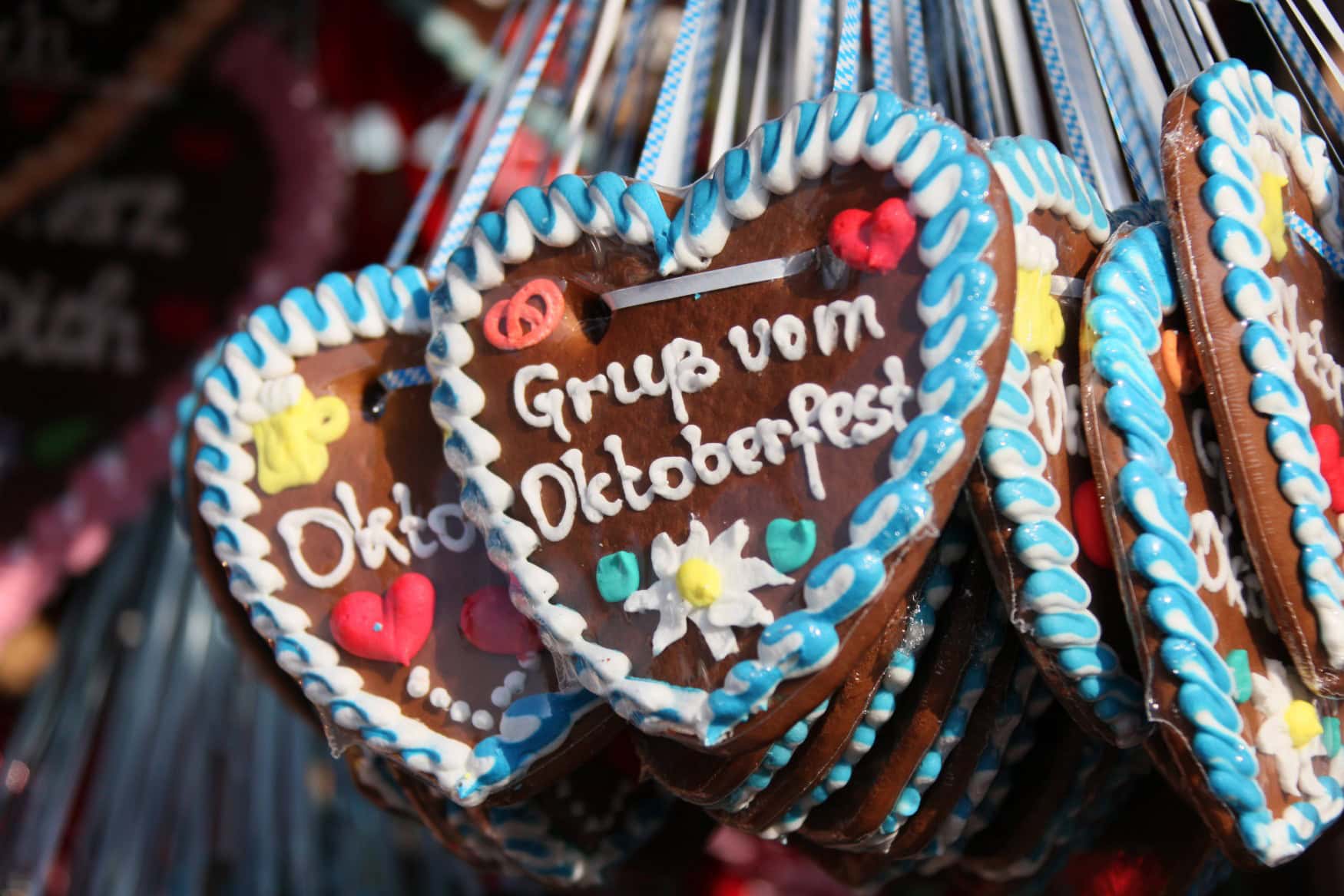
Not entirely obvious: contrary to its name, most of the festival takes place in September. It usually starts on the Saturday after September 15 and ends on the first Sunday in October. However, the first Oktoberfest actually took place in October, starting on October 12, 1810. It was held to celebrate the wedding of Bavarian Prince Ludwig and Princess Therese. It was only later that the start date was moved forward to September in order to have better weather during the festival.
👉 You can find all the information about Oktoberfest on the Munich tourism website.
Carnival, Fasching, and Fastnacht | Western and Southern Germany
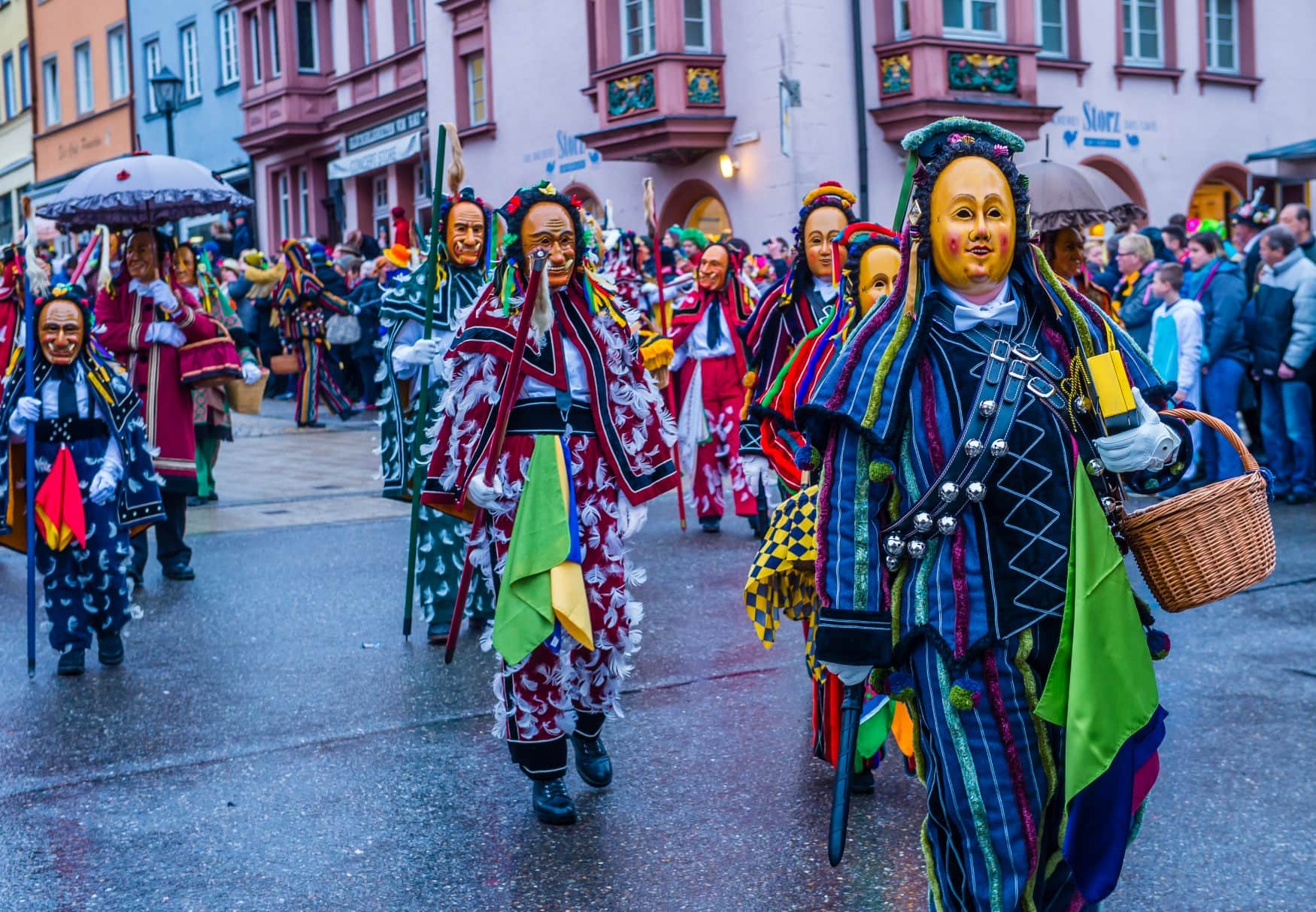
In the spring, sometime in February or March, many German cities on the Rhine are turned upside down for a week. That’s when Carnival, or Fasching or Fastnacht in southern Germany, takes place between Women’s Carnival and Ash Wednesday. People take to the streets in colorful costumes, celebrate outdoors and in pubs, sing, dance, laugh, and chat with complete strangers. There are often large parades with elaborately designed sculptures on floats. Originally, people probably wanted to drive away winter with Carnival.
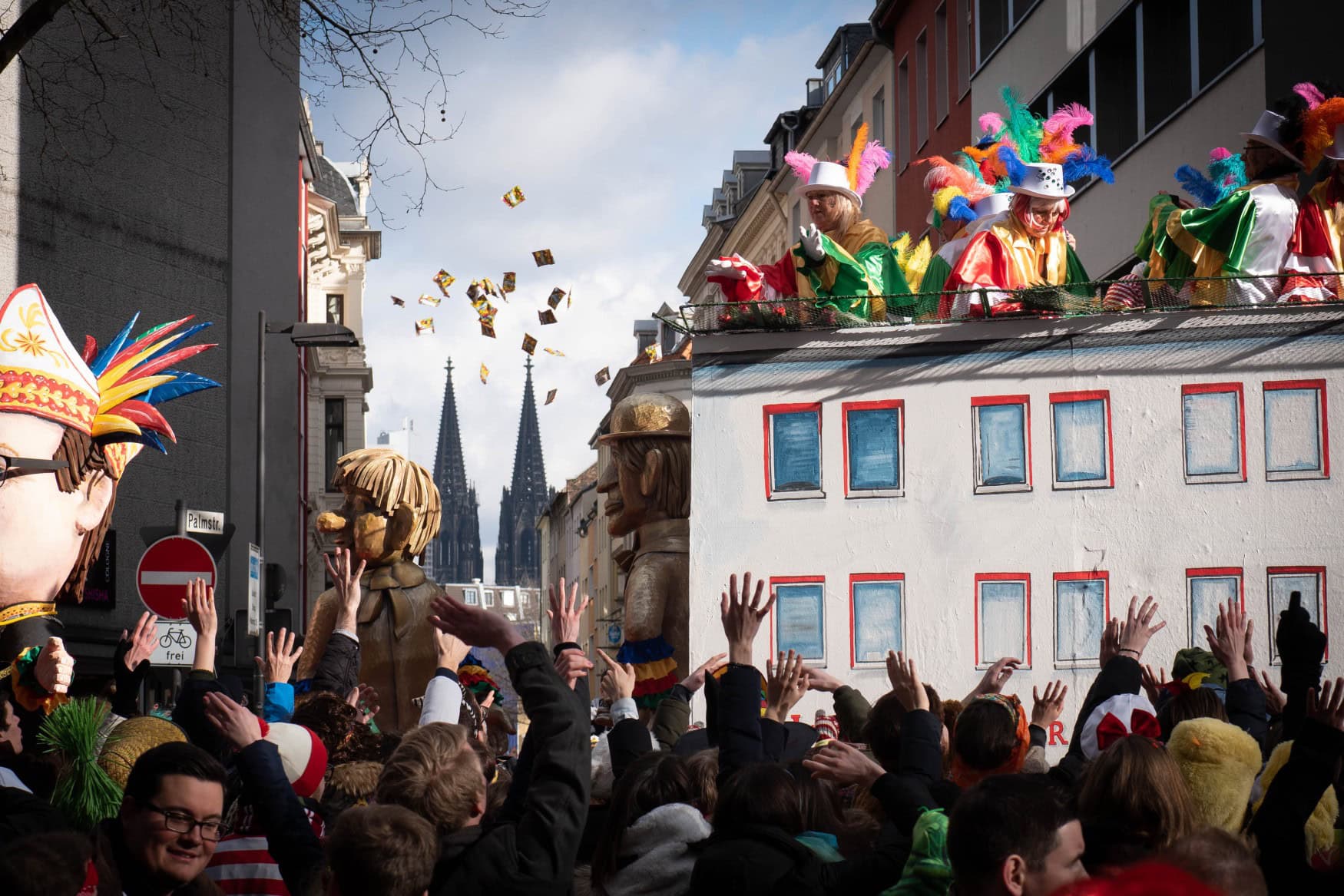
Today, Carnival is political. In many cities, the town hall is “stormed” to symbolize the ‘reversed’ order during Carnival. During this time, the “common people” and the fools rule the city. The motifs in the parades often reflect current issues. Public figures, politicians, and heads of state are portrayed in a satirical and exaggerated manner, problems are addressed, and opinions are expressed in a visually striking way. The costumes worn by visitors, on the other hand, can be anything from fairy tale characters to athletes and musicians to buildings or abstract concepts. The more creative, the better. And preferably homemade rather than bought.
The strongholds of Carnival are Cologne, Düsseldorf, and Mainz. But in the Rhineland part of North Rhine-Westphalia, in Rhineland-Palatinate, and in Baden-Württemberg, Carnival and Fasching events take place in almost all cities and even villages. It traditionally starts on “Weiberfastnacht”, or “Altweiberfasching”, or “Schmutziger Donnerstag” (Dirty Thursday), at 11:11 a.m. Even in many offices, work stops, and in the past, men’s ties were often cut off. Because Thursday belongs to the women. In Cologne, Düsseldorf, and Mainz, the biggest parade traditionally takes place on Rosenmontag (Rose Monday), while in southern Germany, Fasching is often celebrated wildly on Veilchendienstag (Violet Tuesday).
The date of Carnival is flexible and is based on Easter. Carnival ends on Ash Wednesday, which is 46 days before Easter Sunday. On the Tuesday evening before, some cities burn the Nubbel. This is a straw doll that is charged with all the sins and transgressions committed during Carnival. Ash Wednesday marks the traditional beginning of Lent for believers, which lasts until Easter.
👉 Click here for the tourism website of the city of Cologne.
👉 Click here for the tourism website of the city of Düsseldorf.
👉 Click here for the tourism website of the city of Mainz.
Osterfeuer (Easter Bonfires) | All of Germany
Let’s continue with Easter. In churches, Easter is even more important than Christmas. In order to get people more enthusiastic about the new religion during the Christianization of Europe, Easter was scheduled to coincide with the pagan spring and fertility festivals of the time. This is probably also the origin of the custom of Easter fires, which were first documented in 751.
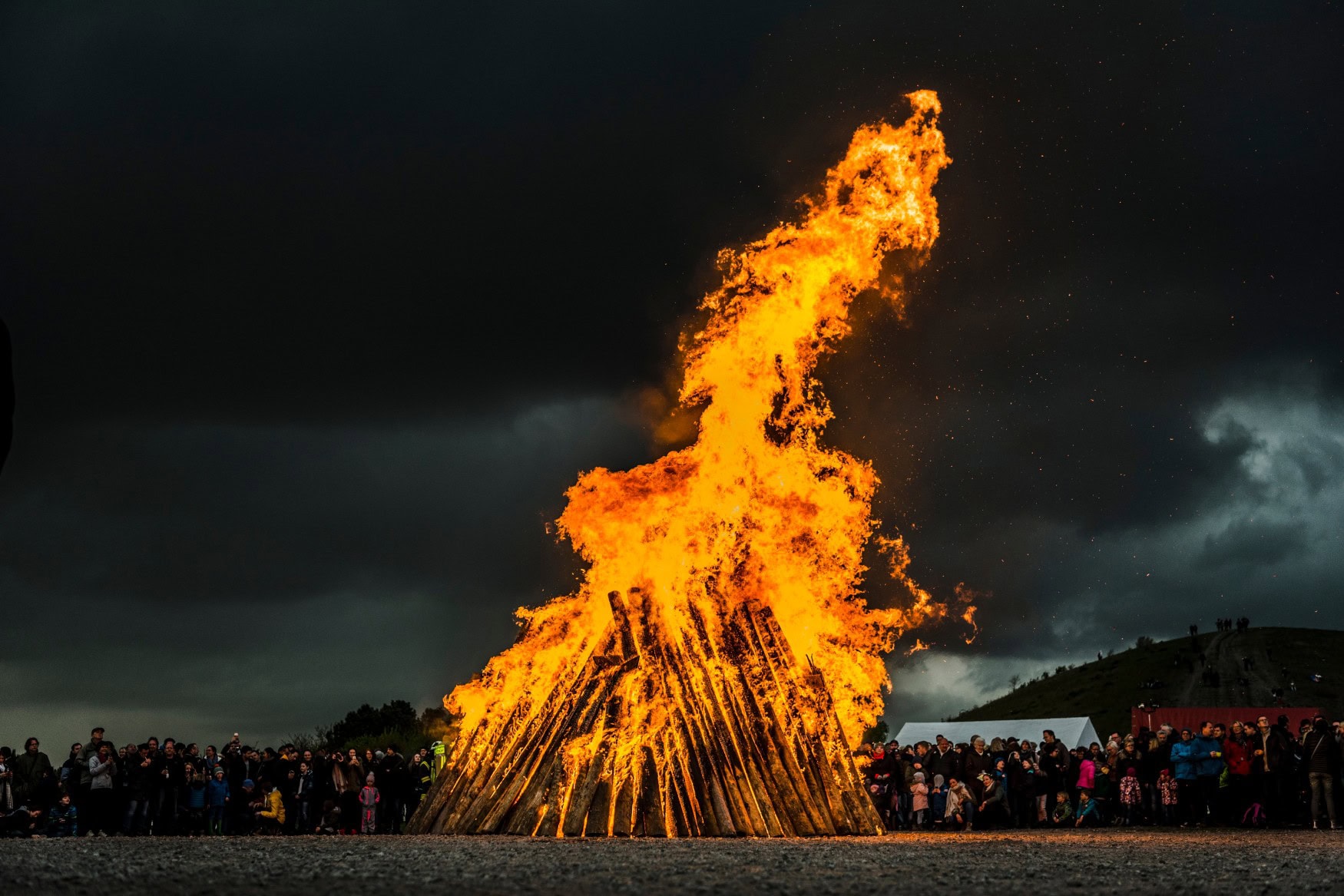
In many towns and villages, especially in western Germany, one or more large piles of wood are stacked up on Holy Saturday or Easter Sunday and lit at nightfall. The Easter fires often rise several meters into the air and can be seen for miles from high vantage points. People gather around the fire, eat food they have brought with them, and drink beer or mulled wine. Local clubs often provide the food and drink.

Weinfeste (Wine Festivals) | Western, Southern, and Eastern Germany
Internationally, Germany is best known for its many types of beer. But we also grow quite a lot of wine. There are 13 wine-growing regions in Germany. Most are located on the Rhine, Main, and Moselle rivers, but wine is also grown in Saxony-Anhalt and Saxony. This shapes a region and also the people and festivals within it.
In many towns and villages, wine festivals are therefore celebrated in late summer or autumn. This is when the harvest has been brought in. The festivals are held either at a central location in the village or town, or, especially in the case of large winegrowers, directly on the farm. Rarely is there an opportunity to taste so many different wines and regional specialties. Often there is also a supporting program with music and dancing. In some places, visitors can also take a short hike and visit different stands one after the other.
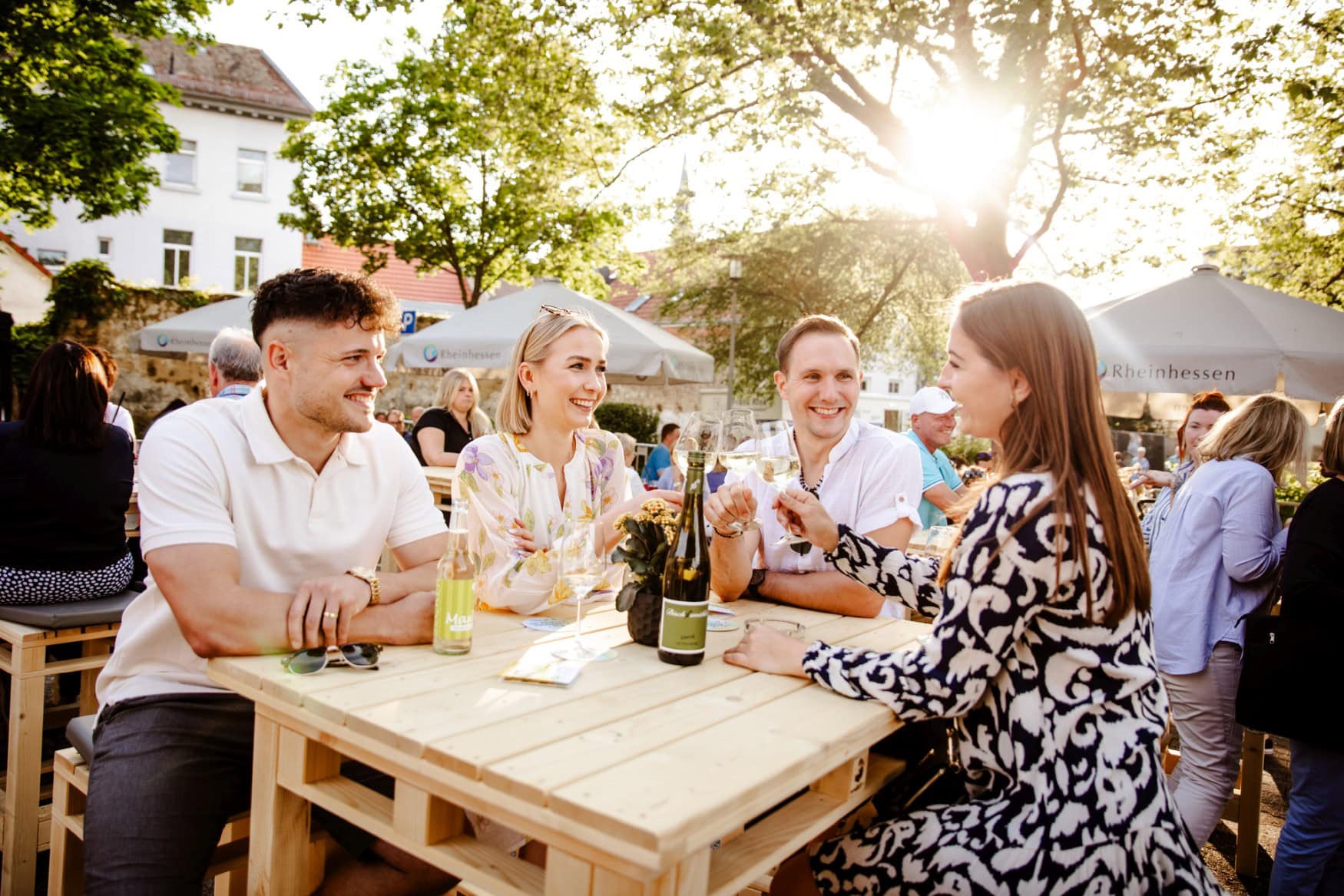
Probably the largest wine festival in Germany is the Wurstmarkt in Bad Dürkheim. In 2026, it will take place over two weekends in September, with several hundred thousand visitors expected. The focus here is not only on wine; there are also rides, concerts, and parties. If you prefer a less crowded atmosphere, simply visit one of the many small villages in the Palatinate or on the Main River. Admission to the festivals is usually free, and you pay by the glass. Sometimes a “pass” is also offered, which allows guests to try one glass at a certain number of different stands.
👉 Here is an overview of the wine festivals in the Palatinate.
👉 Here is an overview of the wine festivals in Franconia.

Schützenfeste (Shooting Festivals) | All of Germany
In the distant past of the Middle Ages, many towns were responsible for their own protection. This was only possible if all citizens helped with the defense. Therefore, it was common practice in many towns in what is now Germany to practice shooting with firearms on a regular basis. With more modern military forces and larger states, this practice gradually became unnecessary. However, the tradition remained in many places. Even today, the marksmen still wear a kind of uniform, usually in green and white.
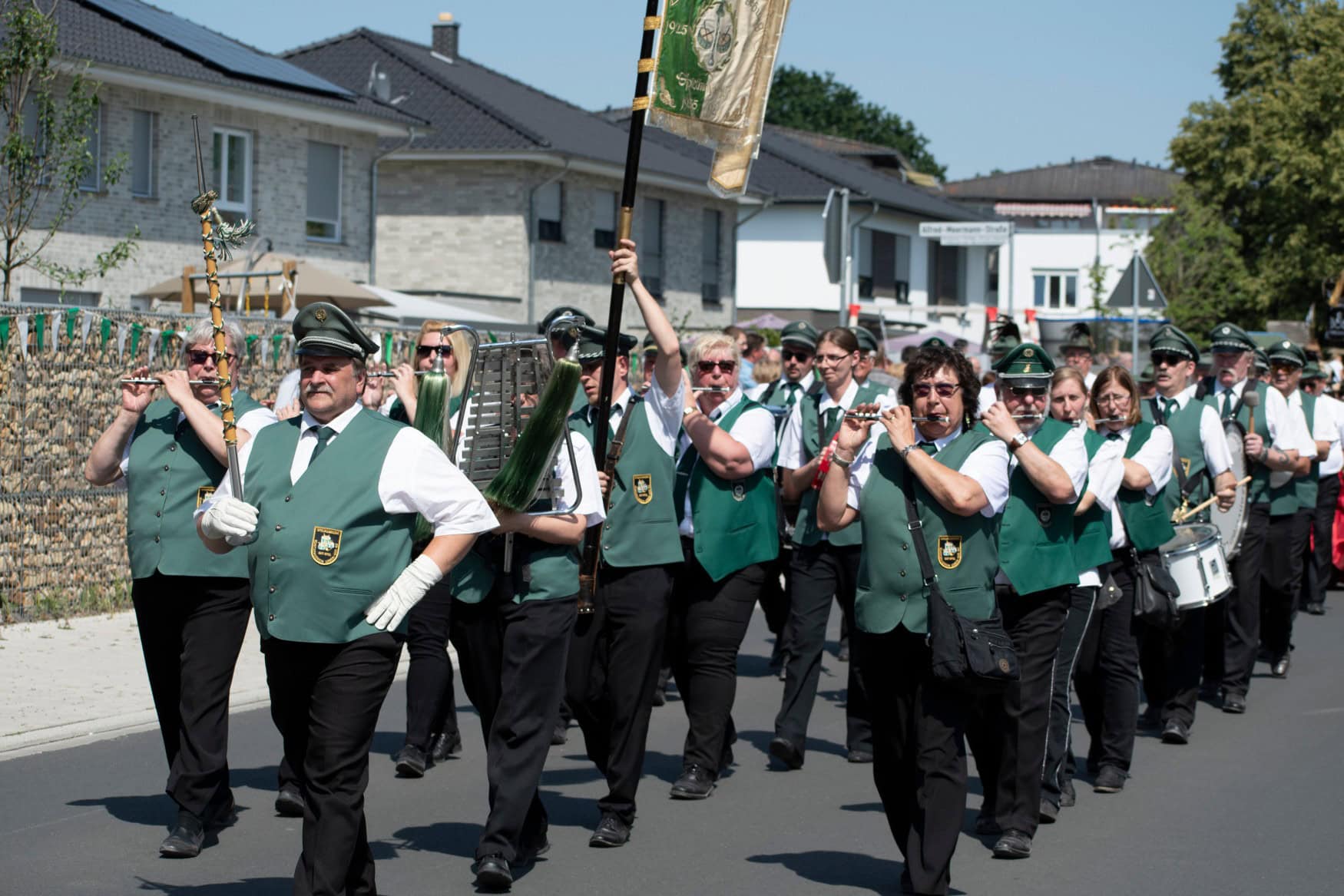
Today, shooting clubs, which can be found almost everywhere in Germany, refer to this tradition. This is especially true in Bavaria, Lower Saxony, and the Sauerland region. In the shooting clubs, members practice shooting, usually in sporting competitions with each other. Once a year, many clubs organize a shooting festival in the summer. Whoever emerges as the best marksman in a tough competition becomes the shooting king for the next year. In the past, this was reserved for men, but today more and more clubs allow women to participate as well.
A shooting festival usually lasts several days. The opening often features a parade with a marching band through the town, during which the reigning royal couple is picked up and led to the shooting range. The competition then takes place there. Usually, there is plenty of food and drink, either in the festival tent or in the open air. Many stands offer beer or bratwurst, and in some cities, even the shops are closed during the shooting festival. Admission is usually free, and anyone who wants to can watch. Only participation in the competition itself remains the privilege of the club members.
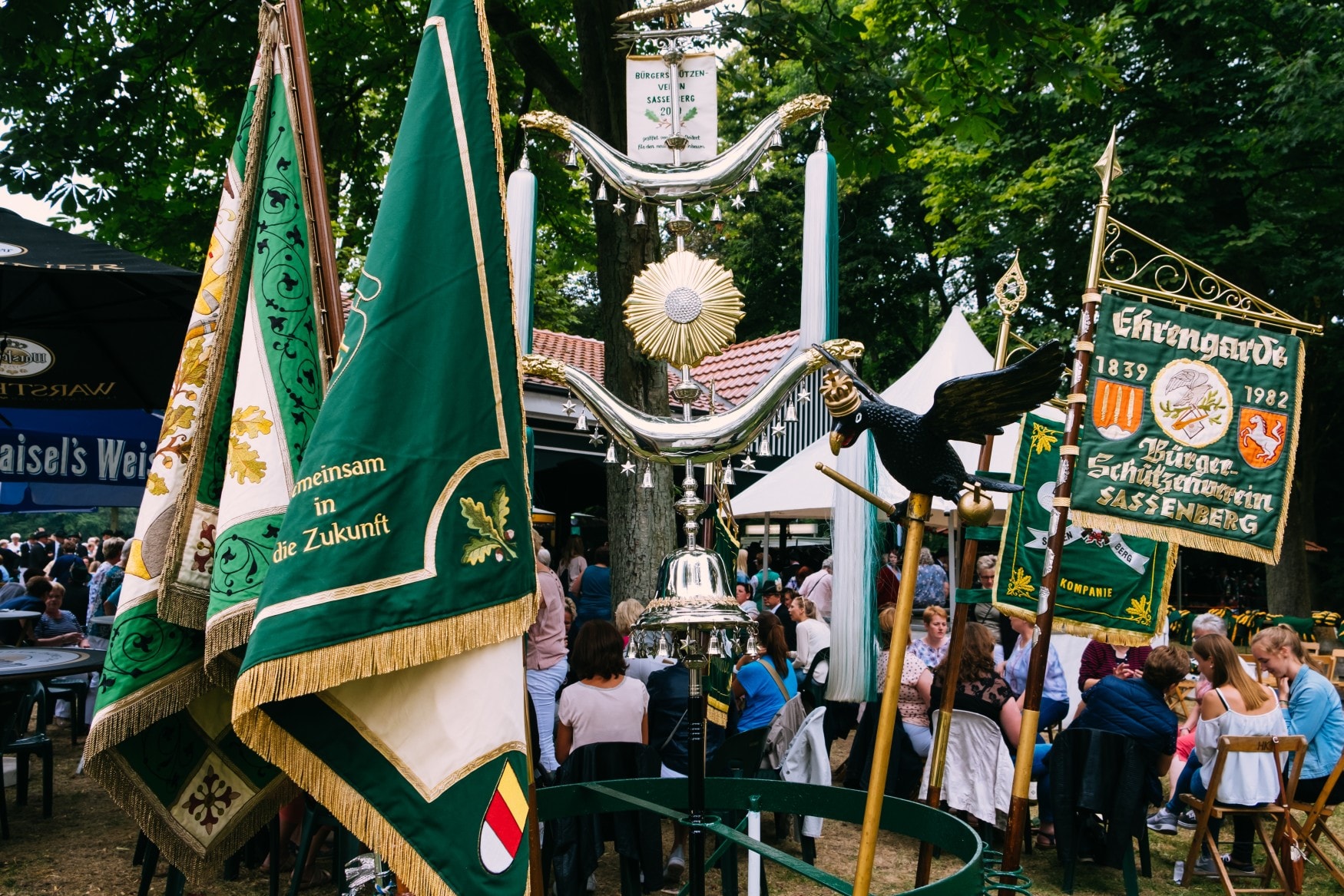
The largest shooting festival in Germany takes place in Hanover. More than 200 stalls are set up there and three festival tents are filled with people. The Schützenmarsch, with more than 10,000 participants, is a good ten kilometers long. In 2026, the Schützenfest in Hanover will take place from July 3 to 12.
👉 Click here to visit the website of the Schützenfest in Hanover.